 Writers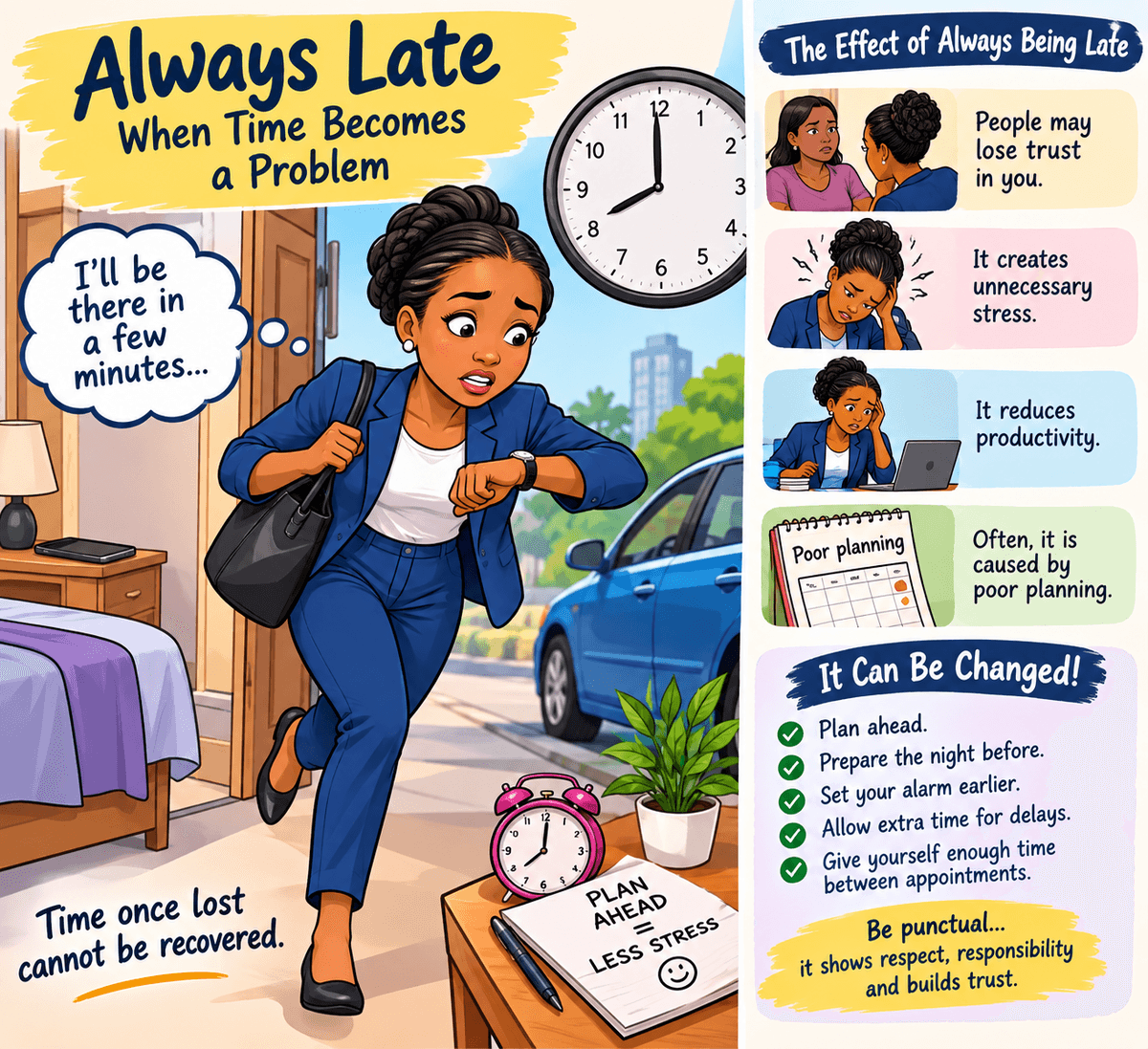
Occasional tardiness can happen to anyone. Factors such as traffic jams, unforeseen circumstances, or emergencies may lead us to be delayed beyond our schedule. Nonetheless, when consistently late, this behavior can impact various aspects of our lives. A person who frequently arrives late might not recognize the degree to which this issue influences their employment, relationships, reputation, and personal development.
A significant consequence of chronic lateness is that it can erode people's trust in you. When you habitually show up late for meetings, appointments, church services, classes, or social events, others may begin to feel you do not value their time. Even legitimate reasons for being late can lead to others doubting your commitments if tardiness is a frequent occurrence.
Being frequently late can also lead to unnecessary anxiety. When you are aware that you're falling behind your schedule, you may hasten your morning routine, skip breakfast, forget essential items, or drive recklessly in an effort to arrive punctually. Instead of starting your day in a relaxed manner, you launch into it feeling stressed and pressured. Over time, this pattern can become overwhelming.
Another impact of being late is its potential to hinder productivity. Arriving late at work or school means you forfeit important time and sometimes crucial information. If a meeting starts at 9:00 a. m. and you walk in at 9:30, you might miss essential conversations that won’t be repeated easily. When this behavior occurs regularly, your performance may decline.
At times, lateness stems from inadequate planning. Some individuals misjudge how long it takes them to prepare or commute to a specific destination. Others procrastinate until the very last minute before getting ready. For instance, a person may know they have an 8:00 a. m. appointment but begins to get dressed only at 7:40 a. m. This situation already sets the stage for potential lateness.
The encouraging news is that you can change this pattern of tardiness. The first step is to acknowledge the issue and choose to make a change. Begin by preparing essential items the night before. Select your outfit, pack your bag, and get organized ahead of time. This can save you valuable minutes in the morning.
Additionally, consider setting your clock or phone alarm earlier than the time you actually need to leave. Allow yourself extra time for traffic, delays, and any unforeseen circumstances. If you typically require 30 minutes to reach your destination, plan for 45 minutes instead. It's better to arrive early than to rush at the last minute.
Another crucial habit is to limit the number of commitments you schedule closely together. When appointments are arranged with little time between them, a single delay can impact everything that follows. Ensure you allocate enough time to finish one task before starting the next.
Being on time is not merely about arriving early; it reflects discipline, accountability, and respect for others. It also provides a sense of tranquility since you aren’t always in a rush from one obligation to the next.
If you frequently find yourself arriving late, don't view it as an unchangeable situation. Begin with minor adjustments, prepare in advance, and treat time with respect. Keep in mind that lost time cannot be regained. Developing good time management skills can enhance your connections, job performance, and daily routine.
