 Writers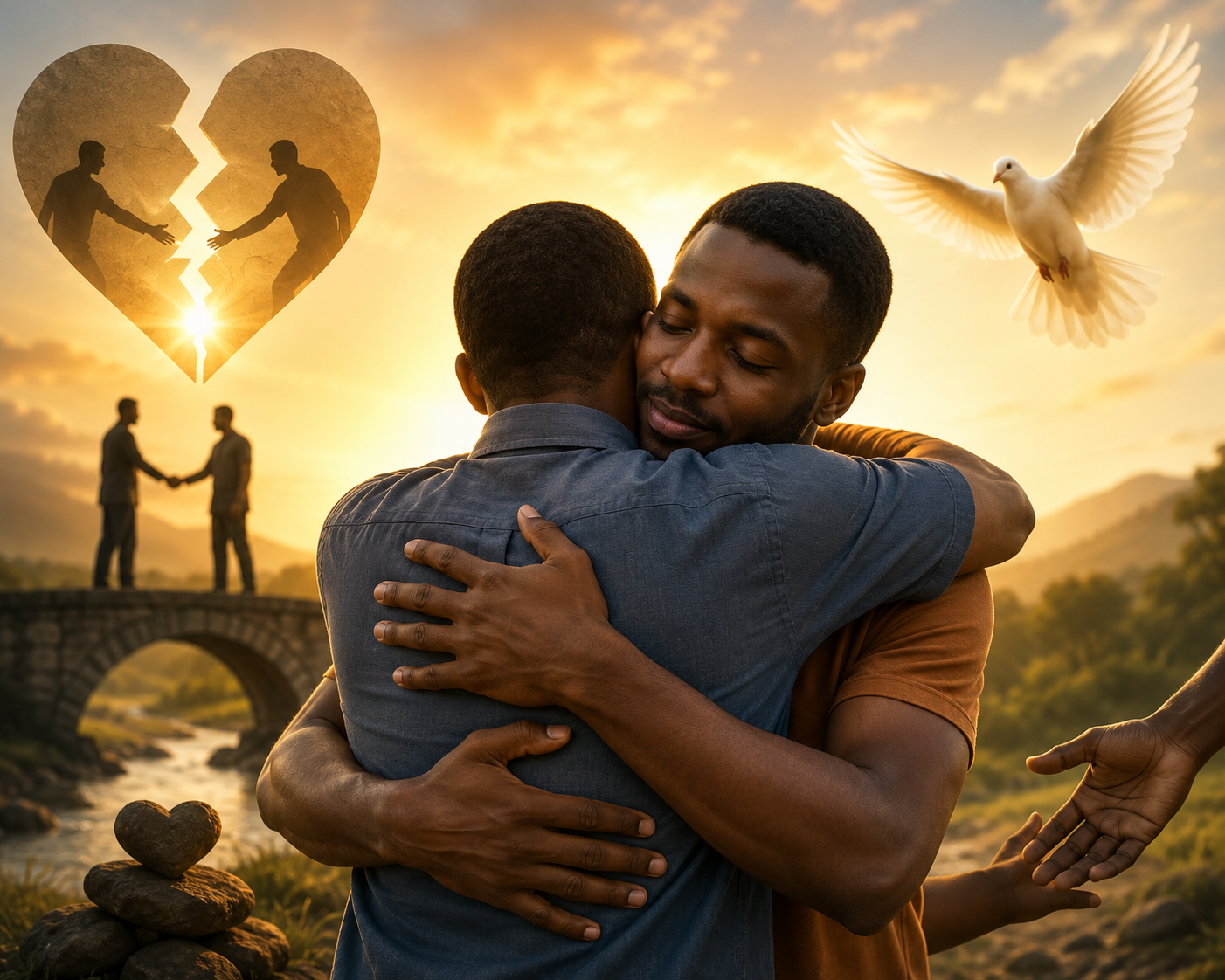
Forgiveness and Reconciliation: The Path to Healing and Restoration
In every relationship, whether between family members, friends, colleagues, or even nations, misunderstandings and offenses are inevitable. Human beings are imperfect, and because of this, we sometimes hurt others knowingly or unknowingly. While pain and disappointment may leave deep emotional wounds, forgiveness and reconciliation provide the pathway to healing, restoration, and renewed hope.
Forgiveness is the conscious decision to release resentment, bitterness, and the desire for revenge against someone who has wronged us. It does not mean pretending the offense never happened or excusing harmful behaviour. Rather, it is choosing not to allow the hurt to control our hearts or define our future. Forgiveness frees both the person who gives it and the one who receives it. It removes the heavy burden of anger and creates room for peace to flourish.
Reconciliation, on the other hand, goes a step further. While forgiveness is an internal decision, reconciliation is the process of restoring a broken relationship when both parties are willing to pursue peace. It involves honest communication, genuine repentance where necessary, rebuilding trust, and a commitment to move forward together. Reconciliation cannot always happen immediately, and in some situations, it may require time, patience, and wisdom. However, where there is sincerity and humility, broken relationships can often become stronger than before.
One of the greatest barriers to forgiveness is pride. Pride convinces us that holding on to anger is a sign of strength, but in reality, unforgiveness often imprisons the one carrying it. Bitterness drains emotional energy, damages relationships, and may even affect physical and mental well-being. Forgiveness, however, opens the door to emotional freedom. It allows us to let go of the past and embrace a healthier future.
The Bible presents forgiveness as one of the highest expressions of love. Jesus Christ demonstrated this perfectly when He prayed for those who crucified Him, saying, "Father, forgive them, for they do not know what they are doing." His example teaches that forgiveness is not based on whether people deserve it but on the grace that God has shown to us. As believers receive God's forgiveness, they are called to extend the same mercy to others.
Reconciliation also reflects God's heart. Throughout Scripture, God continually sought to reconcile humanity to Himself despite mankind's repeated failures. Through Christ's sacrifice, a broken relationship between God and humanity was restored. This divine act of reconciliation serves as a model for how people should pursue peace with one another.
Practising forgiveness and reconciliation does not mean ignoring justice or allowing repeated abuse. Healthy boundaries may still be necessary, especially where trust has been seriously damaged. Forgiveness is about releasing hatred, while reconciliation requires mutual responsibility and genuine change. Wisdom helps us distinguish between offering forgiveness and immediately restoring every relationship without evidence of repentance.
Communities, workplaces, churches, and families thrive when forgiveness becomes a shared value. Conflicts are resolved more peacefully, trust is rebuilt more quickly, and unity is strengthened. Children who grow up in environments where forgiveness is practised learn compassion, humility, and emotional maturity. Likewise, organisations that promote reconciliation often enjoy stronger teamwork and healthier relationships.
Choosing forgiveness is rarely easy, but it is always worthwhile. It requires courage, humility, and sometimes repeated effort. Yet every act of forgiveness weakens the power of hatred and strengthens the possibility of peace. Reconciliation reminds us that broken relationships do not always have to remain broken. With sincerity, patience, and love, restoration is possible.
Ultimately, forgiveness and reconciliation are not signs of weakness but marks of true strength and maturity. They reflect a heart that values peace above revenge and restoration above division. When individuals choose forgiveness and pursue reconciliation, they become instruments of healing in a world that desperately needs hope, compassion, and unity.