Writers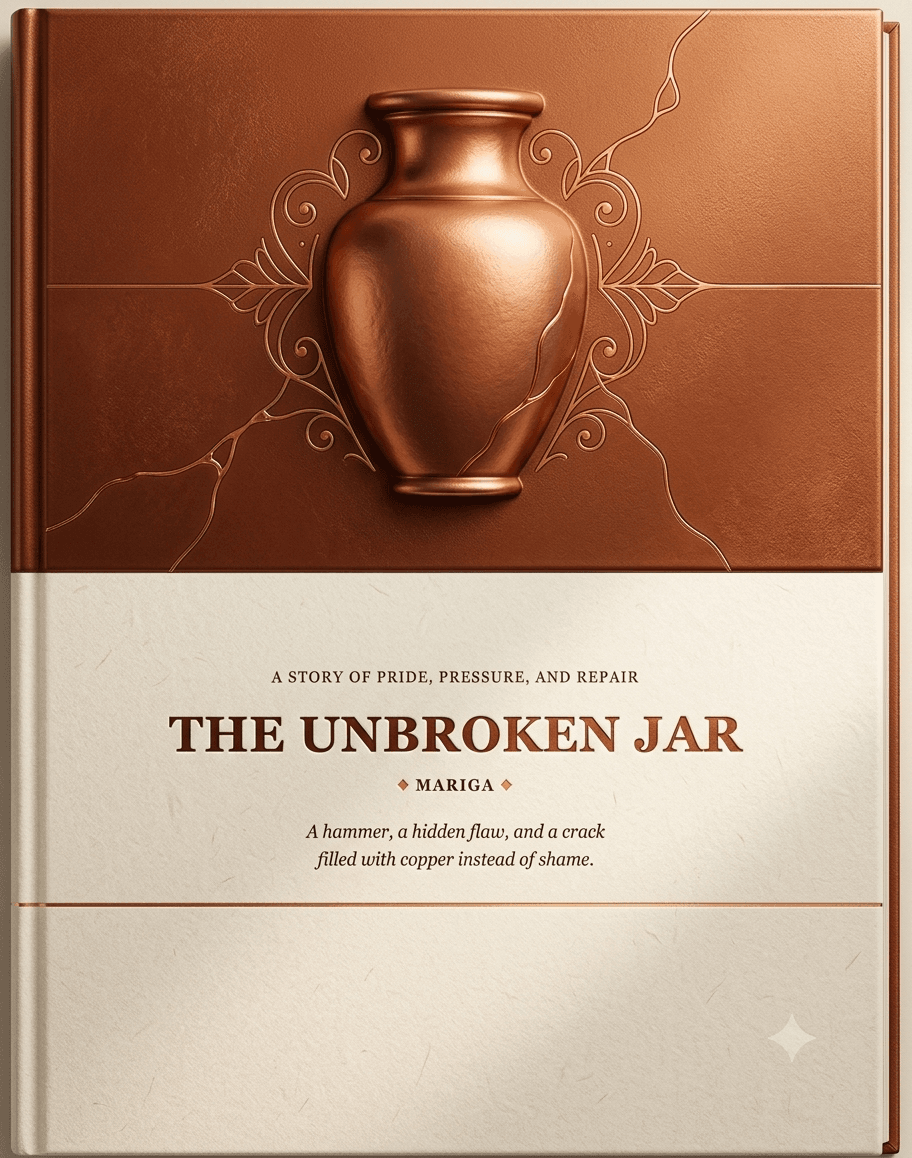
In the town of Mariga, a potter named Zubairu was famous for making the best clay water jars in the region. He knew a special technique that made his jars light, strong, and able to keep water cool. Because of his skill, he became the leader of the local potters' guild.
But success made him proud and harsh. If a young apprentice made even a tiny mistake, Zubairu would smash their work in front of everyone, believing that only strict punishment could create true craftsmen.
His nephew, Tukur, worked quietly in the shop. Because of a childhood illness, Tukur's left arm was weak, making his pottery work slightly uneven. But he had real talent — especially for carving beautiful, detailed patterns into the clay.
One day, an important order came in: a giant ceremonial water jar for the opening of a new town clinic. Zubairu began shaping it himself, but before he could finish, he fell seriously ill with a fever. Unable to work, he had to stay in bed.
With the deadline close, Tukur took over. Working through the night despite his weak arm, he finished the massive jar, carved intricate designs into it, and placed it in the kiln to be fired.
When it came out days later, everyone gathered to see it. It was beautiful — its dark clay glowing like bronze, its carvings catching the morning light. The apprentices cheered.
But Zubairu, still weak from his illness, inspected it closely and found a tiny flaw — a slight ridge near the base, barely visible, caused by Tukur's trembling arm. Furious, Zubairu declared that a "flawed" piece could not represent their guild. Despite Tukur's protests that the jar was solid and safe, Zubairu grabbed a heavy hammer and struck it hard to destroy it.
But the jar didn't break. It rang out like a bell. The force of the hit knocked the hammer out of Zubairu's hands and sent him falling to the ground — while the blow only chipped off a piece of the jar's beautiful carved surface, revealing raw clay underneath.
Everyone stood in stunned silence. Zubairu realized the awful truth: the jar hadn't been broken before — his own pride had broken it.
Tukur didn't yell or argue. He simply helped his uncle up, handed him his walking stick, and walked away, deeply hurt.
That night, alone in the workshop, Zubairu sat with the damaged jar and thought about his own mistakes — how he had used "high standards" as an excuse for cruelty, forgetting that real leadership means guiding people, not breaking them.
Instead of hiding the damage or rushing to make a replacement, Zubairu chose an old, difficult repair method. He spent the entire night carefully filling the crack with melted copper resin — a technique that doesn't hide damage, but highlights it as something beautiful.
The next day, when the town official arrived to collect the jar, the crowd gasped at what they saw: a stunning jar with a shining, golden-copper seam running through its carvings.
The official was amazed and asked about the unusual design. Instead of taking credit, Zubairu told the whole truth — that Tukur had made the jar while he was sick, and that the "scar" was from his own hammer, caused by his own anger and pride. He said the copper wasn't there to hide his mistake, but to remind everyone that when we handle our flaws honestly, they can become the strongest, most beautiful part of who we are. Then he publicly offered to step down as guild leader in favor of his nephew.
Tukur, moved by his uncle's honesty, walked forward, helped him stand tall again, and said the guild still needed him — as long as he led with humility now, not just pride.
The official smiled and declared that the jar would stand in the town square as a lesson for future generations: true strength isn't about never breaking. It's about how we choose to repair what breaks.