 Writers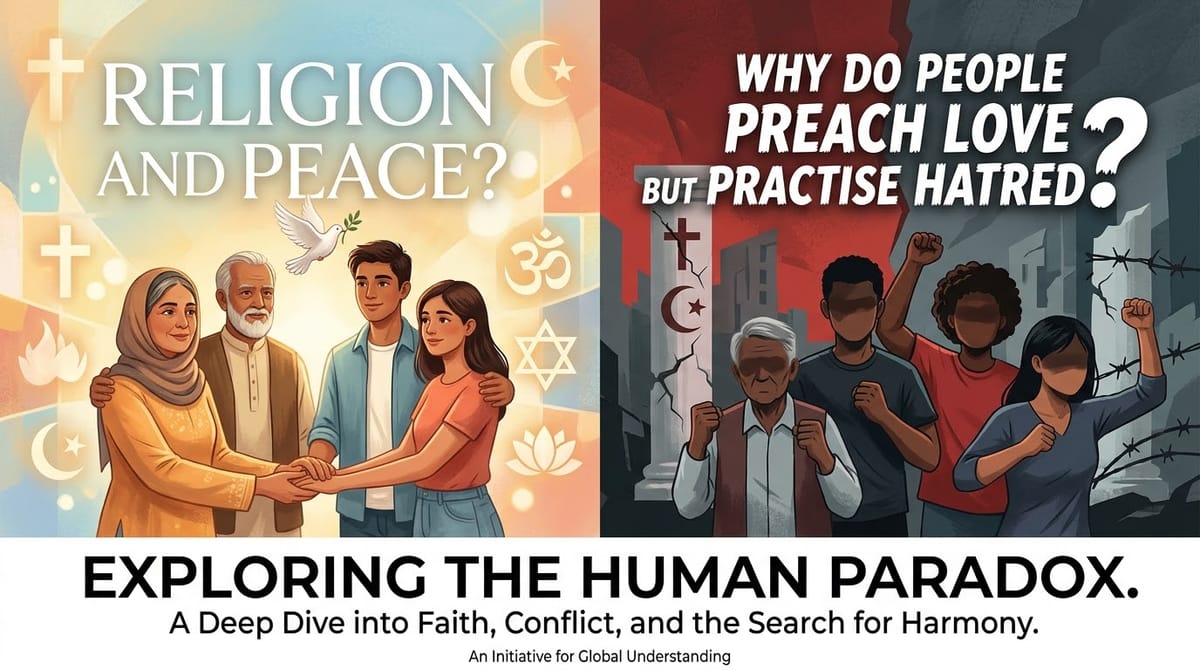
Religion plays an important role in the lives of millions of people around the world. It provides spiritual guidance, moral principles, hope during difficult times and a sense of belonging.
Many people turn to religion when they are grieving, struggling with personal challenges or searching for meaning in life. Religious communities also contribute to society through charity, education, humanitarian assistance and support for vulnerable people.
Yet, despite religion's emphasis on values such as love, compassion, forgiveness and justice, religious differences sometimes become sources of tension, discrimination and violence.
This raises an important question: If many religions teach people to love their neighbours, why do religious differences sometimes divide communities instead of bringing them together?
The Positive Relationship Between Religion and Peace
Religion can contribute significantly to peacebuilding.
Religious leaders often have considerable influence within their communities. People trust them, listen to their advice and look to them for guidance during difficult situations.
When religious leaders promote tolerance, forgiveness, dialogue and peaceful coexistence, they can help prevent disagreements from escalating into violence.
For example, imagine a community experiencing tension between Christians and Muslims over the use of a public facility.
Rather than allowing rumours and accusations to spread, respected religious leaders could bring representatives of both communities together to discuss their concerns, clarify misunderstandings and negotiate a peaceful solution.
Through dialogue and mutual understanding, a disagreement that might have developed into a serious conflict could be resolved peacefully.
Religious organisations can also organise interfaith meetings, community development projects and humanitarian activities that encourage people from different backgrounds to cooperate.
When people work together to help others, they may begin to recognise their shared humanity despite their religious differences.
When Religion Becomes a Source of Conflict
Unfortunately, religion can also become entangled in political competition, ethnic divisions, economic grievances and struggles for power.
Sometimes, individuals or groups exploit religious identity to mobilise supporters against another community.
Rumours about another religion may be spread to create fear, suspicion or hostility. A disagreement that begins with a political, social or economic issue may gradually be presented as a religious confrontation.
In such situations, people may begin to judge others not by their character or actions but by the religious group to which they belong.
This can create dangerous divisions.
However, it is important to recognise that not every conflict involving religious communities is caused by religion itself. Historical grievances, political interests, insecurity, discrimination and competition over resources may also contribute to these conflicts.
Understanding the underlying causes is essential if lasting peace is to be achieved.
Can People of Different Religions Live Peacefully Together?
Absolutely.
People do not need to share the same religious beliefs to live together peacefully.
A Christian and a Muslim can be neighbours, colleagues, business partners and friends. They can cooperate on community projects, help each other during emergencies and maintain respectful relationships without abandoning their personal beliefs.
Peaceful coexistence does not require everyone to agree on religious teachings.
It requires people to recognise that others deserve dignity, safety and respect, regardless of their faith.
Religious freedom should also include the freedom to practise one's religion peacefully, change one's beliefs or choose not to follow a religion, without facing intimidation or discrimination.
The ability to disagree without hatred is an important foundation for peaceful societies.
What Role Should Religious Leaders Play?
Religious leaders can help build peace by encouraging their followers to reject violence, avoid spreading unverified information and respect people of other faiths.
They can also work with community leaders, civil society organisations and public institutions to address grievances before they become serious conflicts.
Importantly, religious leaders should be willing to challenge hatred and discrimination even when they come from members of their own communities.
Peacebuilding becomes more difficult when people condemn intolerance in other groups but excuse it within their own.
True commitment to peace requires consistency, courage and a willingness to treat others fairly.
Religion Should Be a Bridge, Not a Wall
Religious differences will continue to exist because people have different beliefs, traditions and understandings of spirituality.
But these differences do not have to result in hostility.
A peaceful society is one in which people can practise their faith freely while respecting the rights of others to do the same.
Religion can contribute to such a society when its influence is used to promote compassion, justice, reconciliation and peaceful coexistence.
Ultimately, the challenge is not simply to encourage people to attend religious services or profess good values. It is to encourage them to demonstrate those values in their relationships with others.
THE BIG QUESTION
Do you believe religion is more of a force for peace or a source of conflict in today's society?
And here is another question to consider:
If a person genuinely loves God, should that person's religion influence how they treat people of other faiths?
Share your thoughts in the comments. Let us have a respectful discussion, even when we disagree.
Remember: We may not share the same beliefs, but we can still share the same commitment to peace.
