Writers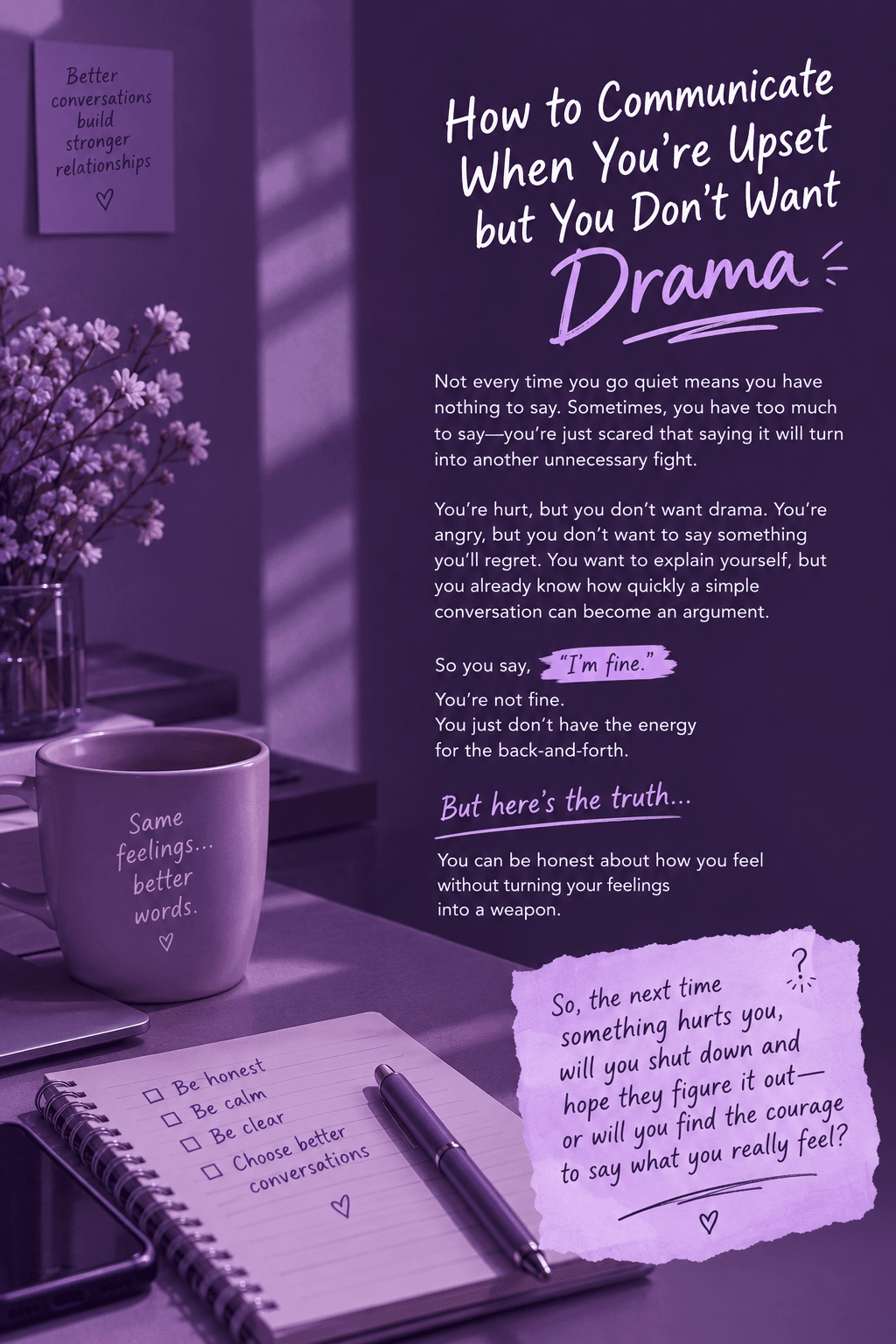
How to Communicate When You’re Upset but You Don’t Want Drama
Not every time you go quiet means you have nothing to say. Sometimes, you have too much to say—you’re just scared that saying it will turn into another unnecessary fight.
You’re hurt, but you don’t want drama. You’re angry, but you don’t want to say something you’ll regret. You want to explain yourself, but you already know how quickly a simple conversation can become an argument.
So you say, “I’m fine.”
You’re not fine.
You just don’t have the energy for the back-and-forth.
And honestly, this is where a lot of us get communication wrong. We think our only options are either to speak angrily or stay completely silent. But there is a space in between: being honest about how you feel without turning your feelings into a weapon.
When you’re hurt, your first instinct might be to withdraw. You become quiet. You start replying differently. You distance yourself and hope the other person notices something is wrong and asks.
But when they don’t, the silence can make the frustration even worse.
Instead of letting that silence create more distance, try explaining what actually happened.
Focus on the situation rather than attacking the person.
Instead of saying, “You always make me feel like this,” try saying, “What happened earlier really hurt me.”
There’s a difference between attacking someone’s character and explaining how their actions affected you. The first can immediately make someone defensive; the second gives them something they can actually understand and respond to.
From there, be specific about what upset you. Saying “You’ve changed” or “You don’t care about me anymore” might express your frustration, but it doesn’t explain the actual problem.
Tell them what happened, how it made you feel, and, when possible, what you would have preferred.
For example: “When you spoke to me that way in front of everyone, I felt embarrassed. I would have preferred if you told me privately.”
Now you’re not just expressing anger. You’re giving the other person an opportunity to understand what went wrong.
Of course, sometimes even knowing what to say isn’t enough because you’re simply too angry to say it calmly. And that’s okay.
You don’t have to have a difficult conversation while your emotions are at their highest. You can say, “I’m really upset right now, and I don’t want to speak out of anger. Let me calm down, then we can talk.”
Taking space to collect yourself is different from deliberately ignoring someone to punish them. One creates room for a healthier conversation; the other can leave the other person confused and hurt.
Once you’re ready to talk, remember that communication goes both ways. Expressing your feelings doesn’t mean the other person isn’t allowed to explain theirs.
You may feel completely justified in your hurt, but they may have a perspective you haven’t considered. Listening doesn’t mean your feelings are invalid. It simply means you’re willing to understand instead of preparing your next response while they’re speaking.
And sometimes, even after you communicate calmly, the conversation may not go the way you hoped.
You might not get the apology you wanted. You might still feel misunderstood. The other person may even disagree with your perspective.
But that doesn’t mean the conversation was pointless.
Sometimes, communication isn’t about getting the exact response you wanted. Sometimes, it’s simply about expressing yourself clearly and making your boundaries known.
You can communicate calmly and still stand up for yourself.
You can be angry without becoming cruel.
You can care about someone while still telling them that something they did hurt you.
You don’t have to shout to be heard. You don’t have to insult someone to prove that you’re hurt. And you don’t have to pretend everything is fine simply because you hate confrontation.
Sometimes, maturity sounds like:
“I’m upset. I’m not trying to fight with you. I just need you to understand why this hurt me.”
Because healthy communication isn’t about pretending you’re unaffected.
It’s about having enough honesty to speak, enough self-control to choose your words, and enough respect to actually listen.
Sometimes, the strongest thing you can do when you’re hurt is say what you mean without becoming someone you’re not.