 Writers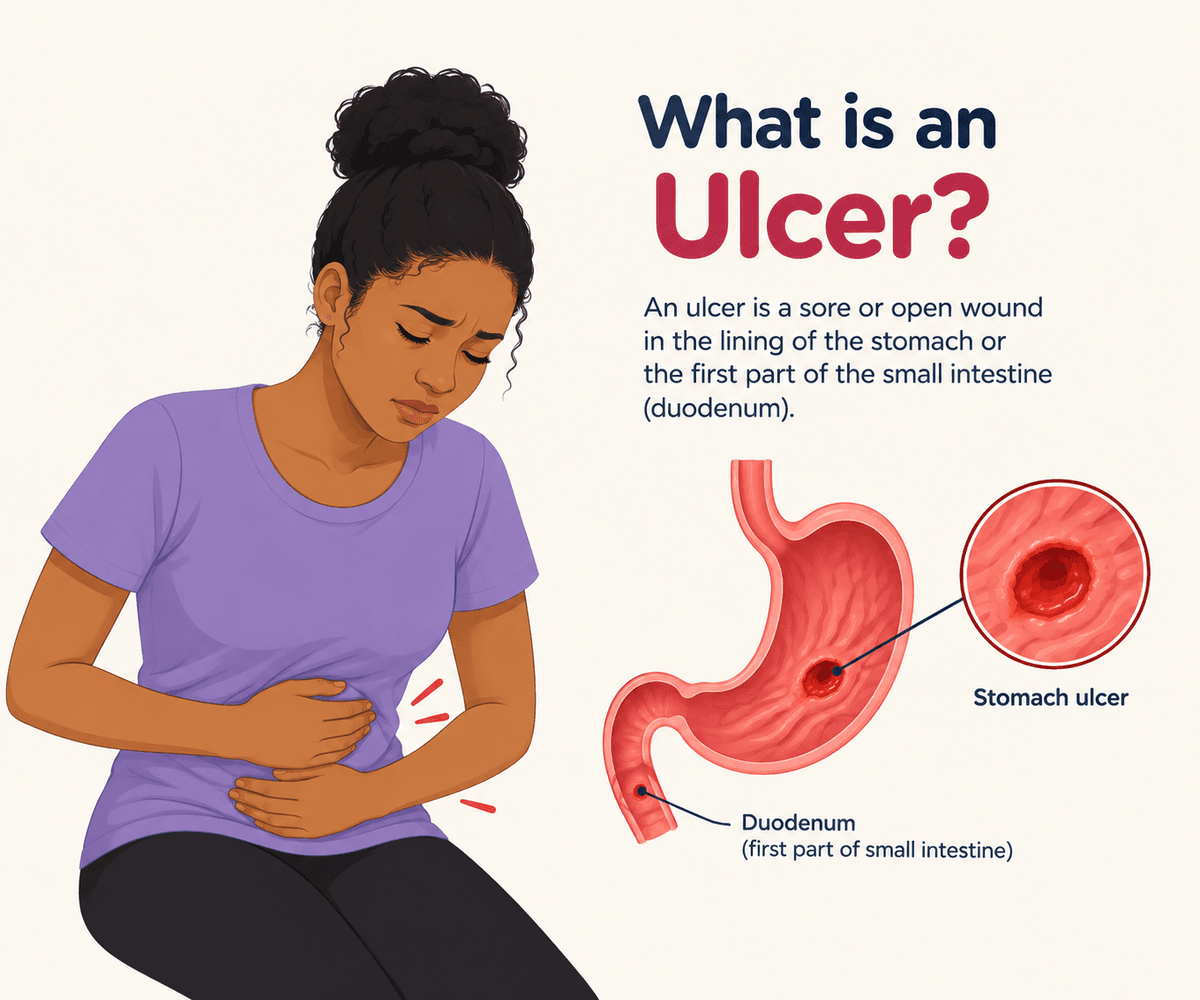
ULCER AWARENESS SERIES DAY 1 : IS EVERY STOMACH PAIN AN ULCER?
“Don’t stay too long without food, you’ll have ulcer.”
How many times have we heard this?
For some people, the word ulcer has become almost synonymous with skipping breakfast, eating pepper, or staying hungry for too long. Someone complains of stomach pain and immediately, someone else says, “That one is ulcer.”
But is it really?
Not every stomach pain is an ulcer. And not everyone has an ulcer.
So, before we start talking about what to eat, what to avoid, or which medicine to take, let's first understand what an ulcer actually is.
So, what exactly is an ulcer?
A peptic ulcer is an actual sore or open wound that develops in the lining of the stomach or the first part of the small intestine, called the duodenum.
Think about the inside of your stomach as having a protective lining. Your stomach naturally contains strong acid because it needs to break down food. That lining helps protect the stomach from being damaged by its own acid.
When that protective system is damaged and a sore develops, an ulcer can form.
And this is where we need to correct one common belief.
Ulcer is not simply “too much hunger.”
One of the major causes of peptic ulcers is infection with a bacterium called Helicobacter pylori (H. pylori). Another major cause is the regular or prolonged use of certain painkillers called NSAIDs, such as ibuprofen, aspirin and naproxen.
How do you know you might have an ulcer?
This is where things can become confusing.
A person with an ulcer may experience a burning, dull or uncomfortable pain in the upper part of the abdomen, somewhere between the belly button and the breastbone.
Some people notice the pain when their stomach is empty or during the night. For others, eating may make the discomfort worse. Other symptoms can include nausea, bloating, belching, feeling full quickly, or feeling unusually full after eating.
But here's something many people don't know:
Some people with ulcers may have no obvious symptoms at all.
So, feeling stomach pain does not automatically mean you have an ulcer, and feeling fine does not always mean an ulcer is impossible.
Then how can you be sure?
You cannot confirm an ulcer simply by touching your stomach or judging the type of pain you feel.
Stomach pain can come from several different conditions, including indigestion, gastritis and other digestive problems. That is why proper medical assessment matters.
A healthcare professional may ask about your symptoms and medicines, examine you, and, depending on the situation, request tests for H. pylori or other investigations such as an upper gastrointestinal endoscopy.
So please don't make a habit of telling yourself, “I know I have ulcer,” every time your stomach hurts.
One more important thing
If you ever vomit blood, notice black or tar-like stool, experience sudden severe abdominal pain, or become very dizzy or faint, don't simply take a home remedy and wait. These can be signs of complications and require urgent medical attention.
next we'll go deeper into ulcer: what causes it, H. pylori, painkillers and ulcers, food and common myths, symptoms and diagnosis, treatment, and how to reduce the risk of having it or having it return.
Because sometimes, the best way to protect our health is not to panic when something hurts, but to understand what our body is actually telling us.
