 Writers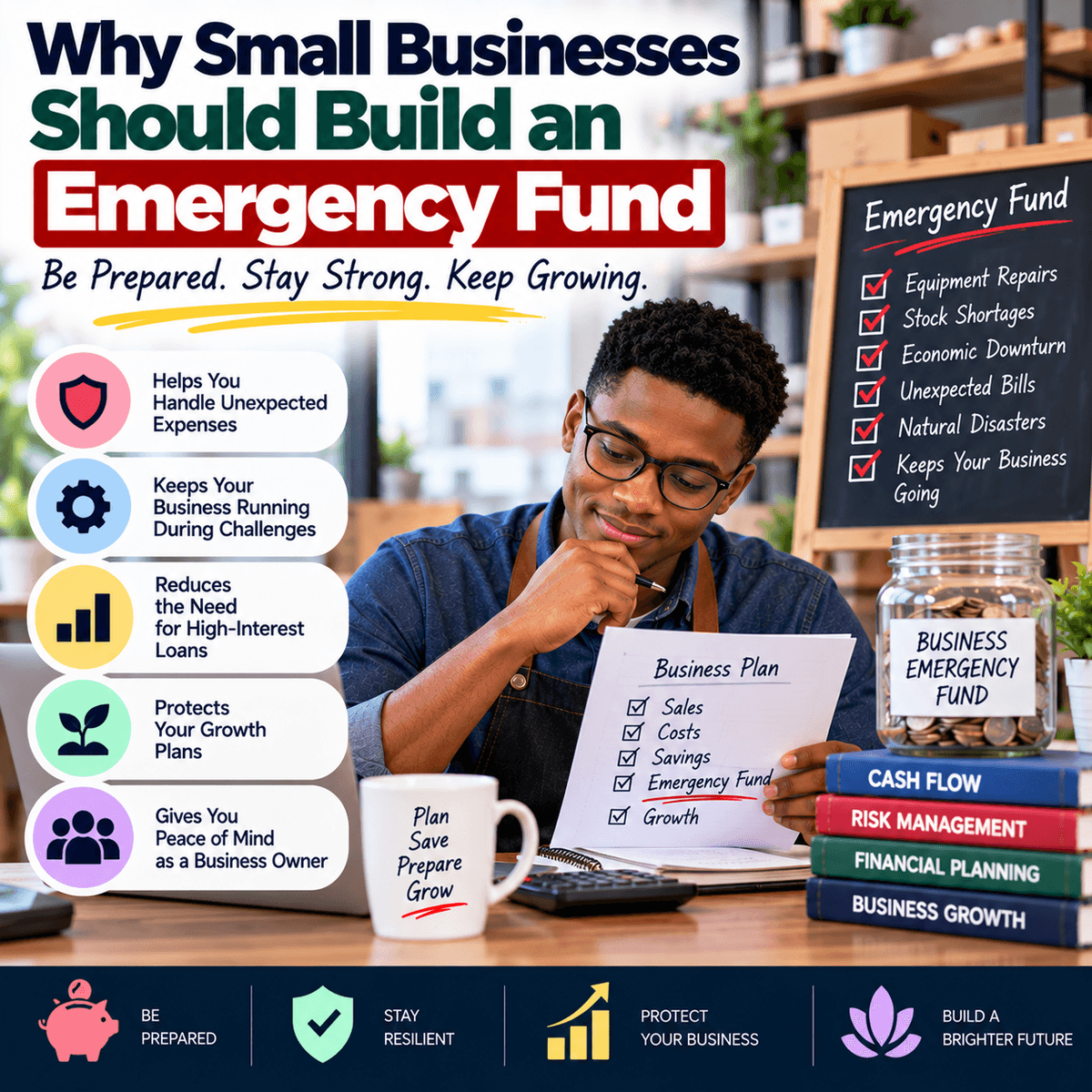
Running a small business involves uncertainty, even when sales are good and the business appears stable. Equipment can break down, an important customer can delay payment, the cost of supplies can increase, a delivery vehicle may need urgent repairs, or sales may suddenly fall. These problems often arrive without enough time for the business owner to prepare for them. When a business has no money set aside, even a temporary problem can become difficult to manage. This is why building an emergency fund can be useful for a small business. A business emergency fund is money kept aside specifically to help the business handle unexpected expenses or periods of reduced income. It is different from the money used for normal daily expenses, planned expansion or the owner's personal needs. For example, if a business depends on a particular machine and that machine suddenly stops working, the emergency fund may help pay for repairs without taking all the money meant for salaries, stock or rent. If sales become unusually low for a period, the fund may help the business meet essential expenses while the owner works on improving revenue. An emergency fund does not remove business risk, and it cannot solve every financial problem. However, it can provide some financial room when an unexpected event occurs. Small businesses can be particularly vulnerable because many operate with limited cash and depend heavily on regular sales. Building a financial reserve gradually can therefore help a business owner respond to problems without immediately depending on expensive borrowing, selling important assets or using money meant for another purpose.
One reason an emergency fund is important is that business income and business expenses do not always happen at the same time. A company can make profitable sales and still experience a cash shortage if customers have not paid their invoices when important bills are due. Imagine a small business that supplies products to companies on credit. It delivers goods worth ₦1,000,000 and expects payment within 30 days. The business may have made a profitable sale, but it still needs money to pay workers, transport new stock and meet other expenses before the customer pays. If payment is delayed for another month, the pressure becomes greater. A cash reserve can help the business continue operating during the delay. The same issue can affect businesses that experience seasonal changes in demand. A company may have very strong sales during certain months and much lower sales during others. If the owner spends all the money earned during the strong period, the business may struggle when demand falls. An emergency fund can provide support during unexpected shortages, although predictable seasonal expenses should ideally be planned for separately. The important point is that money entering a business should not automatically be treated as money available to spend. Some of it may be needed for stock, salaries, taxes, rent, debt payments and other obligations. After these needs are considered, a portion of available cash can gradually be directed toward a reserve. Keeping the emergency fund separate from everyday operating money can also make it less tempting to use it for expenses that are not genuine emergencies.
A common question is how much a small business should keep in an emergency fund. There is no single amount that is suitable for every business because businesses have different costs, risks and sources of income. A company with several employees, expensive equipment and high monthly rent may need a larger reserve than a small home-based service business with few fixed expenses. Instead of choosing an amount simply because another business uses it, start by understanding your essential monthly costs. Calculate how much you need to keep the business functioning at a basic level. This may include rent, essential salaries, utilities, insurance where applicable, important subscriptions, loan repayments and other costs that cannot easily be stopped. Once you know this amount, you can decide on a realistic savings target based on the risks your business faces. Some owners may aim to build enough reserves to cover several months of essential expenses, but reaching that level may take time. A new or small business should not become discouraged because it cannot save a large amount immediately. Starting with a smaller target is better than waiting until you can save everything at once. For example, a business could decide to save a fixed percentage of available profit each month or transfer a set amount whenever cash flow allows. The amount can be reviewed as the business grows. The important thing is to make saving consistent. If the business has a particularly strong month, part of the additional cash can be added to the reserve rather than immediately increasing spending. Over time, regular contributions can build a useful financial buffer.
An emergency fund works best when the business has clear rules about when the money should be used. Without clear boundaries, the fund can slowly become another spending account. Buying new office furniture because the existing furniture looks old may not be an emergency. Launching a new advertising campaign, opening another branch or purchasing additional equipment for expansion are usually planned business decisions and should normally have their own budgets. An unexpected breakdown of equipment that is essential for serving customers is different because failing to repair it could stop business operations. Similarly, using reserves to cover essential expenses during a sudden and significant loss of revenue may be reasonable, depending on the circumstances. Business owners should define what they consider an emergency before one occurs. This makes it easier to make a calm decision when money is needed. The fund should also be kept somewhere that is reasonably accessible when a genuine problem occurs but separate enough that it is not constantly used for everyday transactions. Security matters as well, so the account or financial service holding the money should be reputable and properly protected. If money is withdrawn from the emergency fund, the business should have a plan to rebuild it when conditions improve. Using the fund is not a failure; responding to unexpected problems is exactly why it exists. The mistake would be using the reserve and then forgetting to restore it, leaving the business exposed when another problem appears.
Building an emergency fund should form part of wider financial discipline within a small business. The reserve will be difficult to maintain if the owner does not know how much the business earns, how much it spends or whether it is actually profitable. Keep proper records, separate business money from personal money, monitor cash flow and review major expenses regularly. These habits can help you identify how much the business can reasonably save without preventing it from meeting current obligations. Avoid building an emergency fund by refusing to pay necessary bills, employees, taxes or suppliers when those payments are due. The reserve should come from proper financial planning rather than simply delaying existing responsibilities. It is also important to understand that an emergency fund cannot replace suitable insurance, good risk management or careful business planning. Some losses may be far greater than any reasonable cash reserve, while other risks may require specific protection. The emergency fund is simply one part of preparing the business for uncertainty. Begin with what your business can afford, set a target based on essential expenses, contribute consistently and review the amount as the business changes. Most importantly, do not wait until a financial emergency occurs before thinking about how the business would survive it. A small amount saved regularly during stable periods can become valuable when an unexpected expense or temporary fall in income arrives. For a small business with limited resources, having money available at the right time can help protect normal operations and give the owner more options when making difficult financial decisions.
