 Writers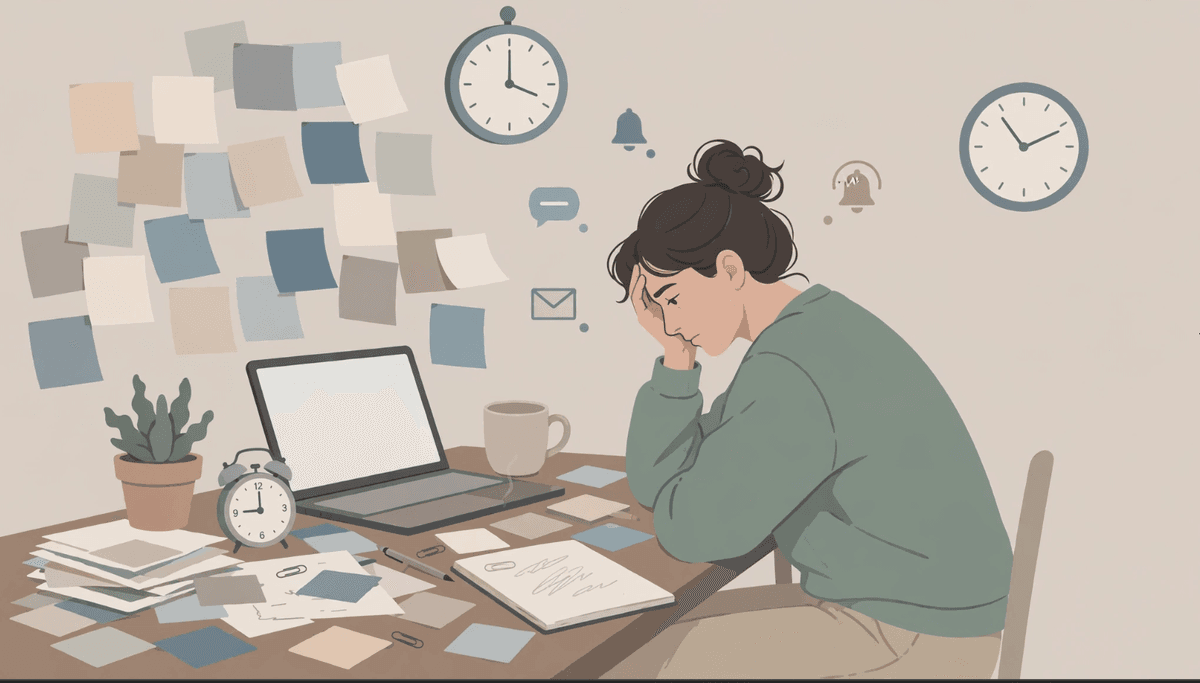
Why Being Busy Doesn't Always Mean You're Productive
We often treat busyness as proof that we're getting things done.
A full schedule can feel productive. Answering messages, checking notifications, switching between assignments, attending meetings, and constantly moving from one task to another can create the feeling that we're accomplishing a lot.
But being busy and being productive are not the same thing.
Productivity is not simply about how much activity happens during a day. It is about whether that activity actually moves something important forward.
The illusion of multitasking
One reason busyness can feel productive is multitasking.
We might write an assignment while checking messages, watch a lecture while scrolling through social media, or work on a project while constantly switching between different tabs.
The problem is that what we call multitasking is often task switching.
Research summarized by the American Psychological Association shows that switching between demanding tasks can create efficiency costs. When people repeatedly move their attention between tasks, they can lose time and make more mistakes.
Stanford researchers have also studied heavy media multitasking and found that people who frequently handled multiple streams of information performed worse on several measures of filtering irrelevant information and controlling attention in their experiments. Importantly, researchers have cautioned that these findings do not by themselves establish that multitasking causes these differences.
So opening five tabs and constantly jumping between them isn't necessarily five times as productive.
Sometimes it is simply five different ways to interrupt yourself.
Activity isn't the same as progress
Imagine two students.
The first spends three hours at a desk. They check their phone, reorganize their notes, respond to messages, browse for information, switch between subjects, and occasionally study.
The second spends one focused hour working on the most important part of an assignment.
Who was busier?
Probably the first student.
Who actually made more progress?
That depends on what they accomplished—not how many hours they appeared to be working.
This distinction matters because productivity can become focused on looking productive rather than producing something meaningful.
A long to-do list can feel satisfying even when the important task remains untouched.
Attention is a limited resource
Productive work requires attention.
Stanford's productivity guidance describes attention as something people can actively manage and recommends reducing unnecessary interruptions when concentration matters.
The American Psychological Association similarly reports that interruptions and task switching can interfere with effectiveness.
This doesn't mean everyone needs to work for hours without moving or taking breaks.
It means that the quality of attention matters.
Sometimes the most productive thing you can do is remove the things competing for your attention.
Put the phone away.
Close unnecessary tabs.
Stop checking your messages every few minutes.
Choose one meaningful task.
Then give it your attention.
Productivity isn't about doing everything
Another common mistake is believing that being productive means completing everything on your list.
It doesn't.
There will always be another message to answer, another notification to check, another task to add, and another thing that could theoretically be improved.
Productivity requires choices.
You have to decide what actually matters.
That might mean finishing an important assignment before answering every message. It might mean working on a difficult project instead of repeatedly reorganizing your to-do list.
Doing fewer things can sometimes allow you to do the important things better.
A better definition of productivity
Perhaps productivity shouldn't be measured by how exhausted you are at the end of the day.
It could be measured by what meaningful progress you made.
You don't necessarily need a twelve-hour workday.
You don't need a desk covered with notebooks.
You don't need to be constantly busy.
You need to know what you're trying to accomplish and protect enough attention to actually work toward it.
Because at the end of the day, being busy tells us how much activity happened. Productivity tells us what that activity achieved.
And those are two very different things.