Writers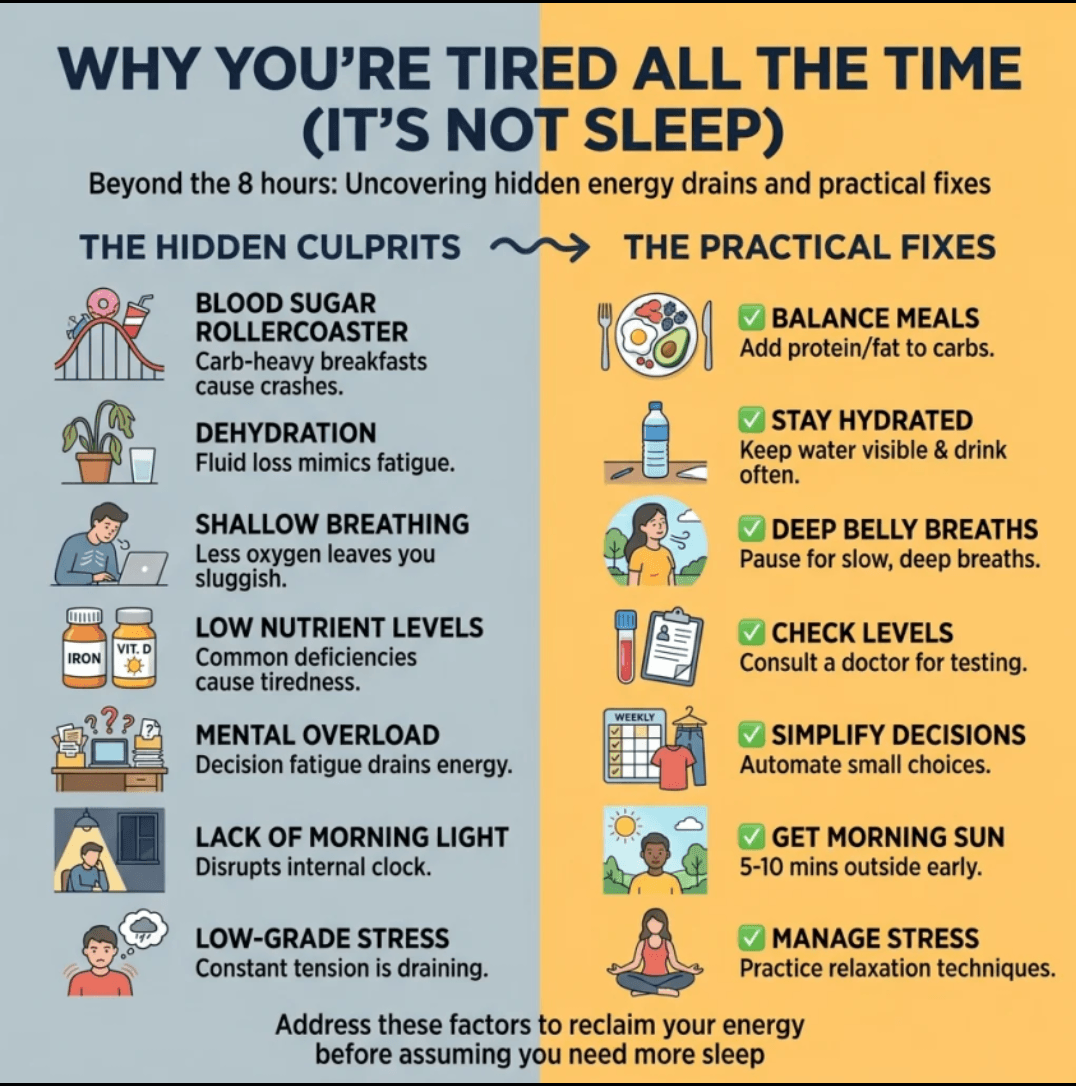
You go to bed on time. You get your seven or eight hours. You might even avoid caffeine after 2 p.m. and still, somehow, you wake up feeling like you never slept at all. If this sounds familiar, you've probably already tried the obvious fixes — earlier bedtime, blackout curtains, a new mattress — and none of it made a real difference. That's because sleep quantity isn't always the problem. A lot of chronic tiredness comes from things that have nothing to do with how long you were in bed.
Here are the less obvious culprits, and what you can actually do about each one.
1. Your blood sugar is on a rollercoaster
Eating a carb-heavy breakfast — say, cereal or a pastry with coffee — causes a sharp rise in blood sugar, followed by an equally sharp drop an hour or two later. That crash often shows up as fatigue, brain fog, or a sudden urge to nap, even though you technically ate recently.
Practical fix: Add protein or fat to every meal, especially breakfast. Eggs instead of cereal, or peanut butter on toast instead of toast alone. You don't need to cut carbs entirely; just stop eating them on their own.
2. You're dehydrated without feeling thirsty
Mild dehydration has been linked to reduced alertness and increased perceived fatigue in several studies. The tricky part is that by the time you feel thirsty, you're already somewhat dehydrated, and the early symptoms (low energy, mild headache, trouble concentrating) look exactly like tiredness.
Practical fix:Keep a glass or bottle of water somewhere visible on your desk. Most people underestimate how little they drink during a normal workday, especially if coffee is their main beverage.
3. You're breathing shallowly, most of the day
If you sit at a desk and stare at a screen, there's a good chance your breathing has gotten shallow without you noticing. Shallow chest breathing brings in less oxygen per breath, and over hours, that can leave you feeling sluggish in a way that's hard to pin on anything specific.
Practical fix: A few times a day, take five slow breaths where your stomach — not your chest — rises and falls. It sounds too simple to matter, but it takes fifteen seconds and costs nothing to try.
4. Your iron or vitamin D levels are low
Fatigue is one of the most common symptoms of iron deficiency, even in people who aren't clinically anemic. Vitamin D deficiency is also associated with tiredness, particularly in people who spend most of their time indoors or live somewhere with long winters. Both are common and both are easy to miss because the tiredness they cause feels generic.
Practical fix: This isn't something to self-diagnose. A basic blood test from your doctor can check both, and treatment (when needed) is usually straightforward — a supplement, not a lifestyle overhaul.
5. You're mentally overloaded, not physically tired
Decision fatigue is real. If your day is full of small choices — what to answer first, what to say in a meeting, what to make for dinner — your brain uses up mental energy the same way muscles use up physical energy. By evening, you can feel exhausted even if you didn't move much all day.
Practical fix: Reduce the number of small decisions you make on autopilot. Some people do this by planning meals for the week in advance, or by picking out clothes the night before. It's not about discipline; it's about freeing up mental bandwidth for the decisions that actually matter.
6. You're not getting natural light early in the day
Your body's internal clock relies heavily on light exposure, especially in the morning, to regulate energy levels and, later, sleep quality. If you wake up and go straight to artificial light indoors, that signal is weaker, which can throw off your alertness for the whole day even if you slept fine.
Practical fix: Spend even five to ten minutes outside within an hour of waking, without sunglasses. Cloudy days still work; outdoor light is far brighter than most indoor lighting, even when it doesn't feel that way.
7. You're carrying low-grade stress you've stopped noticing
Chronic low-level stress — the kind that doesn't feel like a crisis, just a constant hum — keeps your body in a slightly activated state. Over time, this can be draining in a way that's different from being sleepy. You might notice it as tension in your shoulders, a tight jaw, or trouble relaxing even during downtime.
Practical fix:This one doesn't have a quick trick. But noticing it is the first step — a lot of people carry this kind of stress for so long they've stopped registering it as stress at all, and just assume they're "tired" instead.
When it's worth seeing a doctor
If you've addressed the basics above and you're still exhausted, especially if the fatigue is severe, sudden, or paired with other symptoms like unexplained weight change, persistent pain, or mood changes, it's worth talking to a doctor. Conditions like thyroid issues, sleep apnea, and depression can all present primarily as fatigue, and they need proper diagnosis rather than lifestyle tweaks.
Tiredness isn't always a sleep problem, and treating it like one doesn't always help. Blood sugar, hydration, breathing, nutrient levels, mental load, light exposure, and stress can all produce the same symptom: feeling worn out. The good news is that most of these are things you can check or adjust yourself, often within a day or two, before assuming the answer is simply more sleep.