 Writers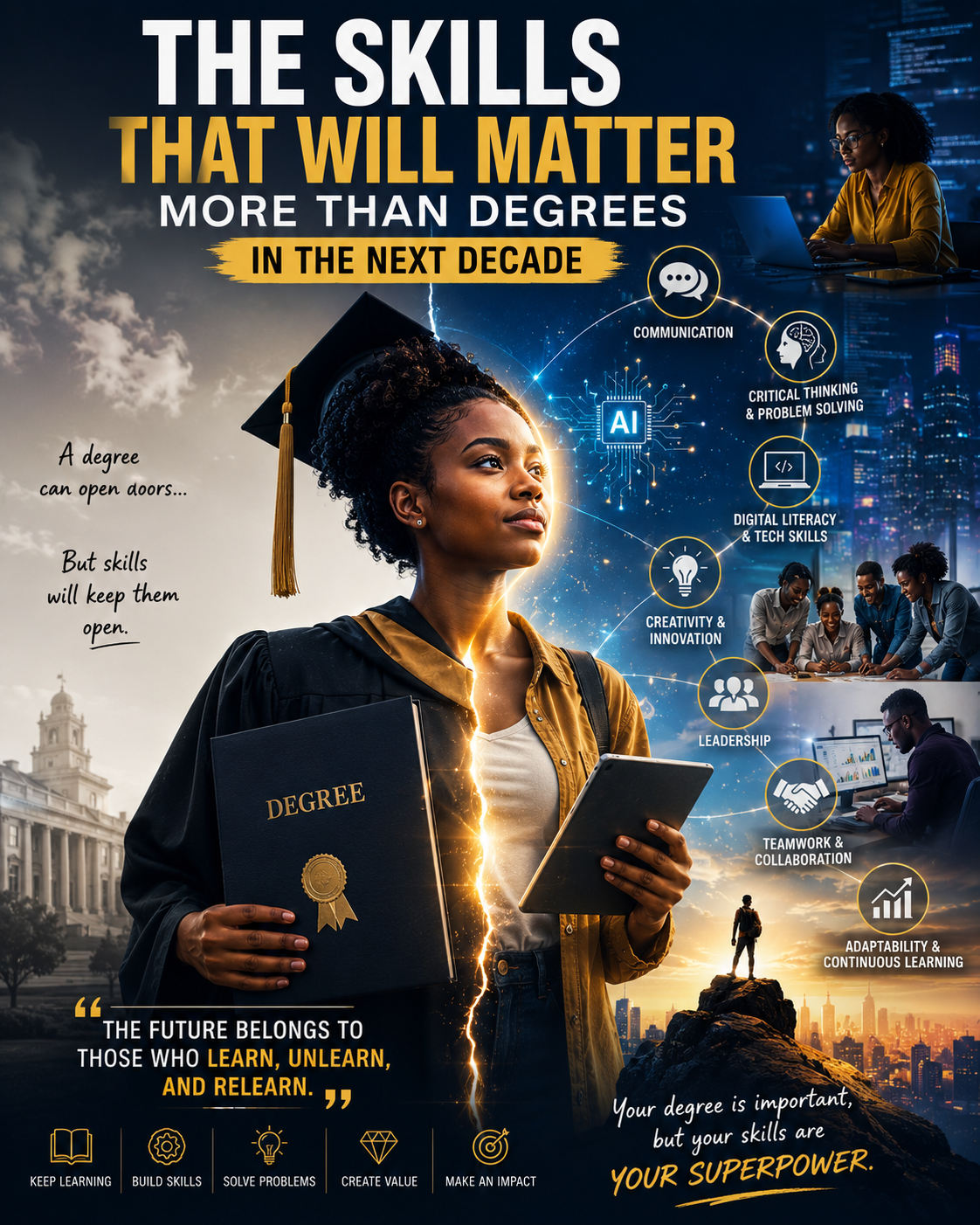
The Skills That Will Matter More Than Degrees in the Next Decade
"A degree may open the first door, but your skills determine how far you will go."
A few months ago, I overheard two university students discussing their future after graduation. One confidently said, "Once I get my degree, life is settled." The other smiled and replied, "I'm not so sure. Employers want more than certificates these days."
That brief conversation stayed with me because it reflects a reality many young people are beginning to face.
For decades, earning a university degree was considered the golden ticket to success. Parents worked tirelessly to send their children to school because education promised a brighter future. While education remains valuable, the world of work is changing faster than ever. Today, employers are not only asking "What did you study?" but also "What can you actually do?"
Technology has transformed almost every industry. Artificial Intelligence, automation, and digital tools are changing the way businesses operate. Some jobs that existed ten years ago have disappeared, while completely new careers have emerged. This rapid transformation means that learning can no longer stop after graduation.
A degree proves that you completed a course of study, but skills demonstrate that you can solve real problems.
Take communication, for example. A brilliant graduate who cannot express ideas clearly may struggle during interviews or in the workplace. On the other hand, someone who communicates effectively can inspire confidence, resolve conflicts, and build strong professional relationships.
Problem solving is another skill that has become increasingly valuable. Employers appreciate individuals who can identify challenges, think critically, and provide practical solutions instead of waiting for instructions. Every organization needs people who can adapt when circumstances change.
Digital literacy is no longer optional. Whether someone studies microbiology, accounting, law, or engineering, understanding digital tools has become essential. Basic knowledge of spreadsheets, online collaboration, data management, and emerging technologies can significantly increase employability.
Creativity is another quality that machines cannot easily replace. Artificial Intelligence can generate ideas based on existing information, but genuine innovation often comes from human curiosity, imagination, and life experiences. The people who will stand out in the coming years are those who can combine technical knowledge with creative thinking.
Perhaps one of the most underrated skills is emotional intelligence. The ability to understand emotions, work well with others, manage stress, and show empathy cannot be measured by academic transcripts. Yet these qualities often determine who becomes an effective leader.
Another important skill is adaptability. The world is changing so quickly that many professionals will need to learn new technologies several times during their careers. Those who embrace continuous learning instead of resisting change will remain relevant.
This does not mean degrees have lost their importance. Doctors still need medical school. Engineers still need engineering education. Teachers still require professional training. However, a degree should be seen as the beginning of learning, not the end of it.
Imagine two graduates applying for the same job. Both earned excellent grades. One only has academic qualifications. The other has the same qualifications plus communication skills, digital competence, leadership experience, and a portfolio of practical projects. It is easy to predict which candidate is more likely to receive the offer.
Young people should therefore begin preparing now. Learn a new skill online. Volunteer. Build projects. Improve public speaking. Read widely. Develop leadership abilities. Every new skill becomes another tool that can create opportunities in the future.
The next decade will reward those who are willing to keep learning long after they leave the classroom. In a world where information changes rapidly, the most successful people will not necessarily be those with the highest number of certificates but those with the greatest ability to adapt, create, and solve problems.
Your degree may introduce you to opportunities, but your skills will determine whether those opportunities become lasting success.