 Writers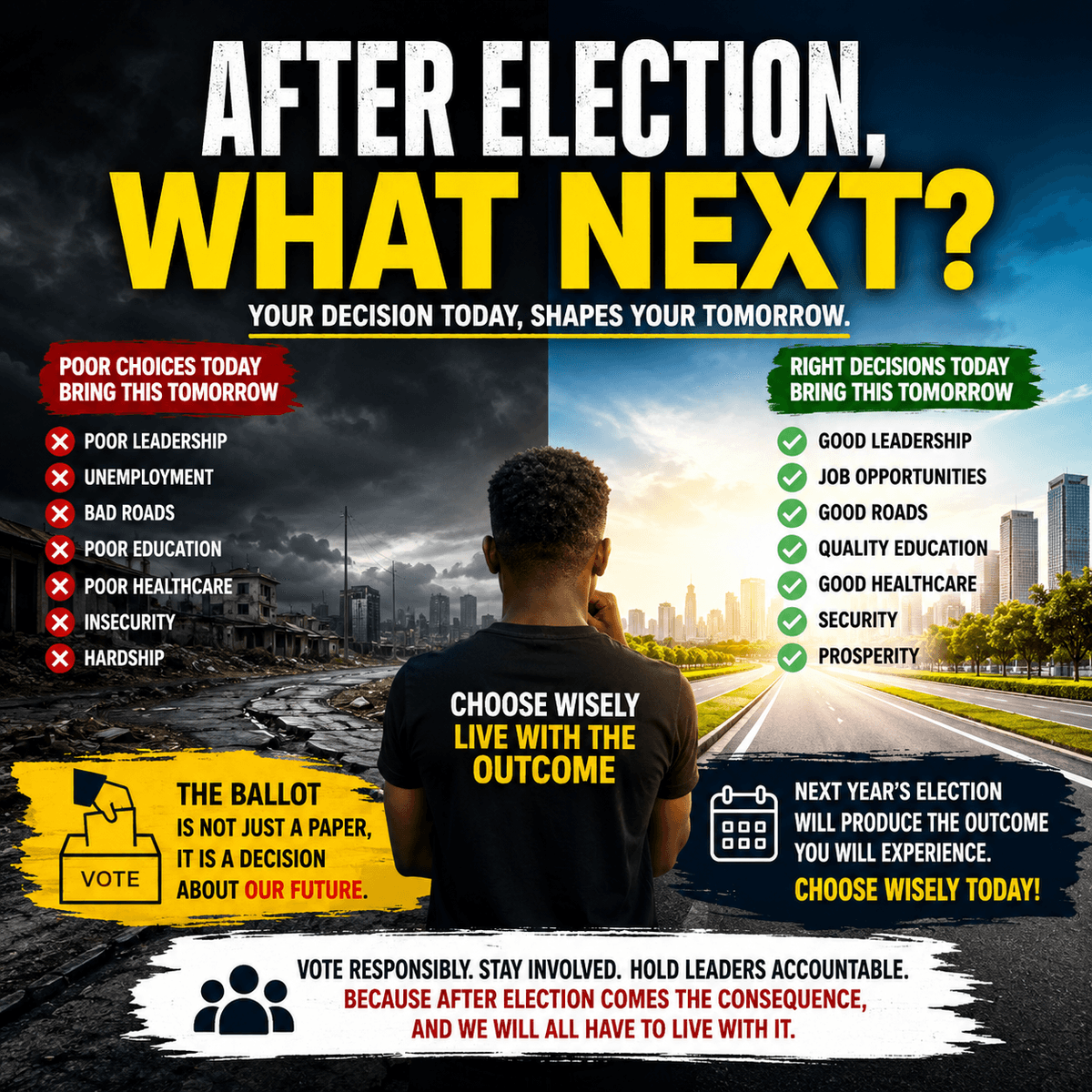
AFTER ELECTION, WHAT NEXT?
Elections come and go, but the consequences of our choices remain. Campaign posters will eventually come down, political rallies will end, promises will either be fulfilled or forgotten, and the politicians we celebrate today will return to their offices to begin the real work of governance. The question we should therefore be asking is not only “Who won the election?” but also “What happens next?”
An election is not the end of our responsibility as citizens. In many ways, it is only the beginning. Every election is a decision about the kind of leadership we want for the future. When we vote, we are not simply choosing a candidate; we are making a decision that can affect our schools, hospitals, roads, businesses, employment opportunities, security, electricity, agriculture and the general welfare of our communities.
This is why we must understand one important truth: the outcome of today's political decision will eventually give birth to the reality we experience tomorrow. If we choose leaders based solely on political party, ethnicity, religion, friendship, gifts or temporary financial inducement, we should not be surprised when the consequences of those choices appear in our daily lives. If we elect leaders who lack vision, competence, accountability and genuine concern for the people, the people will eventually bear the cost.
And when the consequences arrive, it will be too late to complain.
After the election, we must move beyond celebration and begin demanding accountability. Those who win must remember that victory at the polls is not a personal achievement; it is a mandate entrusted to them by the people. They must govern for everyone, not only for those who voted for them, not only for members of their political party, and certainly not only for their friends and political associates.
The opposition also has a responsibility. Losing an election should not mean abandoning the people. Constructive opposition is an important part of democracy. Those who did not win should continue to ask questions, scrutinize government policies and defend the interests of the people without turning every issue into political warfare.
We must stop treating politicians as untouchable personalities. A public office holder is a servant of the people. The fact that someone won an election does not mean that citizens have surrendered their right to ask questions. Democracy does not end on election day.
- If a government promises to improve education, we must ask: What has been done?
- If they promise better healthcare, we must ask: Where are the hospitals and medicines?
- If they promise employment, we must ask: Where are the opportunities for our young people?
- If they promise infrastructure, we must ask: Where are the roads, water projects, electricity and other basic amenities?
- If they promise transparency, we must ask: How is public money being spent?
These questions are not acts of disrespect. They are the responsibilities of citizens in a democracy. We must also understand that political decisions have consequences that can last for years. The excitement of receiving a small gift during an election campaign may last for a day, a week or perhaps a month. But the government that emerges from that election may remain in power for years. A bag of rice, a small amount of money, a political appointment or temporary favour cannot compensate for years of poor leadership.
After election, what next?
The answer should be: accountability, participation and vigilance.
We must monitor the promises made during campaigns. We must keep records of what politicians promised and compare those promises with what they eventually deliver. Civil society organizations, journalists, students, professionals, religious institutions, community leaders and ordinary citizens all have a role to play.
We must also resist the dangerous culture of defending politicians even when they are clearly failing. Blind loyalty to political personalities can be more damaging than political opposition. A good leader should be praised when doing well and questioned when failing. The next election will eventually come. When it does, we will again be presented with choices. The decisions we make then will be influenced by what happened between one election and another.
That is why the period after an election is extremely important.
We must watch.
We must ask questions.
We must demand results.
We must participate.
We must hold leaders accountable.
And when the next election arrives, we must remember the consequences of our previous choices.
If a leader performed well, reward performance. If a leader failed, do not allow propaganda, money, political party or empty promises to erase your memory.
The future of our communities is too important to be surrendered to temporary political emotions.
Let us therefore stop asking only, “Who won?”
Let us begin asking:
What will the people gain?
What will change?
What promises will be fulfilled?
Who will hold the government accountable?
And most importantly:
What kind of future are we creating with the choices we make today?
Because after every election comes governance. After every campaign comes responsibility. After every promise comes the test of performance.
And eventually, another election will come.
When that day arrives, the outcome will largely reflect the choices we made today and what we allowed to happen afterward.
Election is not the destination. It is the beginning of another chapter.
So, after election, what next?
We watch. We participate. We demand accountability. And we remember.