Writers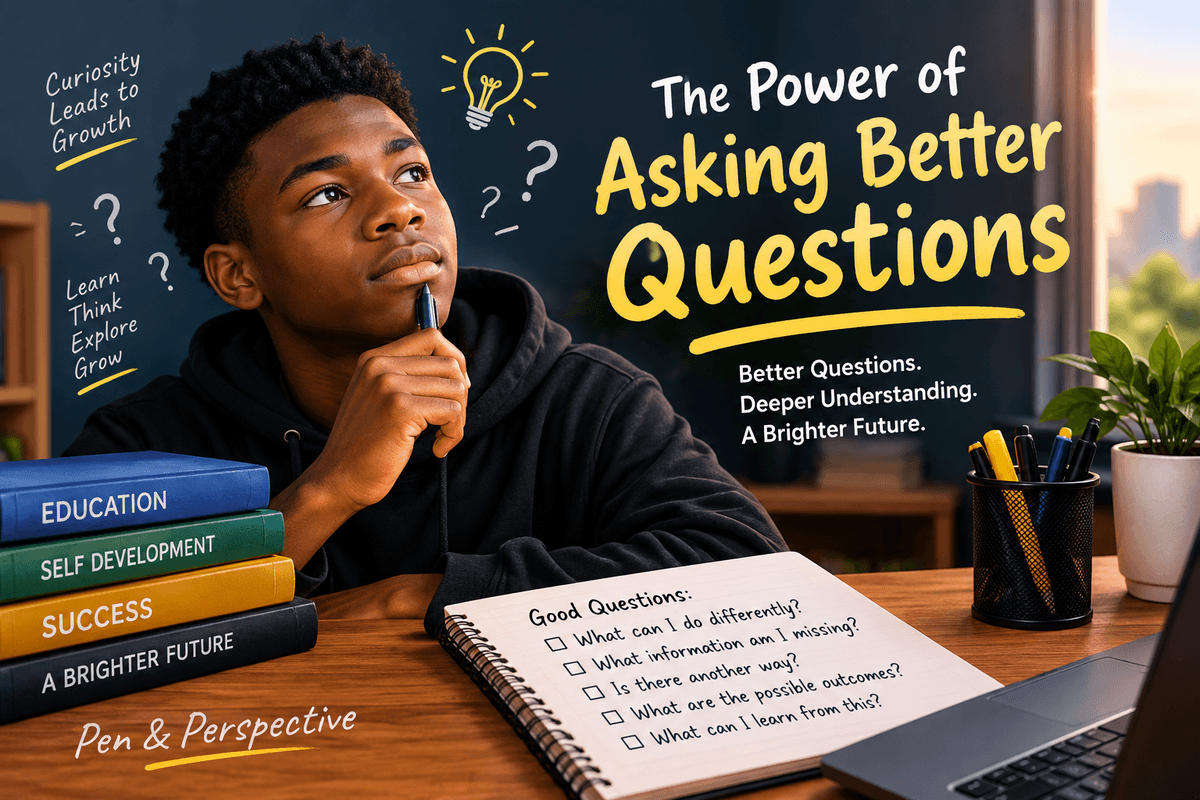
In a world filled with information, knowing how to ask the right questions has become one of the most valuable skills a person can develop. Every day, we have access to answers through books, teachers, smartphones, videos, search engines, and conversations. Yet having access to information does not automatically mean we understand it. Sometimes, the quality of the answer we receive depends on the quality of the question we ask.
Asking questions is something we begin doing as children. We ask why the sky is blue, why people work, how machines function, and why certain things happen. Unfortunately, as many people grow older, they sometimes become afraid of asking questions. They may worry that their question sounds foolish or that other people will judge them.
But asking a question is not a sign of weakness. It is often a sign of curiosity and a willingness to learn.
Questions Help Us Learn
One of the simplest ways questions improve our lives is by helping us understand things more deeply.
Imagine a student who receives a low score on an examination. There are two possible reactions. The student might simply conclude, “I am not good at this subject.” Another option is to ask, “What exactly did I misunderstand?” The second question creates an opportunity for improvement.
Good questions turn mistakes into lessons. Instead of simply accepting an outcome, we begin investigating the reason behind it.
This approach can be useful far beyond school. If a business fails, the owner can ask what went wrong. If a friendship becomes difficult, someone can ask what caused the misunderstanding. If a personal goal is not achieved, a person can examine what prevented progress.
The question does not immediately solve the problem, but it points the mind toward a solution.
Not Every Question Has to Begin With “Why”
People often associate good questions with the word “why,” but useful questions can take many forms.
“What can I do differently?”
“What information am I missing?”
“Is there another way to approach this?”
“What evidence supports this idea?”
“What would happen if I tried something else?”
These questions encourage reflection rather than simply searching for someone to blame.
For example, asking “Why am I always unlucky?” may encourage a person to focus on circumstances outside their control. Asking “What can I change about my approach?” creates a more productive direction.
The difference may seem small, but the mindset behind the questions can be very different.
Questions Can Prevent Poor Decisions
Many bad decisions happen because people act too quickly.
Before accepting information, making a purchase, choosing a career, or following advice, it can be helpful to pause and ask questions.
Is this information reliable?
What are the possible consequences?
What am I assuming?
Do I understand the risks?
Am I making this decision because I genuinely want it, or because I am under pressure?
These questions create space for careful thinking.
In an age where information can spread rapidly, this ability is particularly important. Not everything we see online is accurate. A person who learns to question information responsibly is less likely to accept every claim simply because it appears convincing.
Questioning does not mean refusing to believe everything. It means developing the habit of examining information before accepting it.
Asking Questions Can Build Confidence
Some people believe confidence means always having an answer. In reality, confident people can also admit when they do not know something.
Saying, “I don't understand this. Could you explain it?” requires honesty.
When people become comfortable asking questions, learning can become less intimidating. They no longer need to pretend that they understand everything. Instead, they can identify what they do not know and actively work on it.
This can be especially valuable for young people. Nobody begins life knowing everything. Education is not about knowing all the answers; it is about developing the ability to find, understand, evaluate, and apply knowledge.
Ask Questions, But Also Listen
Asking better questions is only half of the skill. Listening carefully to the answers is equally important.
A person who asks questions but ignores the answers is not truly learning. Good communication requires curiosity, patience, and attention.
Sometimes the best question is followed by a period of silence, allowing another person enough time to explain their thoughts.
We can also learn to ask follow-up questions. If someone gives an interesting answer, instead of immediately changing the subject, we can ask, “What made you think that?” or “Can you give me an example?”
These simple habits can lead to deeper conversations and stronger understanding.
Curiosity Can Change Your Future
A question may look small, but it can lead to a major discovery.
A student who asks about an unfamiliar career may discover a profession they had never considered. Someone curious about computers might begin learning programming. A person interested in writing might ask how published authors developed their skills and eventually begin writing themselves.
Progress often begins with curiosity.
The next time you encounter something you do not understand, resist the temptation to ignore it. Ask. Research. Listen. Think. Then ask another question if necessary.
You do not need to know everything to move forward. You simply need to remain willing to learn.
Sometimes, the question that changes your future is not the one that gives you an immediate answer. It is the one that makes you curious enough to keep searching.
Pen & Perspective