 Writers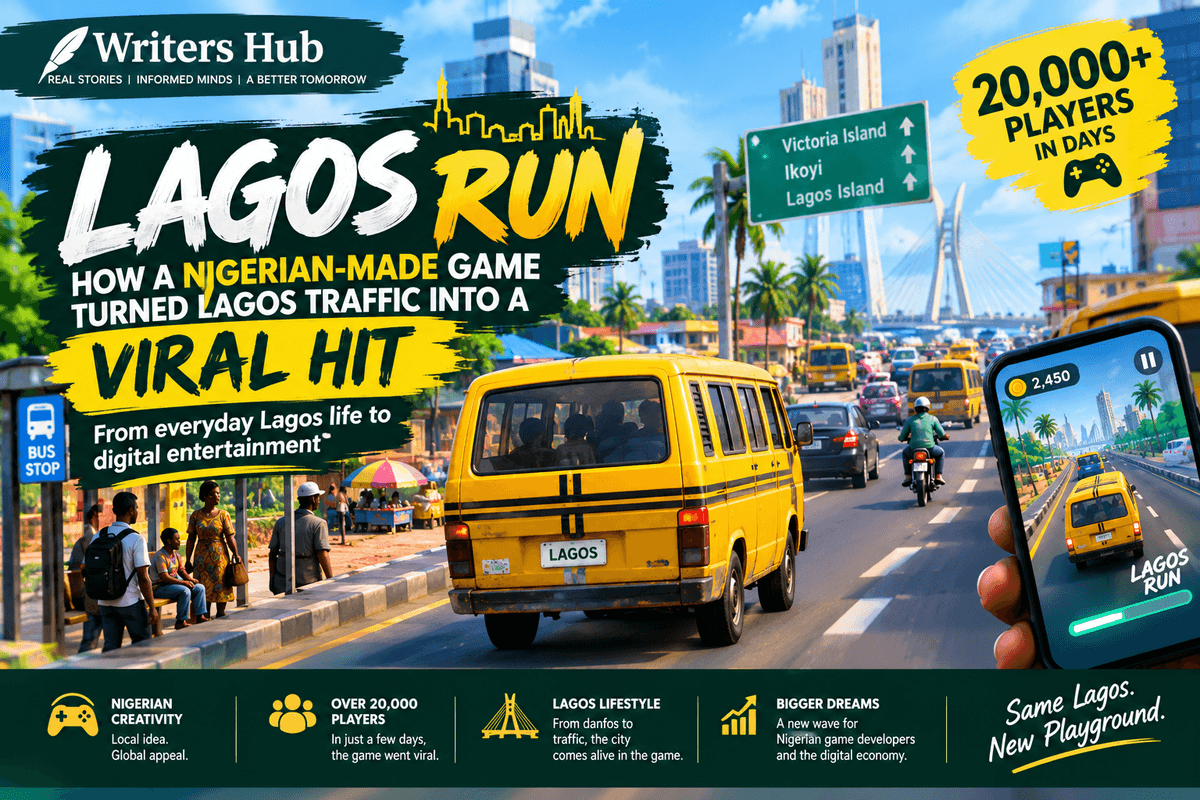
Lagos Run: How a Nigerian-Made Game Turned Lagos Traffic Into a Viral Digital Hit
Lagos traffic is something many Nigerians complain about almost every day. From danfos and bus stops to pedestrians, roadblocks and the endless struggle to move from one point to another, the experience can be exhausting. But a Nigerian developer has found a completely different way to turn that familiar experience into entertainment.
It is called Lagos Run, a browser-based endless-runner game created by Berlin-based Nigerian engineer Opeyemi Adeniran. Within days of its September 2026 release, the game attracted more than 20,000 players, with users sharing scores and competing on leaderboards. (Businessday NG)
The concept is simple but immediately recognisable. Players take control of a yellow Lagos danfo, pick up passengers, navigate through traffic and avoid obstacles such as pedestrians, tyres and other vehicles. The game also includes bus stops, missions, levels and a leaderboard where players can compare their performances.
What makes Lagos Run interesting is not necessarily its complicated gameplay. Instead, its strength comes from how familiar the environment feels to Nigerians.
For someone who has travelled around Lagos in a danfo, the yellow bus, traffic, bus stops and sounds immediately create a sense of recognition. The developer has essentially taken an everyday Nigerian experience and transformed it into a digital playground.
Adeniran reportedly built the game in about four to five weeks, beginning it as a side project. He has explained that moving away from Nigeria and missing home helped inspire the project. Rather than simply remembering Lagos, he decided to recreate part of the experience digitally. (SierraleoNews)
Another interesting aspect is the game’s accessibility. Lagos Run is played directly through a web browser, meaning users do not need to download a large application or create an account before playing. This approach can make it easier for people using smartphones or dealing with limited storage and data resources.
The game also includes a radio feature designed to recreate part of the experience of travelling in a Lagos danfo. Players can encounter music and radio elements while driving through the virtual city. (SierraleoNews)
The success of Lagos Run also highlights a bigger opportunity for Nigeria’s gaming industry.
For years, Nigerian developers have experimented with turning local culture into games. Studios have created titles inspired by danfos, okadas, Lagos street life and other aspects of everyday Nigerian experiences. BusinessDay reports that games such as Okada Ride, Aboki Run and other locally inspired projects demonstrate how Nigerian culture can become the foundation for digital entertainment. (Businessday NG)
This is important because Nigerian developers do not necessarily need to copy the biggest international gaming companies to attract attention. A locally developed game can compete for attention by offering something international games cannot easily reproduce: authentic Nigerian experiences.
Imagine a game built around Lagos traffic, another around a Nigerian market, one around football culture, or even a game based on the everyday experience of running a small business in Nigeria. These ideas may look ordinary in real life, but they can become interesting digital experiences when developers combine storytelling, humour and technology.
Artificial intelligence is also changing how quickly independent developers can experiment. Reporting on Lagos Run says Adeniran used AI-assisted tools and AI-generated graphics during development. This suggests that some developers can now test ideas much faster than was possible several years ago. (Businessday NG)
However, going viral is only the beginning.
The bigger challenge for Nigerian game developers is turning attention into sustainable businesses. Games can generate revenue through advertising, sponsorships, branded challenges, partnerships, merchandise and other forms of intellectual property.
For example, a telecommunications company could sponsor a game challenge, a bank could create a branded digital experience, or a consumer brand could become part of the virtual environment.
Lagos Run therefore represents more than a game about a danfo. It is an example of how ordinary Nigerian experiences can become valuable creative content when combined with technology.
The early response also shows that Nigerians are willing to support locally created digital entertainment when it connects with their everyday lives.
For years, Lagos traffic has been seen mainly as a problem. Lagos Run presents another perspective: the same traffic, danfos, roads and urban chaos can become raw material for creativity.
The next question is whether Nigerian developers can build on this momentum and create globally recognised games, characters and digital brands rooted in African experiences.
Lagos Run may have started as a side project, but its early reception demonstrates the possibilities that exist when Nigerian creativity meets modern technology.
The traffic may still be real, but now Lagos has a digital road to run on.