Writers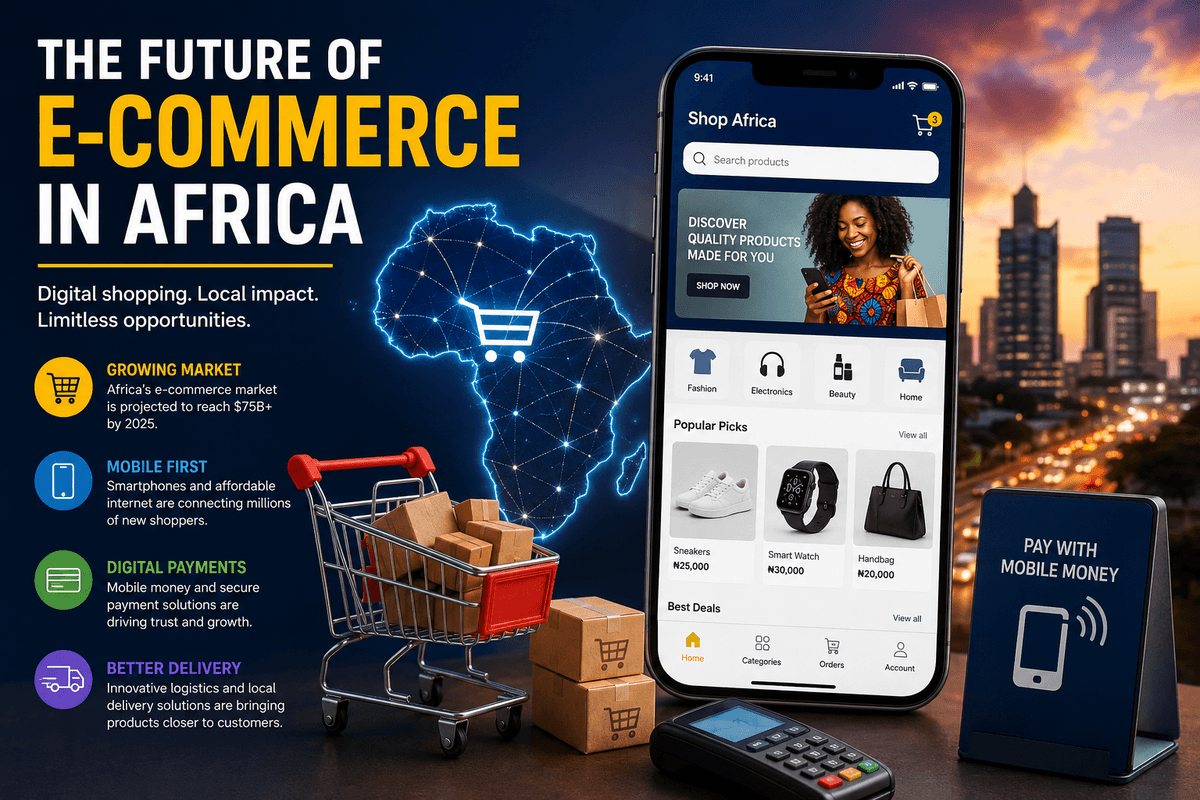
The Future of E-Commerce in Africa: How Digital Shopping Is Reshaping the Continent
For many years, buying and selling in Africa was largely built around physical markets, roadside shops, supermarkets, and personal relationships between customers and sellers. Today, that picture is changing rapidly. A customer can discover a product on social media, ask questions through a messaging app, make a digital payment, and have the product delivered without ever visiting a physical store.
This transformation is being driven by the rapid growth of smartphones, internet access, digital payments, social media, and a young population that is increasingly comfortable doing business online. As these trends continue, e-commerce could become one of the most important drivers of business growth across Africa.
A Market Full of Opportunity
Africa has one of the world's youngest populations, and this creates a huge opportunity for digital commerce. Younger consumers are generally more willing to experiment with new technologies and discover businesses through platforms such as Instagram, TikTok, Facebook, and messaging applications.
For entrepreneurs, this means a physical shop is no longer the only way to reach customers. A small fashion brand operating from a bedroom can showcase its products online and potentially attract customers from different cities. A food vendor can receive orders through messaging apps, while a student selling accessories can build a customer base without paying for expensive shop rent.
This lowers some of the traditional barriers to starting a business and gives small entrepreneurs an opportunity to compete in markets that were once dominated by larger companies.
Social Media Is Becoming the New Marketplace
One of the most interesting developments in African e-commerce is the connection between social media and shopping.
Many customers do not begin their shopping journey by visiting an online store. Instead, they discover products while scrolling through social media. A short video demonstrating a product, a customer review, or an attractive photograph can turn an ordinary social-media post into a sales opportunity.
This has created a new form of entrepreneurship in which content creation, marketing, customer service, and selling are closely connected.
Businesses that understand how to tell stories and build trust online may have an advantage over businesses that simply post pictures of products with prices. Customers want to know who is behind a brand, whether the product is genuine, how quickly it can be delivered, and what happens if something goes wrong.
Digital Payments Will Be Crucial
Another major factor shaping the future of e-commerce is digital payment technology.
Customers need convenient and trustworthy ways to pay for products, while businesses need reliable systems for receiving and managing money. Mobile money, bank transfers, cards, digital wallets, and other payment solutions are making online transactions increasingly practical.
However, payment accessibility remains an important challenge. Not every potential customer has access to the same financial services, and some consumers are still uncomfortable paying for products they have not physically seen.
Building confidence will therefore be just as important as building payment infrastructure. Businesses that offer transparent pricing, clear return policies, order confirmations, and reliable customer support can gradually make online shopping feel safer.
Logistics Could Determine the Winners
If payment is the heart of e-commerce, delivery is arguably its backbone.
A customer may be willing to order something online, but the experience can quickly become frustrating when delivery is expensive, slow, or unreliable. Africa's enormous geographical size, traffic problems, road conditions, addressing systems, and differences in infrastructure can make last-mile delivery challenging.
This challenge, however, also creates opportunities for entrepreneurs.
Local delivery companies, logistics startups, dispatch riders, warehouses, pickup stations, and technology-enabled transportation services can all become important parts of the e-commerce ecosystem. Instead of every online business building its own delivery network, specialized logistics companies can provide these services at scale.
Trust Will Become a Competitive Advantage
One of the biggest opportunities for African e-commerce is also one of its biggest challenges: trust.
Customers want confidence that the person selling a product online actually exists, that the product will match its description, and that their money will not disappear after placing an order.
Businesses can build trust through consistent communication, genuine product images, customer reviews, transparent policies, secure payment options, and professional branding.
In the future, reputation could become one of the most valuable assets an online business owns. A company with hundreds of satisfied customers and strong reviews may be able to grow faster than a competitor offering a slightly cheaper product.
What the Future Could Look Like
The future of African e-commerce will probably not look exactly like e-commerce in Europe, Asia, or North America. African businesses will develop solutions that fit local realities.
Social commerce may continue to grow. Small businesses may use messaging platforms as storefronts. Digital payments may become more widespread. Delivery networks may become more organized, while artificial intelligence and automation could help businesses understand customers, manage inventory, create marketing content, and provide customer support.
The most successful businesses may not necessarily be the biggest ones. They could be the companies that understand their customers best and solve everyday problems efficiently.
Conclusion
The future of e-commerce in Africa is filled with both opportunities and challenges. Technology is making it easier for entrepreneurs to reach customers, but success will depend on more than simply putting products online.
Businesses will need to earn trust, provide reliable delivery, offer convenient payment methods, create valuable content, and deliver excellent customer experiences.
For African entrepreneurs, this is an exciting time. The next major online brand may not come from a huge corporation. It could come from a young entrepreneur with a smartphone, a good idea, and the determination to solve a real problem.
E-commerce is not simply changing the way Africans shop. It is changing the way Africans build businesses—and the biggest transformation may only be beginning.