 Writers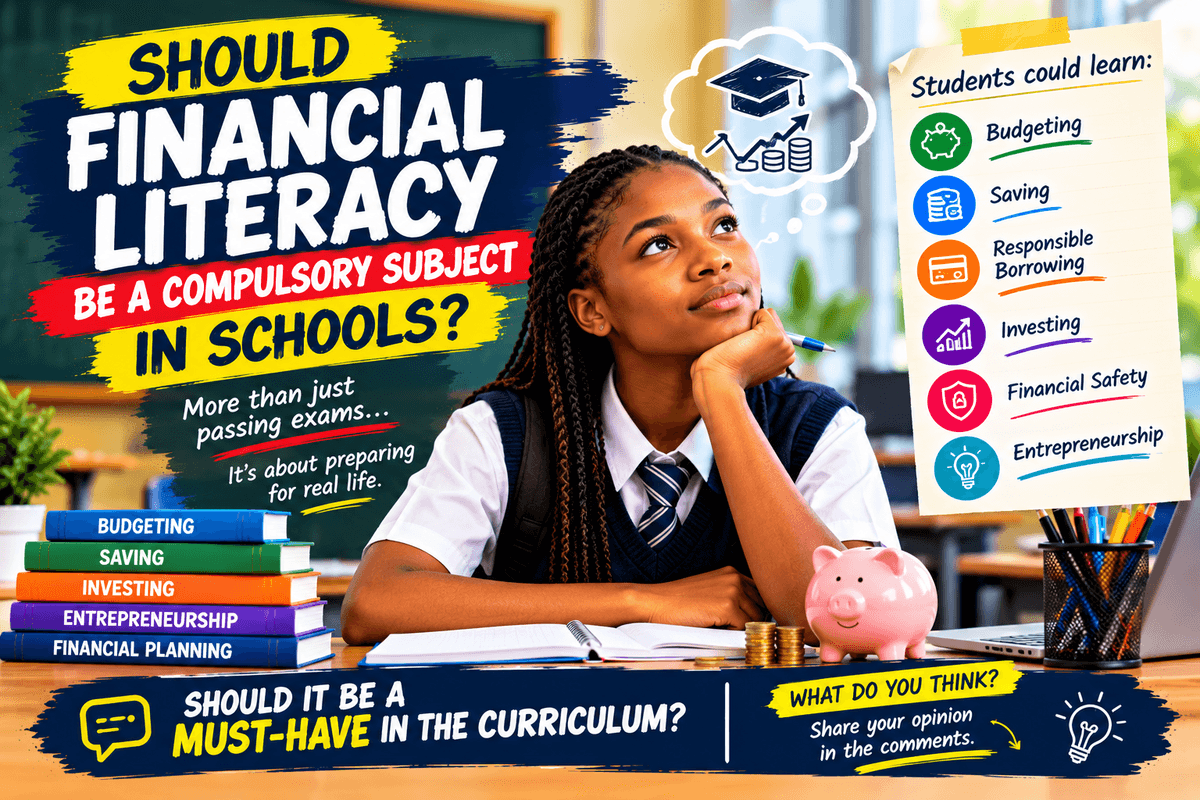
Imagine a student who spends years in school, passes Mathematics, English, Biology, Economics and other subjects with excellent grades, graduates from university and gets a good job.
But when the salary begins to come, the person does not know how to create a budget, save consistently, manage debt or plan for the future.
This raises an important question:
Are schools preparing students only to pass examinations, or are they preparing them to manage real-life responsibilities?
One subject that could make a major difference is financial literacy.
Why Do Students Need Financial Education?
Money is part of everyday life.
Whether someone becomes a teacher, doctor, engineer, civil servant, entrepreneur, farmer, designer or freelancer, that person will eventually have to make financial decisions.
They will need to understand income, expenses, saving, budgeting, borrowing and financial planning.
Yet many young people enter adulthood without having received practical education about these issues.
Some learn through experience, while others learn after making expensive mistakes.
Should students have to wait until they are adults before learning how to manage money?
What Could Students Learn?
Financial literacy does not necessarily mean teaching students complicated investment strategies.
It could begin with simple and practical concepts.
Students could learn how to prepare a personal budget, distinguish between needs and wants, develop saving habits, understand responsible borrowing and avoid unnecessary spending.
They could also learn about entrepreneurship, basic banking, digital financial safety and the importance of planning for unexpected expenses.
For older students, lessons could introduce concepts such as interest, inflation, investment risks, insurance and responsible use of credit.
These are skills that can remain useful long after a student leaves the classroom.
Would It Distract Students From Other Subjects?
This is one argument against adding another compulsory subject.
Schools already have many subjects, and students sometimes struggle to manage their academic workload.
Some may argue that financial education should be taught by parents at home rather than added to the school curriculum.
That argument has some merit.
Parents can teach children valuable lessons about money through everyday activities such as saving, shopping and budgeting.
However, not every child grows up in a home where financial matters are openly discussed.
A school-based programme could therefore ensure that students, regardless of their family background, receive at least a basic understanding of financial responsibility.
Education Should Prepare Students for Life
The purpose of education should not be limited to producing students who can answer examination questions.
Students should also acquire knowledge and skills that can help them make responsible decisions after leaving school.
Financial literacy could become part of that preparation.
A student who understands how to manage money may be better prepared to handle their first salary, start a small business, save for an important goal or avoid financial decisions that could create unnecessary problems.
Of course, financial education alone will not make someone financially successful.
Good financial decisions also require discipline, opportunities, access to decent employment and a favourable economic environment.
But knowledge is still an important starting point.
THE BIG QUESTION
Should Financial Literacy become a compulsory subject in Nigerian secondary schools?
Or should financial education remain the responsibility of parents and guardians?
If you could introduce one practical subject into the school curriculum, what would you choose: Financial Literacy, Entrepreneurship, Digital Skills, Communication Skills, Vocational Training or something else?
Share your opinion in the comments. Let's hear what you think.
