Writers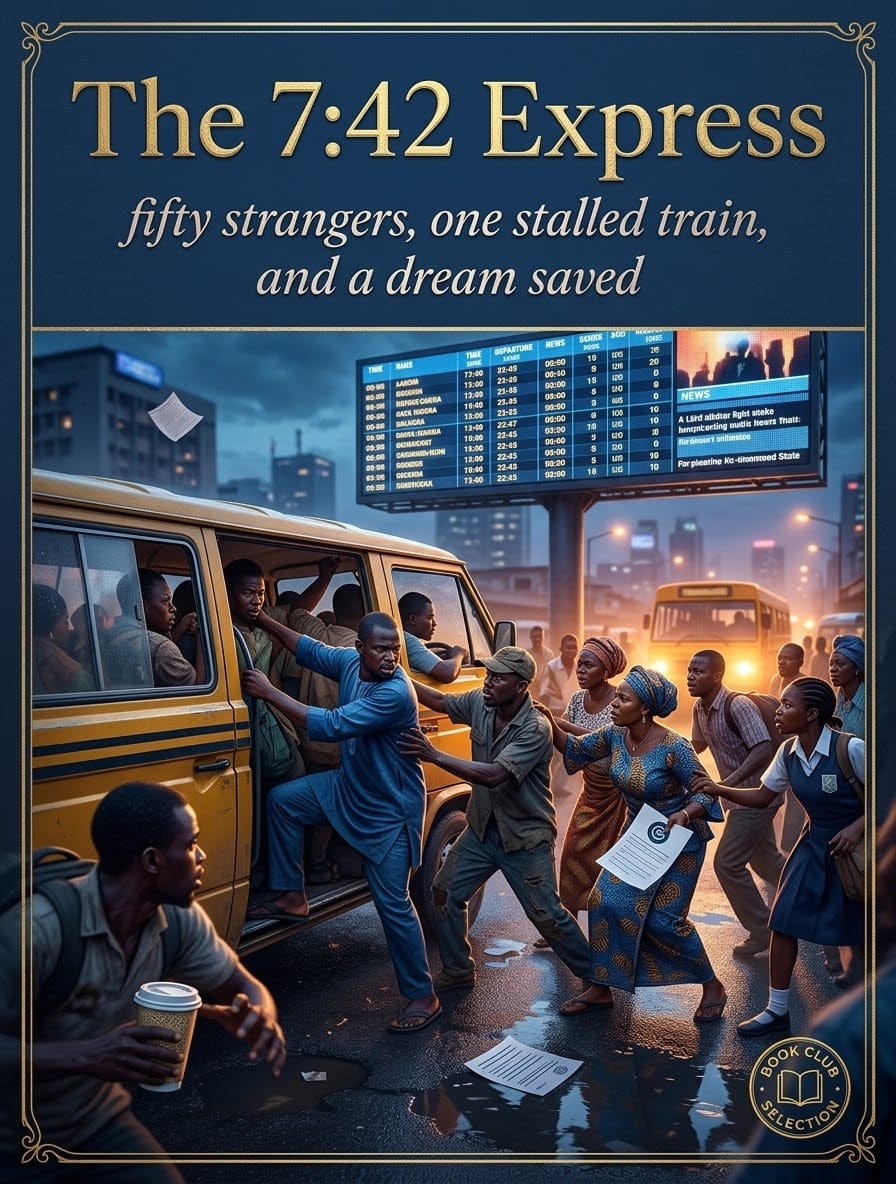
The 7:42 AM express train into the city was crowded, tense, and quiet. On Monday mornings, everyone in Car 3 followed the same unspoken rules: don't make eye contact, protect your personal space, and don't move suddenly, or someone's coffee will end up on the floor.
In the middle of the car stood Maya, holding the overhead pole with one hand and a worn leather portfolio with the other. Inside it was three months of work, a pitch for an eco-friendly housing project. If it went well, she could start her own architecture practice. If it didn't, she would be back to scrambling for freelance jobs.
Across from her sat Mr. Henderson, an older man in a neat pinstripe suit, reading a financial report with his glasses low on his nose. He looked completely calm, like someone who had survived thousands of commutes. Standing between them was Julian, a nervous art student with a huge canvas bag and a tray holding two caramel macchiatos.
Then the train's emergency brakes screamed.
The whole carriage lurched forward. Maya lost her balance, and her portfolio flew open, sending her hand-drawn plans into the air like white birds. Julian stumbled, and one of his coffees shot toward Mr. Henderson's tie. But Henderson, who had spent forty years on trains, reacted instantly. He threw up his briefcase to block the coffee and grabbed the pole with his other hand. The coffee splashed harmlessly on the leather, and Maya's drawings drifted down over shoes, laps, and bags.
The train stopped in a dark tunnel. A voice on the speaker announced a signal delay and asked everyone to stay seated. The passengers groaned. Everyone had somewhere to be.
Maya dropped to her knees and began grabbing her pages. "I'm so sorry," she kept saying, her voice shaking. Julian stood frozen, holding the last coffee and nearly in tears, offering to pay for dry cleaning.
Before the stress could turn into anger, Mr. Henderson took off his glasses, put them in his pocket, and unbuttoned his jacket. He told Julian, kindly, to put the last coffee on the floor before it got lost too. Then, to everyone's surprise, the well-dressed older man knelt down and started carefully picking up Maya's drawings, holding each one by its corners so the ink wouldn't smudge.
"Architectural drawings?" he asked.
Maya explained that her presentation was at 8:30 and the whole board would be waiting. "Then we'd better make sure they're in order," Henderson said calmly. He pointed out a page under a teenager's shoe, and she quickly handed it over.
Something shifted in the carriage. The man beside Julian passed along three pages that had landed in his lap. A woman in medical scrubs found a detailed drawing behind her umbrella. Passengers began handing pages forward from person to person, like a chain of helping hands. For ten minutes, fifty strangers forgot their own rush and worked together to rebuild a young woman's work. Julian helped sort the numbered pages, and Henderson checked that everything was in the right order.
When the train started moving again and reached Central Station at 8:22 AM, Maya's portfolio was full once more. The pages were a little creased, but all there.
As the doors opened and the crowd surged out, Maya turned back toward Car 3. Mr. Henderson gave her a small, encouraging nod, and Julian flashed an anxious thumbs-up.
Maya took a deep breath, tightened her grip on the portfolio, and walked into the busy city. She was no longer just trying to survive the morning rush. She had been lifted by it.