Writers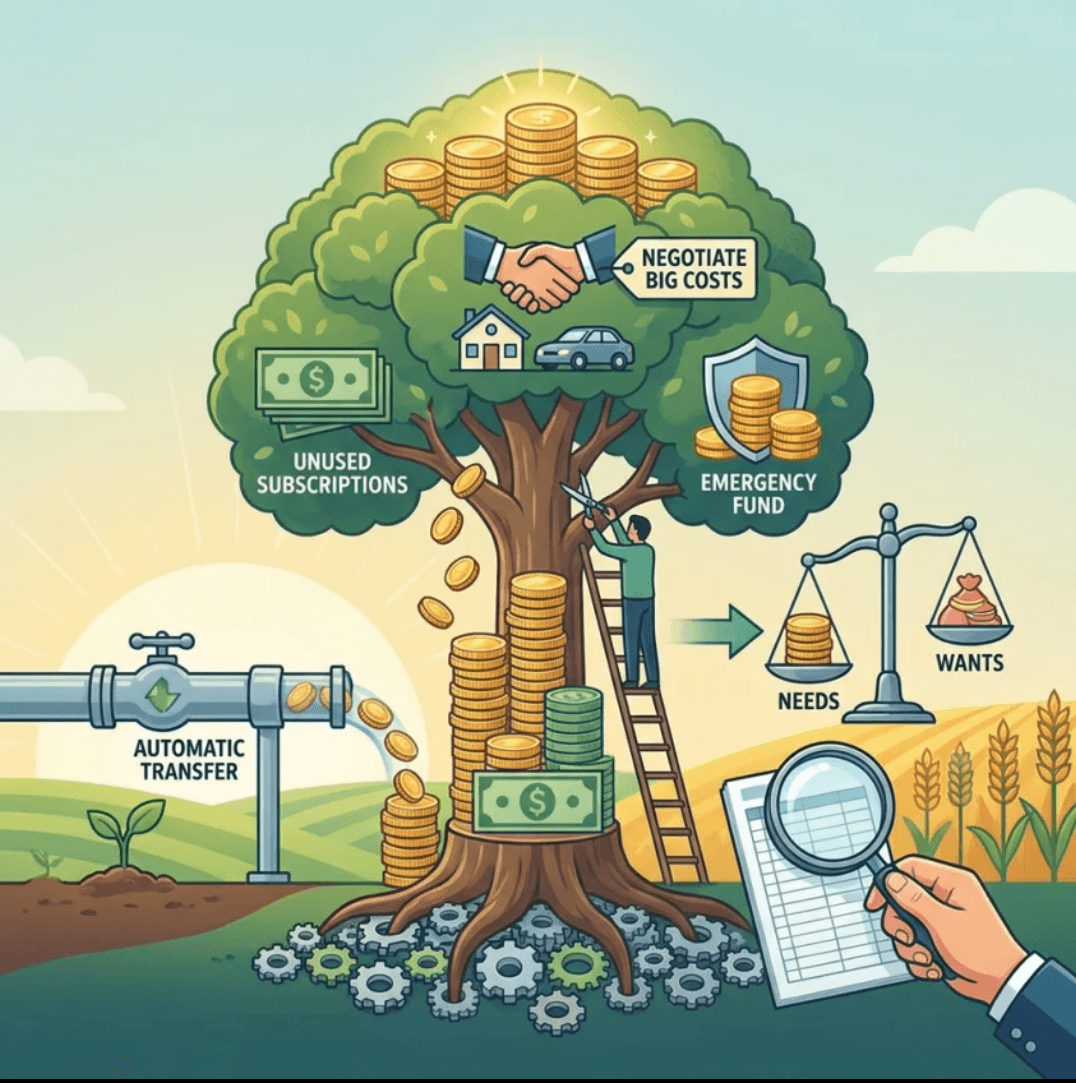
Most people picture wealth as the result of one big move: a lucky investment, a business that takes off, a windfall. But talk to people who've actually built financial security over time, and the story is usually less dramatic. It's a series of small, repeated decisions that never make headlines but add up in ways that are easy to underestimate.
This isn't about frugality for its own sake or chasing a "get rich" formula. It's about a handful of habits that shift the odds in your favor, quietly, over years. Here's what they actually look like in practice.
1. THEY AUTOMATE SAVING BEFORE THEY SEE THE MONEY
The habit isn't "I try to save what's left at the end of the month." It's "money moves to savings or investments the moment it arrives, before it can be spent."
This works because it removes willpower from the equation. If $300 leaves your checking account the day your paycheck lands, you adjust your spending around what's left — the same way you'd adjust if your salary were $300 lower. Most people never notice the difference after a month or two. But if you wait to save whatever's left over, there's rarely anything left.
A simple version: set up an automatic transfer to a separate savings or brokerage account for the day after payday. Start with an amount that doesn't feel painful and increase it slightly every few months.
2. THEY TRACK SPENDING IN A WAY THAT ACTUALLY STICKS
Budgeting apps and spreadsheets fail for a lot of people because they demand constant upkeep. A habit that lasts is usually simpler: checking account balances regularly, glancing at where money went each week, or reviewing one bank statement a month.
The goal isn't precision. It's awareness. People who know roughly what they spend on dining out, subscriptions, or impulse purchases tend to catch problems early — before a habit turns into a pattern that's hard to undo. People who avoid looking at their spending altogether often discover the problem only when it's already large.
3. THEY SEPARATE WANTS FROM COMMITMENTS
A recurring subscription, a car payment, a gym membership you're not using — these are commitments, and they behave differently from one-time purchases. A $15 impulse buy costs $15. A $15 monthly subscription you forget about costs $180 a year, every year, until you cancel it.
People who build wealth tend to review recurring charges every few months and cut what they no longer use. It's not glamorous, but it's one of the few money habits with almost no downside: you're not sacrificing anything you actually value.
4. THEY AVOID LIFESTYLE CREEP — BUT DON'T TREAT EVERY UPGRADE AS A MISTAKE
When income rises, spending often rises with it, sometimes matching the raise dollar for dollar. This isn't inherently bad — enjoying more of your income as you earn more is reasonable. The habit that matters is making sure spending doesn't rise as fast as income.
A practical approach: when you get a raise or bonus, decide in advance what portion goes to savings or debt before you decide what to spend on. Even routing half of a raise toward savings, while enjoying the rest, keeps your financial position improving instead of standing still.
5. THEY UNDERSTAND THE COST OF DEBT BEFORE THEY TAKE IT ON
Not all debt is the same. A mortgage or a reasonable student loan is different from high-interest credit card debt that carries a balance month to month. The habit here isn't "avoid all debt" — it's understanding what debt actually costs before agreeing to it.
If a credit card charges 22% interest and you carry a balance, that's a guaranteed 22% cost working against you. Very few investments reliably return more than that. People who build wealth tend to pay off high-interest debt aggressively before focusing heavily on investing, because the math usually favors it.
6. THEY INVEST CONSISTENTLY, NOT OCCASIONALLY
Trying to time the market — waiting for the "right moment" to invest — is a habit that tends to work against people, mostly because it leads to waiting indefinitely. A more reliable habit is investing a fixed amount on a regular schedule, regardless of what the market is doing that week.
This doesn't guarantee the best possible returns. But it removes the guesswork and the emotional decision-making that often causes people to buy high and sell low. Over long periods, consistency has historically mattered more than timing for most individual investors
7. THEY NEGOTIATE THE BIG THINGS AND STOP SWEATING THE SMALL ONES
Cutting out your morning coffee won't make you wealthy. But negotiating your salary, comparing insurance rates every year or two, or shopping around before a major purchase like a car can save thousands of dollars
8. THEY KEEP AN EMERGENCY FUND SO BAD LUCK DOESN'T BECOME BAD DEBT
Without savings set aside, an unexpected car repair or medical bill often ends up on a credit card, where it starts accumulating interest.
This is one of the least exciting financial habits, and also one of the most protective. It doesn't build wealth directly, but it stops setbacks from undoing progress you've already made.
None of these habits are exciting. They don't involve predicting the next big stock or making a risky bet that pays off. What they have in common is that they reduce the number of ways your finances can quietly go wrong, while giving compound growth time to work.
You won't notice a dramatic difference after one month of any of these habits. That's normal, and it's also the point. The people who end up in a strong financial position rarely trace it to one decision. They trace it to years of habits that were boring enough to stick with.