 Writers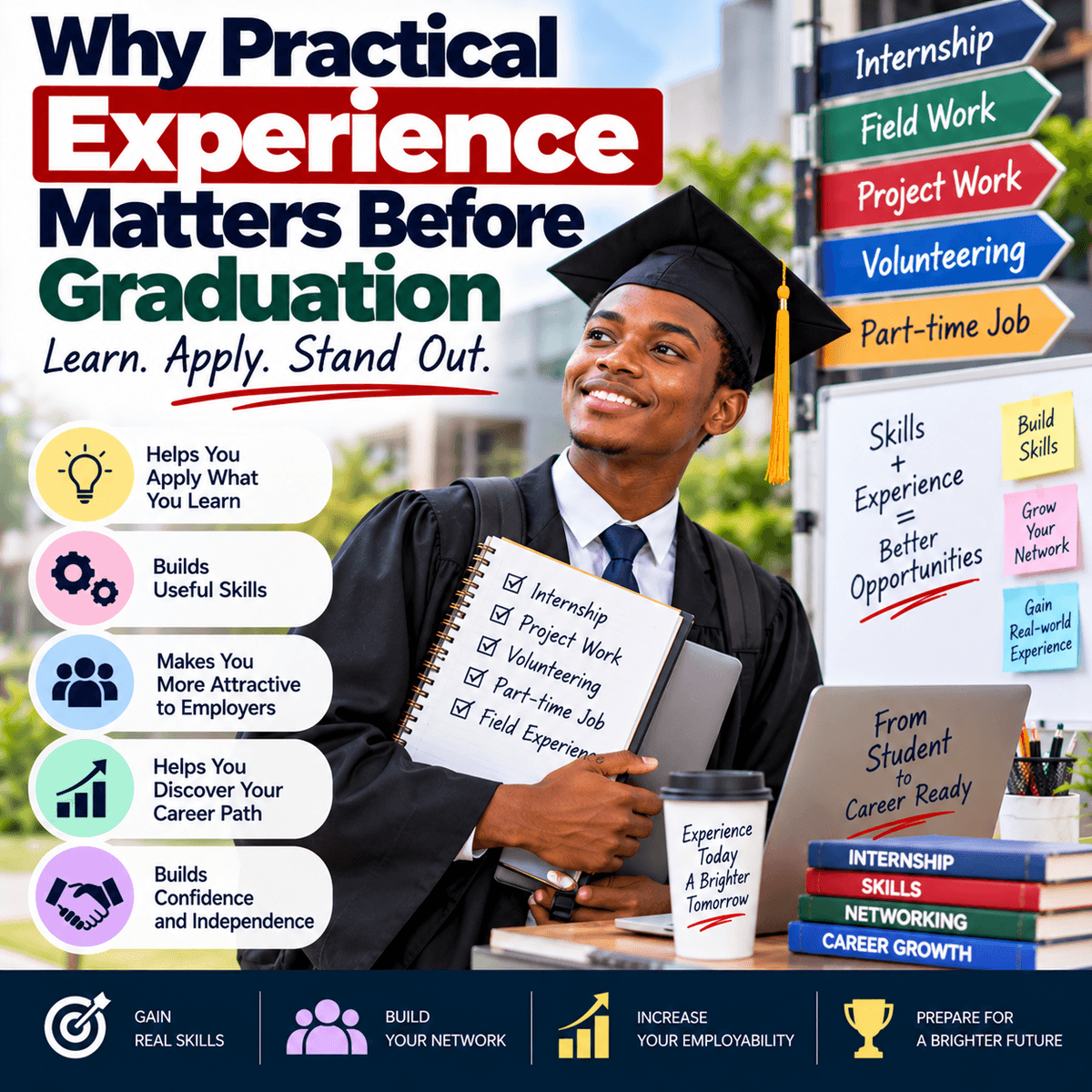
Education gives students knowledge, but preparing for life after school often requires more than passing examinations and earning good grades. A student may understand theories, definitions and principles taught in class but still struggle when asked to apply them to a real problem. This is why gaining practical experience before graduation can be valuable. Practical experience means taking what you have learned and using it in situations that are similar to what happens outside the classroom. It can come through internships, industrial training, volunteering, part-time work, student projects, fieldwork, laboratory activities, professional competitions or helping with a real project in your area of study. The exact form will depend on the course and opportunities available. An accounting student might help prepare simple financial records, a computer science student might build a working application, an engineering student might participate in a technical project, while an estate management student might gain experience through property inspections, measurements, market surveys or valuation assignments under proper supervision. These activities do not replace academic study. Instead, they allow students to see how knowledge is used in practice. A textbook may explain a process in a clear order, but real situations can involve incomplete information, changing conditions, deadlines and people with different expectations. Practical exposure helps students understand these differences before they leave school. It can also make classroom learning easier to understand because students can connect what they read with something they have actually seen or done. The aim is not for students to become experts before graduation. It is to begin developing the ability to use their education outside an examination hall.
Practical experience can also help students discover what employers and clients expect from people working in a particular field. Academic performance is important, but the workplace also requires skills such as communication, teamwork, problem-solving, organisation, punctuality and the ability to follow instructions. These skills are difficult to develop through lectures alone. During an internship, for example, a student may have to communicate with a supervisor, work with colleagues, prepare a report and complete tasks within a deadline. A student who joins a group project may learn that completing their own part is not enough if they fail to communicate with other members. Someone volunteering for an organisation may learn how to speak professionally with customers or members of the public. Mistakes made during these experiences can become useful lessons when students receive proper guidance. A student may discover that their written communication needs improvement or that they need to become better at managing time. Finding these weaknesses before graduation gives them an opportunity to work on them. Practical experience can also teach students that workplaces have rules and standards that must be respected. Arriving late, ignoring instructions or submitting poor-quality work can affect other people. Students begin to understand that professional responsibility involves more than knowing the correct answer to a question. It also involves reliability and the quality of the work they produce. These lessons can make the transition from school to employment less difficult because the graduate has already experienced some of the expectations that come with a professional environment.
Another benefit of practical experience is that it can help students make better career decisions. Many people enter university with only a general idea of what professionals in their chosen field actually do every day. A course may have several career paths, and classroom teaching may not provide enough exposure to each one for a student to know which area interests them most. Practical experience gives students a closer look. During an internship or project, a student may discover that an area they previously found attractive does not suit their interests. Another part of the profession that received less attention in class may turn out to be more interesting. Learning this before graduation can help the student make better choices about additional training, job applications or postgraduate study. Practical experience can also reveal gaps in a student's knowledge. For example, a student may discover that employers in the field regularly use certain software or tools that the student has not yet learned to use well. The student can then begin developing that skill before completing school. This does not mean students should chase every new tool they hear about. They should first understand what is genuinely relevant to the work they hope to do. Speaking with lecturers, professionals, supervisors and graduates already working in the field can help. Students should also pay attention to job descriptions for entry-level positions because these can show common requirements. The goal is to use practical exposure to understand the profession better and prepare for it more deliberately rather than waiting until after graduation to discover what employers expect.
Practical experience can also make it easier for students to show what they can do when they begin applying for jobs. A new graduate may not have years of full-time employment, but that does not mean the graduate has nothing useful to discuss during an interview. An internship, volunteer role, academic project or practical assignment can provide examples of problems the student has worked on and responsibilities they have handled. Instead of simply writing “good communication skills” on a CV, a graduate may be able to explain how they presented a group project, communicated with customers during an internship or prepared reports for a supervisor. Instead of claiming to have teamwork skills, the person can describe a project completed with other students and the role they played. Practical examples make it easier to explain your abilities. Students should therefore keep records of meaningful projects and experiences. Where appropriate and permitted, they can record the project title, their responsibilities, tools used, problems addressed and results achieved. Students in fields where portfolios are common can build one gradually, while those in other fields can keep a clear record for future CVs and interviews. However, students should never exaggerate their responsibilities or claim work completed by someone else. If you assisted a professional, describe your role as assistance rather than presenting yourself as the person who led the entire assignment. Employers can ask detailed questions, and being able to explain what you genuinely did is more useful than presenting experience you cannot defend.
Students do not have to wait for a perfect internship at a large organisation before gaining useful experience. Opportunities can begin with small projects. A student interested in writing can contribute to a student publication. Someone studying technology can build a simple project that solves a real problem. A business student can help a small organisation organise basic records under suitable guidance. Students can participate in recognised school projects, professional student groups, competitions, community activities or research work with lecturers when opportunities are available. What matters is that the activity gives the student a chance to learn, practise and take responsibility. At the same time, students should be careful about opportunities that exploit them or ask them to perform unsafe, unethical or professional work beyond their level of training and supervision. Practical experience should support education, not put students at unnecessary risk or prevent them from completing their studies. Students should aim for a reasonable balance between academic work and practical learning. Grades still matter, and the knowledge gained in school provides an important foundation. The stronger approach is to combine academic knowledge with opportunities to apply it. By the time graduation arrives, a student who has studied seriously and gained relevant practical exposure may have a clearer understanding of the profession, stronger examples to discuss during job applications and a better idea of the skills that still need improvement. A degree shows that you have completed an academic programme, while practical experience helps you begin showing how you can use what you have learned. Starting before graduation gives you time to learn, make corrections and prepare more effectively for the responsibilities that come after school.
