 Writers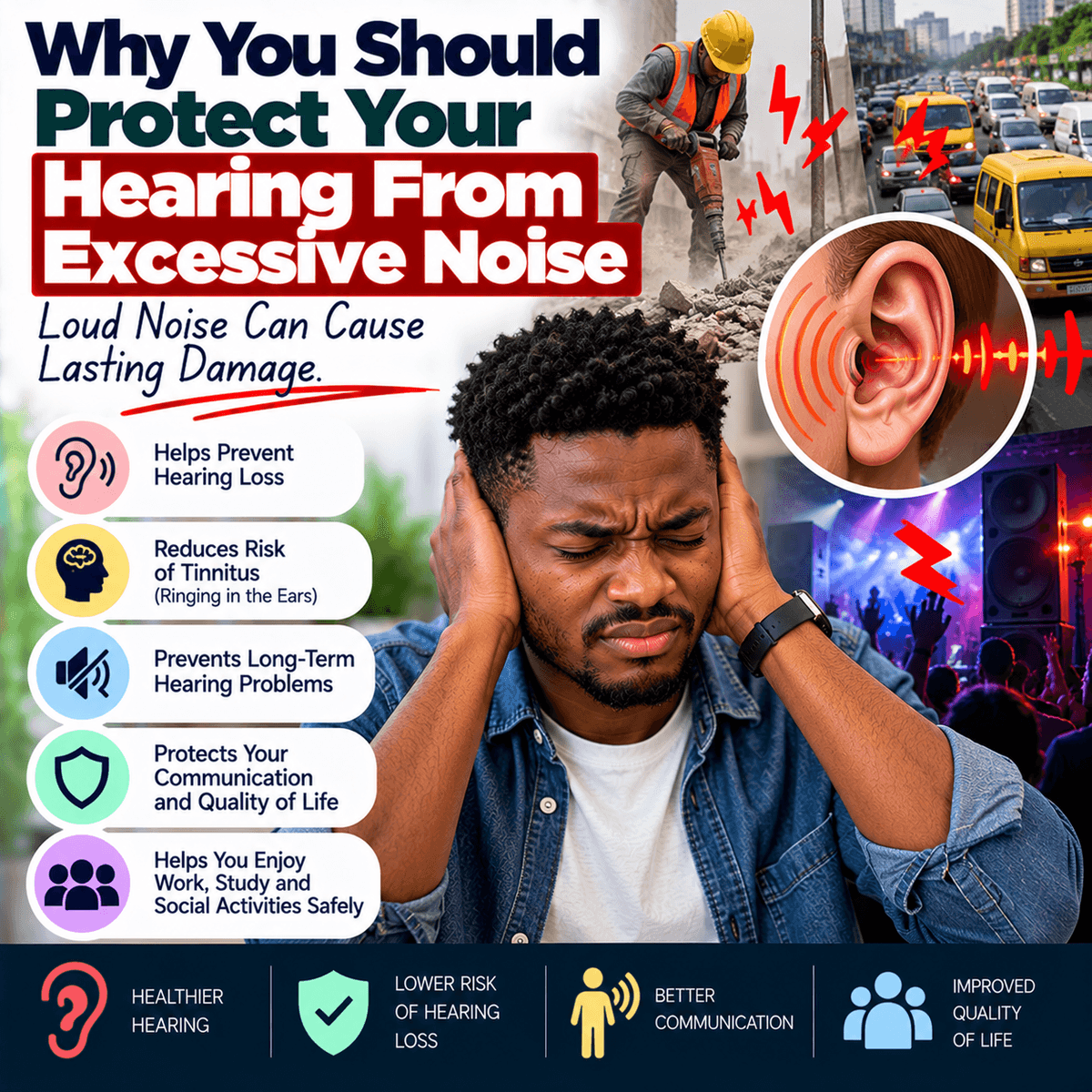
Hearing is an important part of everyday life, yet many people rarely think about protecting their ears until they begin experiencing problems. We depend on our hearing to communicate with others, enjoy music, follow conversations, respond to warnings and understand what is happening around us. However, regular exposure to excessive noise can gradually damage hearing, sometimes without causing immediate pain or obvious symptoms. In many cities, people are exposed to loud sounds from traffic, generators, construction activities, industrial equipment, entertainment centres and personal audio devices. Some people spend several hours each day using earphones or headphones at high volumes without considering the possible effects. Others work in noisy environments and assume that loud sounds are simply part of their jobs. Although noise is common in modern life, repeated exposure to harmful sound levels can affect the delicate structures responsible for hearing. The risk depends on how loud the sound is, how long someone is exposed to it and how often the exposure occurs. Very loud sounds can cause damage in a short period, while repeated exposure to lower but still harmful levels can cause problems over time. One major concern is that noise-related hearing damage can develop gradually. A person may not notice the early changes because they can still hear many everyday sounds. They may simply begin increasing the television volume, asking people to repeat themselves or finding it difficult to follow conversations in crowded places. By the time these changes become obvious, some hearing damage may already have occurred. This is why hearing protection should not begin only when someone experiences difficulty hearing. Understanding the risks and developing safer listening habits can help reduce preventable damage and support better hearing throughout life.
Personal listening devices are among the common sources of noise exposure that people can control. Earphones and headphones make it possible to listen to music, watch videos, attend online meetings and receive calls almost anywhere. They are convenient, especially when travelling, studying or working in shared environments. However, listening at high volume for long periods can increase the risk of hearing damage. Some people increase the volume when they are inside buses, near busy roads or in other noisy places because they want to hear their music clearly above the surrounding noise. Unfortunately, this can result in exposure to louder sound than they realise. A better approach is to keep the volume at a comfortable level and avoid increasing it unnecessarily to compete with background noise. Noise-cancelling headphones may help some people listen at lower volumes in noisy environments, although they do not remove every risk associated with loud listening. Many phones also provide volume warnings or settings that allow users to limit audio levels. These features can be useful, but they should not replace good judgement. If someone sitting close to you can clearly hear the sound coming from your earphones, the volume may be unnecessarily high, although this is not a reliable way to measure actual exposure. It is also helpful to take listening breaks rather than keeping headphones on continuously for several hours. If you notice ringing, buzzing, muffled hearing or discomfort after listening to loud music, do not dismiss the experience as something that must happen after enjoying entertainment. Such symptoms can indicate that your ears have been exposed to excessive sound. Reduce further noise exposure and seek professional advice if the symptoms persist or concern you. Enjoying music and other audio content does not require listening at the highest available volume. Developing sensible listening habits allows you to continue enjoying these activities while reducing unnecessary risks to your hearing.
Workplaces and public environments can also expose people to harmful noise, particularly when loud sounds are present for several hours each day. Construction workers, factory employees, machine operators, airport workers, entertainment professionals and people who regularly operate generators or other noisy equipment may face repeated exposure. Even individuals who do not work directly with machinery can be affected if their workplace is located close to loud equipment. In Nigeria, for example, generators are widely used in homes and businesses, and some produce considerable noise depending on their size, condition and installation. Busy roads, workshops and entertainment venues can also create noisy surroundings. People sometimes assume that they have become used to a loud environment because the sound no longer bothers them as much as it did initially. However, becoming accustomed to noise does not necessarily mean that the ears are protected from damage. Where possible, the best approach is to reduce noise at its source. Proper maintenance of equipment, quieter machinery, suitable barriers and improved workplace arrangements may help reduce exposure. When harmful noise cannot be adequately controlled, appropriate hearing protection becomes important. Earplugs and earmuffs designed for noise protection can reduce the amount of sound reaching the ears when they are selected, fitted and used correctly. Ordinary earphones should not automatically be treated as a replacement for proper protective equipment. Employers should assess workplace noise risks and provide suitable controls, training and protective equipment where required. Workers should also understand how to use hearing protection correctly and avoid removing it unnecessarily while exposed to loud machinery. If you regularly work in a noisy environment, ask about the safety measures available and whether hearing assessments are recommended. Protecting hearing at work is not only a personal responsibility; it is also an important part of maintaining a safe working environment.
Recognising possible hearing problems early can help people seek appropriate care instead of allowing difficulties to continue without assessment. Hearing changes do not always involve complete hearing loss. Some people may notice that voices sound unclear, particularly when several people are speaking at once. Others may struggle to hear conversations on the phone, frequently misunderstand words or feel that people around them are speaking too softly. A person may also experience tinnitus, which refers to hearing sounds such as ringing or buzzing when there is no matching external sound. Tinnitus can have different causes and does not automatically mean that someone has permanent hearing damage, but persistent symptoms deserve medical attention. Ear pain, discharge, a feeling of blockage or dizziness may also occur with various ear conditions. It is important not to assume that every hearing problem is caused by excessive noise. Earwax buildup, infections, certain medicines, age-related changes and other medical conditions can affect hearing. A qualified healthcare professional can assess the symptoms and determine whether further examination or a hearing test is necessary. Sudden hearing loss, particularly when it affects one ear, requires urgent medical assessment because some causes are time-sensitive. Do not wait several days hoping that sudden hearing loss will resolve on its own. Similarly, significant hearing changes following a very loud explosion or other acoustic injury should be assessed promptly. Avoid putting sharp objects, cotton buds or unverified substances deep inside the ear in an attempt to remove wax or treat discomfort. These actions can cause injury or make an existing problem worse. If you are having difficulty hearing, professional assessment is safer than depending on advice from social media or using ear products without understanding the cause.
Protecting your hearing is a long-term health habit that can begin with small changes in your daily routine. Start by identifying situations where you are regularly exposed to loud sounds. Consider how often you use headphones, how high you set the volume and how much time you spend around noisy equipment or entertainment systems. If you attend concerts, parties or other loud events, avoid standing unnecessarily close to speakers, take breaks in quieter areas and consider suitable hearing protection. At home, keep television and music volumes at reasonable levels, particularly when listening for long periods. If you operate noisy equipment, follow appropriate safety instructions and use hearing protection designed for the level and type of noise involved. Parents and caregivers should also pay attention to children's listening habits. Children may spend long periods watching videos, playing games or listening to music through headphones without recognising when the volume is excessive. Helping them develop safer habits early can be useful. Regularly discuss the importance of comfortable listening levels and encourage breaks from continuous headphone use. People who are frequently exposed to loud noise or who notice hearing changes should consider professional hearing assessments based on their individual circumstances. Most importantly, do not wait for serious hearing difficulties before taking preventive action. Some forms of noise-related hearing damage are permanent, and treatment may not restore hearing that has already been lost. Prevention is therefore especially valuable. You do not have to avoid music, social events or every noisy environment to protect your ears. The goal is to make sensible choices about volume, duration and protective measures. Hearing allows us to participate in conversations, understand important information and remain aware of our surroundings. Giving it regular attention and reducing avoidable noise exposure can help preserve this important ability and support a better quality of life as we grow older.
