 Writers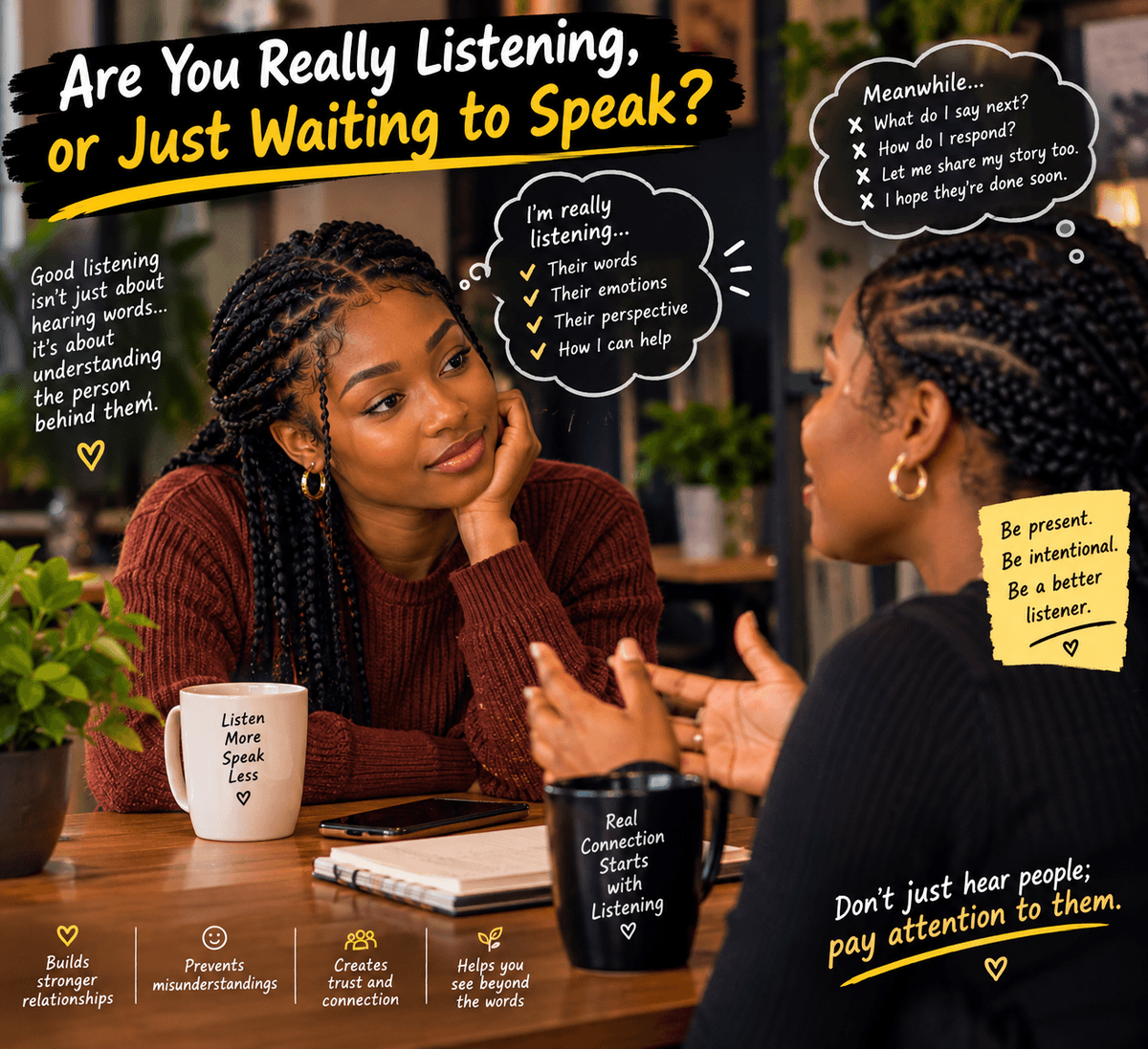
Have you ever been explaining something to someone and realized they weren't really listening? They're already preparing their response, thinking about what to say next, or waiting for you to finish so they can speak.
They hear your words, yet somehow, they miss your message.
Many people want to be heard, but not everyone is willing to listen. Listening is more than hearing words; it is paying attention to understand the person behind them.
Listening Is a Skill
Hearing happens naturally, but listening requires intention: paying attention, considering another person's perspective, and responding thoughtfully.
Sometimes, we're so occupied with what we want to say that we barely notice what the other person is saying.
But how can you understand someone when your mind is more concerned with responding than understanding?
You cannot understand someone properly when you are more interested in being heard than in hearing them.
Good listening requires emotional intelligence: the willingness to put yourself in another person's shoes and consider their perspective, even when it differs from yours. You don't have to agree with everything they say. You simply need to understand before judging or offering an opinion.
The Danger of Not Feeling Heard
Have you ever explained something to someone, only to discover that they completely misunderstood you? You end up saying, "That's not what I meant," or "You didn't understand what I was trying to say."
Sometimes, the problem isn't that you failed to communicate. The other person may not have listened carefully enough.
Imagine someone who has had a difficult day and wants to talk about it. Instead of listening, you immediately tell them what they should have done differently. Perhaps you dismiss their feelings because you don't think the situation is serious enough to upset them.
You may believe you're helping, but they may feel dismissed.
Sometimes, people don't need immediate solutions. They need someone who will listen and let them express themselves without feeling judged.
When people repeatedly feel unheard, they may stop sharing—not because they have nothing to say, but because they no longer believe speaking up will make a difference. Someone who once told you everything may gradually become silent around you. You might assume they've changed without considering your role.
When people no longer feel comfortable expressing themselves around you, you may lose access to parts of their lives they once freely shared.
Listening helps us understand one another, resolve conflicts, and build meaningful connections. Sometimes, the care someone needs is hidden in what they're trying to communicate.
Hearing the Words Is Not Enough
One mistake we make is assuming that because we heard what someone said, we understood them.
Someone might say, "I'm fine," while struggling inside. We cannot know exactly how someone feels, but we can ask thoughtful questions and make room for honest conversations.
When someone expresses hurt, pause before becoming defensive and try to understand their perspective.
The goal of listening isn't simply to collect words; it is to understand the message those words are carrying.
How Can We Become Better Listeners?
Becoming a better listener starts with recognizing that every conversation isn't an opportunity to prove a point or show how much we know.
Allow people to finish speaking without interrupting. When something is unclear, ask questions instead of making assumptions. When someone shares a problem, listen before rushing to give advice. And when someone says you've misunderstood them, resist the urge to defend yourself immediately. Try to understand their perspective.
Be present: put away distractions, pay attention, and respond thoughtfully.
Not every problem needs an immediate solution, and not every conversation needs your final say. Sometimes, listening means giving someone room to express themselves fully.
Finally,
We all want to be heard and understood. But we must ask whether we offer others the same attention.
When someone talks to you, are you genuinely listening, or simply waiting for your turn? When someone shares a problem, are you trying to understand, or already preparing to tell them what they did wrong?
You don't need an answer to every problem or the best advice in every conversation. Sometimes, you simply need to listen—to recognize when someone needs encouragement, guidance, or the freedom to express themselves.
Don't just hear people; pay attention to them. Don't listen merely to respond; listen to understand.
Sometimes, the difference between making someone feel alone and helping them feel cared for is not what you say, but how well you listen.
Perhaps, before asking people to understand us better, we should learn to understand them better.
The next time someone speaks to you, don't be so eager to respond that you miss what they're trying to tell you. You might hear their words and still miss their message. ❤️