Writers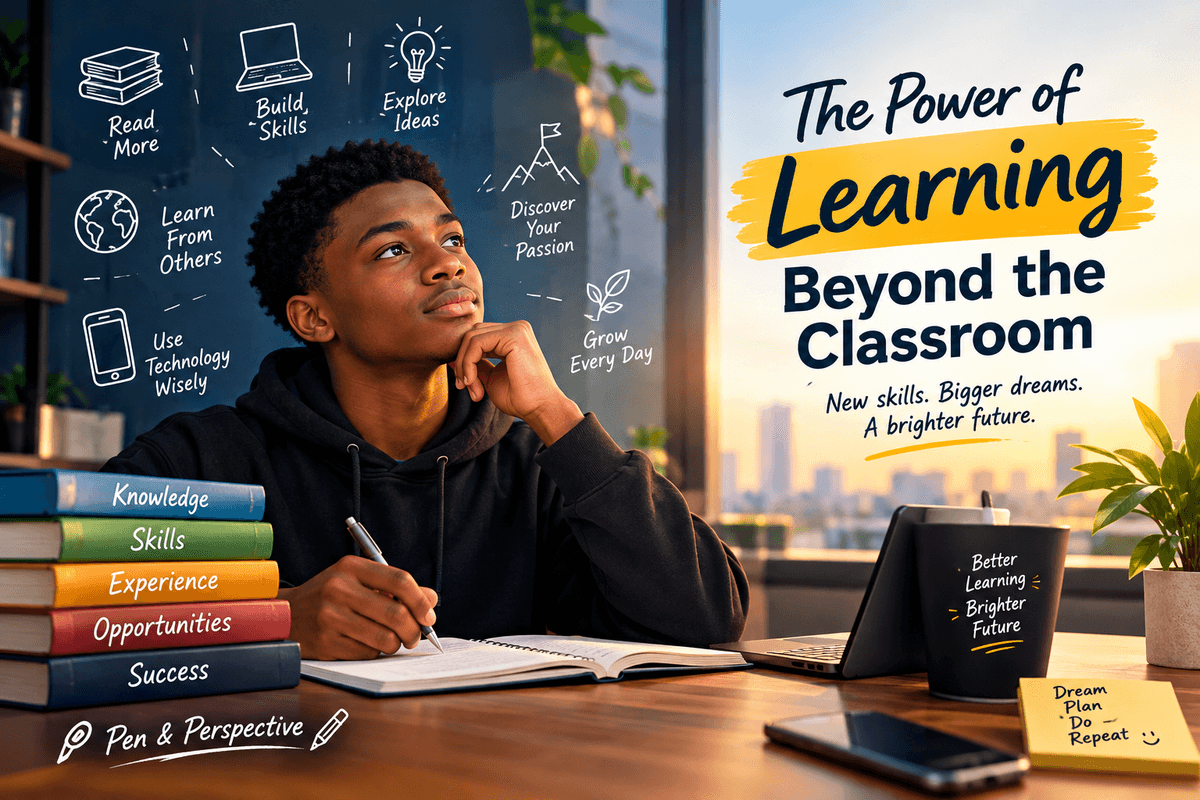
Education is often associated with classrooms, textbooks, examinations, and certificates. For many young people, learning seems to end when the school bell rings or when an examination is completed. However, some of the most valuable lessons in life cannot be found in a school timetable. Learning continues everywhere, and young people who understand this can develop skills and knowledge that prepare them for opportunities beyond the classroom.
School provides an important foundation. It teaches students how to read, write, calculate, research, communicate, and understand different subjects. These skills are essential, but the modern world requires more than academic knowledge. Employers, businesses, universities, and communities also value creativity, problem-solving, communication, adaptability, and the ability to learn independently.
One of the easiest ways to learn beyond the classroom is through reading. Books can introduce young people to ideas, cultures, careers, historical events, and experiences they may never encounter personally. Reading does not always have to involve textbooks. Biographies, novels, newspapers, essays, and educational articles can all provide useful knowledge. Even spending a few minutes reading every day can gradually improve vocabulary, writing ability, and general understanding.
Technology has also changed the way people learn. A smartphone, for example, can become more than a device for entertainment. With an internet connection or suitable offline resources, a young person can learn languages, improve computer skills, study mathematics, explore science, practice writing, and discover information about potential careers.
However, technology is only useful when it is used intentionally. Spending hours scrolling through entertainment content may consume time without developing meaningful skills. Young people can make better use of their devices by creating a balance between entertainment and education. Instead of only asking, “What can I watch?” they can also ask, “What can I learn?”
Another important form of learning comes from experience. Making mistakes can teach lessons that theory alone cannot provide. A student who tries writing an article may discover the importance of research, editing, patience, and clear communication. Someone learning a new language may realize that progress requires consistent practice. A young person starting a small project may learn about planning, responsibility, budgeting, and persistence.
Learning from other people is equally valuable. Teachers, parents, friends, professionals, and experienced individuals can provide advice based on their own experiences. Asking thoughtful questions can open doors to knowledge that may not be available in a textbook. Young people should not be afraid to learn from people who know more than they do.
Learning beyond school can also help people discover their interests. A student may begin learning about technology and discover an interest in programming. Another may start writing for fun and eventually develop a passion for journalism, publishing, or creative writing. Someone else may explore different cultures and become interested in languages or international relations.
The key is consistency. Nobody becomes highly skilled overnight. Learning is a gradual process. Reading one book, watching one educational lesson, practicing one skill, or writing one article may not seem significant by itself. But when small efforts are repeated over months and years, they can produce remarkable results.
Young people should therefore avoid believing that education is limited to what appears on an examination paper. Certificates can open certain doors, but knowledge, practical skills, curiosity, and character can help people make the most of the opportunities they receive.
The world continues to change, and the ability to learn is becoming increasingly important. What is useful today may change tomorrow, which means people must be willing to acquire new knowledge throughout their lives.
The classroom may introduce us to knowledge, but life gives us countless opportunities to expand it. Every book read, skill practiced, question asked, mistake corrected, and experience gained can become part of our education. The greatest learners are not necessarily those who know everything; they are those who remain curious enough to keep learning.
Pen & Perspective