Writers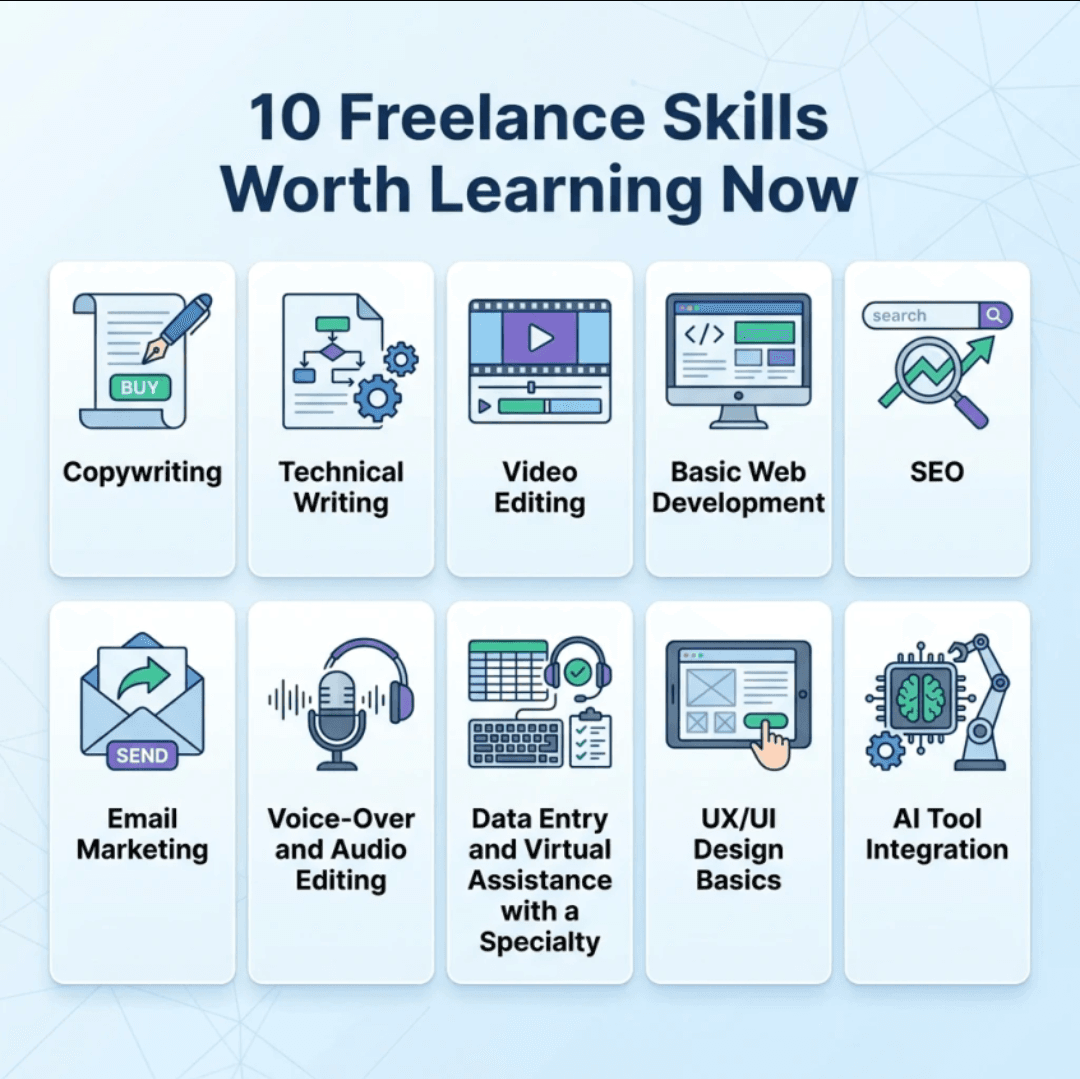
Freelancing isn't the side gig it used to be. More people are doing it full time, and companies are hiring freelancers for work they used to keep in-house. If you're thinking about starting or switching what you offer, the skill you pick matters a lot. Some skills have steady demand and pay well. Others are crowded or fading. Here are 10 worth looking at, with real examples of what the work actually looks like.
1. Copywriting
Businesses always need words that sell — landing pages, email sequences, ads. This is different from blog writing; copywriting is about getting someone to click, sign up, or buy. A small SaaS company might pay a copywriter $500–$1,500 to rewrite their homepage because their current one isn't converting visitors into trial users. You don't need a fancy degree for this. You need to study how people write persuasive emails and practice on real (or practice) products.
2. Technical Writing
Software companies need documentation — how-to guides, API references, onboarding manuals. This is less about creative flair and more about being clear and precise. A freelance technical writer might work with a startup to document their new app's features so support tickets go down. If you're detail-oriented and can explain complicated things simply, this pays well and has less competition than general content writing.
3. Video Editing
Short-form video is everywhere — YouTube, TikTok, Instagram Reels, course content. Creators and small businesses often don't have time to edit their own footage. A freelancer who can cut a 20-minute raw video into a tight 90-second Reel, add captions, and match it to trending styles is in demand. Tools like CapCut and Premiere Pro aren't hard to learn with a few weeks of practice, and there are plenty of tutorials to start from.
4. Basic Web Development
You don't need to be a full software engineer. Many small businesses just want a simple website — a homepage, a contact form, maybe an online store. Learning platforms like Webflow or WordPress, along with some basic HTML and CSS, lets you build sites for local businesses or startups without years of coding training. This is one of those skills where a portfolio of 3–4 real projects can get you client work faster than a certificate would.
5. SEO (Search Engine Optimization)
Businesses want to show up on Google, but most don't know how. Freelancers who understand keyword research, on-page optimization, and basic link building can help a client's blog or product pages rank higher. This isn't instant — SEO takes months to show results — so it helps to be upfront with clients about timelines instead of promising fast wins.
6. Email Marketing
A lot of businesses have an email list they don't use well. Someone who can write welcome sequences, abandoned cart emails, or a weekly newsletter that people actually open is valuable. Tools like Mailchimp, Klaviyo, or ConvertKit are used across ecommerce and small business. This skill pairs well with copywriting, so many freelancers offer both together.
7. Voice-Over and Audio Editing
Podcasts, audiobooks, and explainer videos all need decent audio. If you have a clear speaking voice or know how to clean up noisy recordings, this is a real niche. A freelancer might record a two-minute product explainer voice-over for $100–$300, or edit a podcast episode by removing filler words and balancing sound levels. You'll need a decent microphone and basic editing software, but the setup cost is low.
8. Data Entry and Virtual Assistance with a Specialty
Plain data entry is low-paying and easy to outsource cheap. But a virtual assistant who also understands, say, bookkeeping basics, or how to manage a Shopify store, or how to schedule social media posts, stands out. The trick is combining admin work with one specific skill so you're not competing purely on price.
9. UX/UI Design Basics
Apps and websites need to be easy to use, not just good-looking. Learning tools like Figma and understanding basic design principles — spacing, contrast, how users read a screen — can get you freelance work designing app screens or website layouts. You don't need a design degree. A few strong portfolio pieces, even redesigns of existing apps as practice projects, can show clients what you can do.
10. AI Tool Integration
This one's newer. Businesses are trying to use AI tools like ChatGPT, Claude, or automation platforms like Zapier and Make, but many don't know how to set them up properly. Freelancers who can build simple automations — like connecting a form submission to an email response, or setting up a chatbot for customer questions — are finding work here. This field is still forming, so staying updated matters more than in older skills.
Don't try to learn all 10. Pick one that matches something you already know a bit about, or genuinely want to get better at. If you already write well, copywriting or technical writing is a shorter path. If you're comfortable with software and logic, web development or AI tool integration might suit you more.
Also, be realistic about time. Most of these skills take a few months of steady practice before you're ready to take on paid work confidently. Building 2–3 sample projects, even unpaid ones for friends or small local businesses, will help you more than watching hours of tutorials without applying them.
Freelance demand shifts. What pays well today might be more competitive in two years. The skills on this list aren't guaranteed income — they're starting points based on where the work currently is. Whatever you choose, the way to actually get clients is showing real examples of your work, not just claiming you can do something. Start small, build a portfolio, and let the results speak for themselves.