 Writers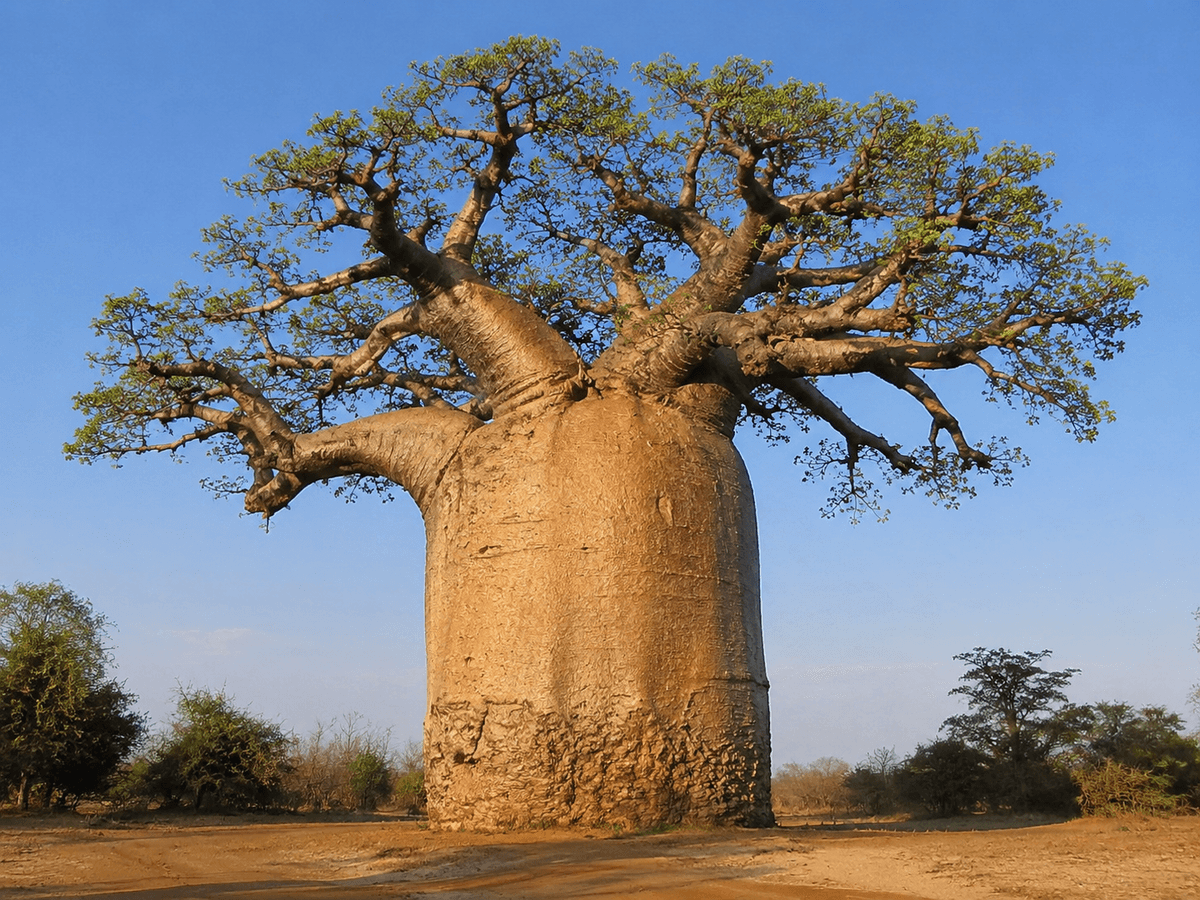
The Baobab tree is one of Africa's most amazing trees. The baobab is readily identifiable due to its enormous trunk, broad branches, and extended lifespan. Because of the numerous ways it sustains humans, animals, and the environment, it is occasionally referred to as the "Tree of Life." For generations, communities have highly regarded the baobab tree for its medicinal qualities, shade, food source, and cultural importance.
Its huge trunk is one of the baobab's most amazing characteristics. The trunk has the potential to get quite broad and hold significant amounts of water. This ability aids the tree in surviving in hot, dry conditions when there may be a long period of little rain. The tree collects and retains water in its trunk during the wet season, which aids in its survival during the dry season.
The Baobab tree's look is also highly unique. Its branches could seem like roots extending towards the sky. Some describe it as a tree planted upside down because of its unusual form. The tree's big trunk and twisted branches stand out even more during the dry season, when it sheds its leaves.
Baobab trees have the potential to endure for centuries. Determining the precise age of very old baobabs may be challenging, however some are thought to live for hundreds or even thousands of years. Due to their lengthy lifespans, they are crucial evidence of alterations in their surrounding human population and environment. One spot may have seen several generations of the same baobab tree.
Humans may also benefit from the baobab. Its fruits are large and have a hard shell. The fruit pulp is nutritious and may be utilized to make drinks and other culinary items. In certain communities, the leaves can be eaten, and the seeds have various traditional applications. Additionally, other portions of the tree, including its bark, have long been utilized for a variety of things.
The Baobab is vital to nature in addition to providing sustenance. Its branches provide refuge and resting areas, and its blossoms and fruit provide nutrition for a variety of creatures. Its flowers may be visited by bats and other creatures, who will help with pollination. As a result, the baobab helps maintain the ecosystem's equilibrium.
Additionally, the tree has deep cultural value. Baobabs are entwined with customs, history, stories, and gatherings in several African cultures. Meeting locations or landmarks have been established using several major trees. Communities can be reminded of their forefathers and the generations that came before them by their presence.
However, Baobabs are endangered by droughts, land clearing, environmental changes, and other human activities. Because these magnificent trees are valuable to biodiversity and local populations in addition to being beautiful, it's essential to preserve them.
In conclusion, the baobab tree is much more than an ordinary tree. What makes it particularly special is its unique look, ability to hold water, nutritional content, cultural significance, and wildlife contribution. It serves as a metaphor for the link between mankind and the environment, as well as for endurance, resiliency, and power. Protecting the baobab means protecting a vital component of Africa's natural and cultural heritage.
