Writers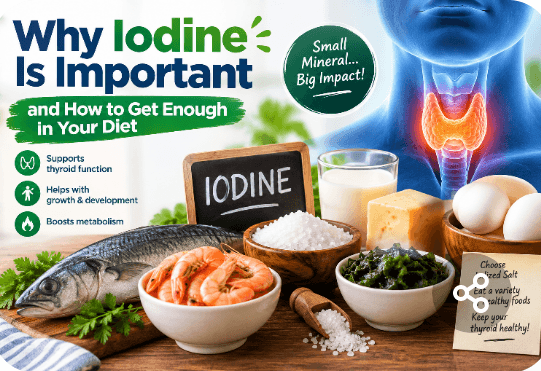
Iodine is a small but very important mineral that the human body needs to function properly. Although the body requires only a small amount of iodine, it plays an important role in the production of thyroid hormones. These hormones help control metabolism, growth, development, body temperature, and the way the body uses energy. Getting enough iodine is therefore an important part of maintaining good nutrition.
Foods That Provide Iodine
One of the simplest ways to get iodine is by using iodized salt. Iodized salt has iodine added to it to help prevent iodine deficiency. However, this does not mean people should consume large amounts of salt. Salt should be used moderately as part of a balanced diet.
Iodine can also be obtained from different foods. Fish and other seafood are natural sources of iodine. Eggs and dairy products can also provide iodine, although the amount may vary depending on the food and how it is produced.
Eating a variety of nutritious foods is a good way to support the body's nutritional needs. Instead of depending on one particular food, people should try to maintain a balanced diet that includes different food groups.
What Happens When the Body Lacks Iodine?
When the body does not receive enough iodine for a long period, the thyroid may not be able to produce enough thyroid hormones. This can affect normal body functions and may lead to health problems.
One possible result of prolonged iodine deficiency is an enlarged thyroid gland, commonly called a goiter. Iodine deficiency is also particularly important during pregnancy and childhood because thyroid hormones are involved in normal growth and brain development.
However, having symptoms does not automatically mean that a person has an iodine deficiency. Different health conditions can produce similar symptoms, so people who are concerned should speak with a qualified healthcare professional.
Can You Get Too Much Iodine?
Although iodine is necessary for the body, having too much can also cause problems. Excessive iodine intake can interfere with normal thyroid function in some people.
For this reason, iodine supplements should not be taken unnecessarily or in large amounts without professional guidance. Getting iodine from normal food sources and appropriately using iodized salt is generally a safer approach than taking high-dose supplements without advice.
Simple Ways to Maintain Adequate Iodine
People can support adequate iodine intake by choosing iodized salt, eating a varied diet, and including suitable iodine-containing foods such as fish, eggs, and dairy products. It is also important to follow general healthy-eating habits instead of focusing on a single nutrient.
People with special nutritional needs may require individual advice from a healthcare professional. This is especially important for pregnant women, children, and anyone with a thyroid-related condition.
Iodine may be required only in small amounts, but its role in the body is significant. It supports the production of thyroid hormones, which are important for metabolism, growth, and development. Using iodized salt in moderation and eating a balanced diet can help people obtain iodine, at the same time.