 Writers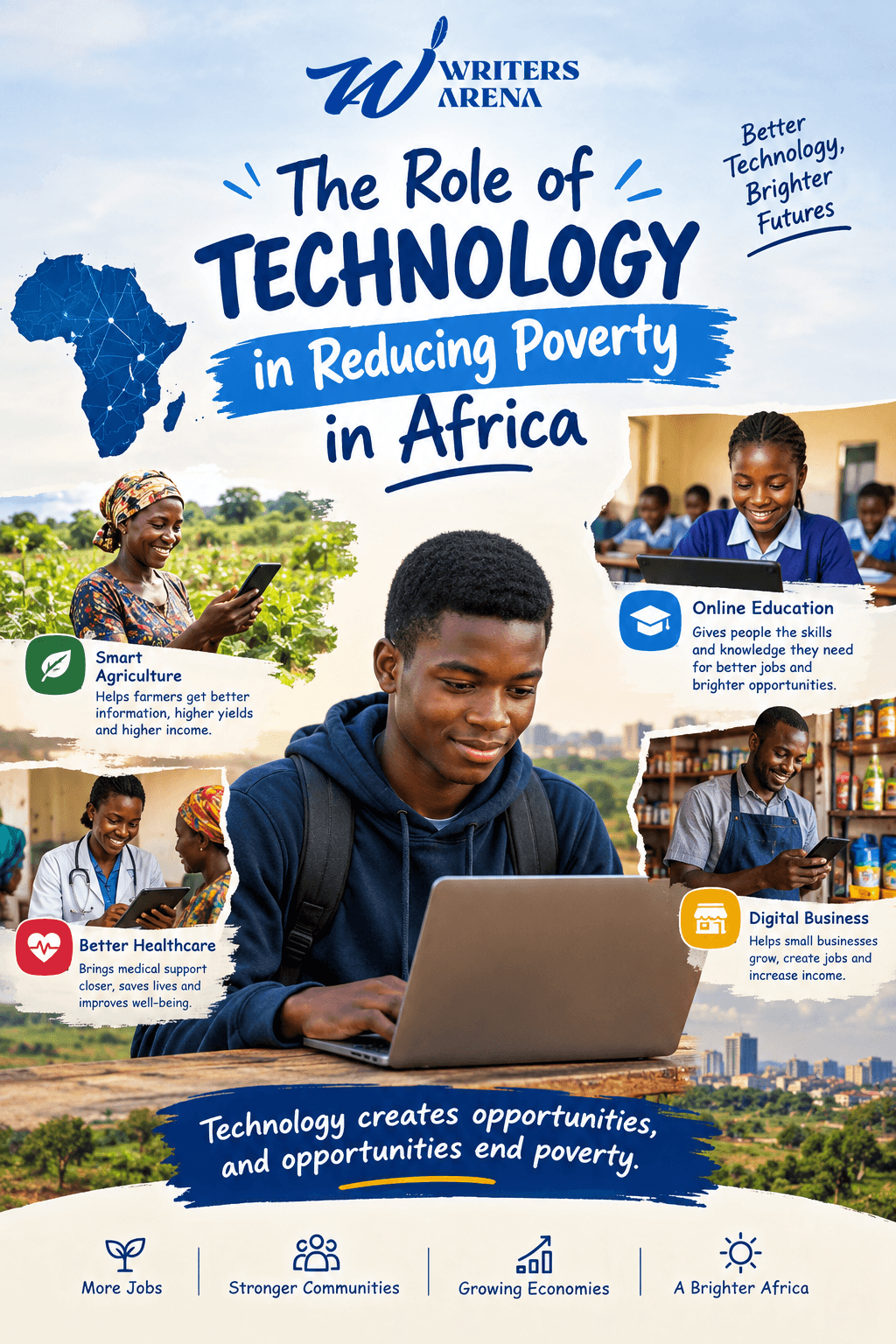
Poverty remains one of the major challenges facing many African countries. Millions of people struggle to find good jobs, start businesses, access quality education, and receive proper healthcare. However, technology is creating new opportunities that can help people improve their lives. From smartphones and the internet to digital banking and modern farming tools, technology is becoming an important part of the fight against poverty in Africa.
One major way technology can reduce poverty is by creating jobs and business opportunities. Today, young Africans can learn skills such as graphic design, programming, writing, digital marketing, video editing, and many others through online platforms. Some of them can work for companies or clients in other countries without leaving their communities. This allows people to earn income based on their skills rather than depending only on traditional jobs.
Technology is also helping small businesses grow. In the past, a small business owner might have depended mainly on people living nearby. Today, social media and online marketplaces allow business owners to advertise their products to a much larger audience. A person selling clothes, food, crafts, or other products can use a smartphone to communicate with customers, promote products, and receive orders. This can increase sales and create more employment.
Another important area is digital banking. Mobile money and online payment systems have made it easier for many people to send, receive, save, and manage money. People who live far from traditional banks can sometimes access financial services through their phones. This can help small business owners manage their money and make payments more easily. Digital financial services can also support people who previously had limited access to formal banking.
Technology is transforming agriculture, which is especially important because agriculture provides livelihoods for millions of Africans. Farmers can use mobile phones to receive information about weather conditions, market prices, farming methods, and disease prevention. Modern equipment and improved farming technologies can also help farmers increase productivity. When farmers produce more and can sell their products at better prices, their income can improve.
Education is another powerful area where technology can make a difference. A student in a remote community may not have access to the same learning materials as a student in a large city. With internet access, however, students can watch educational lessons, read digital books, take online courses, and learn new skills. Teachers can also use technology to improve the way they teach. Education gives people knowledge and skills that can help them find better opportunities in the future.
Healthcare can also benefit from technology. Digital health services can connect patients with medical professionals, while electronic records and modern medical equipment can help healthcare workers provide better services. In remote areas, technology can help people receive important health information without always having to travel long distances.
However, technology alone cannot eliminate poverty. Many African communities still face problems such as expensive internet services, poor electricity supply, limited digital skills, and lack of access to devices. Governments, businesses, schools, and communities must work together to make technology more affordable and accessible.
Technology is not simply about computers, smartphones, or the internet. It is a powerful tool that can open doors to education, jobs, businesses, farming, banking, and healthcare. If African countries invest in digital skills, reliable electricity, affordable internet, and useful technology, more people can benefit from the opportunities of the modern world. Technology may not solve poverty overnight, but when used properly, it can give millions of Africans the tools they need to build better and more independent lives.