 Writers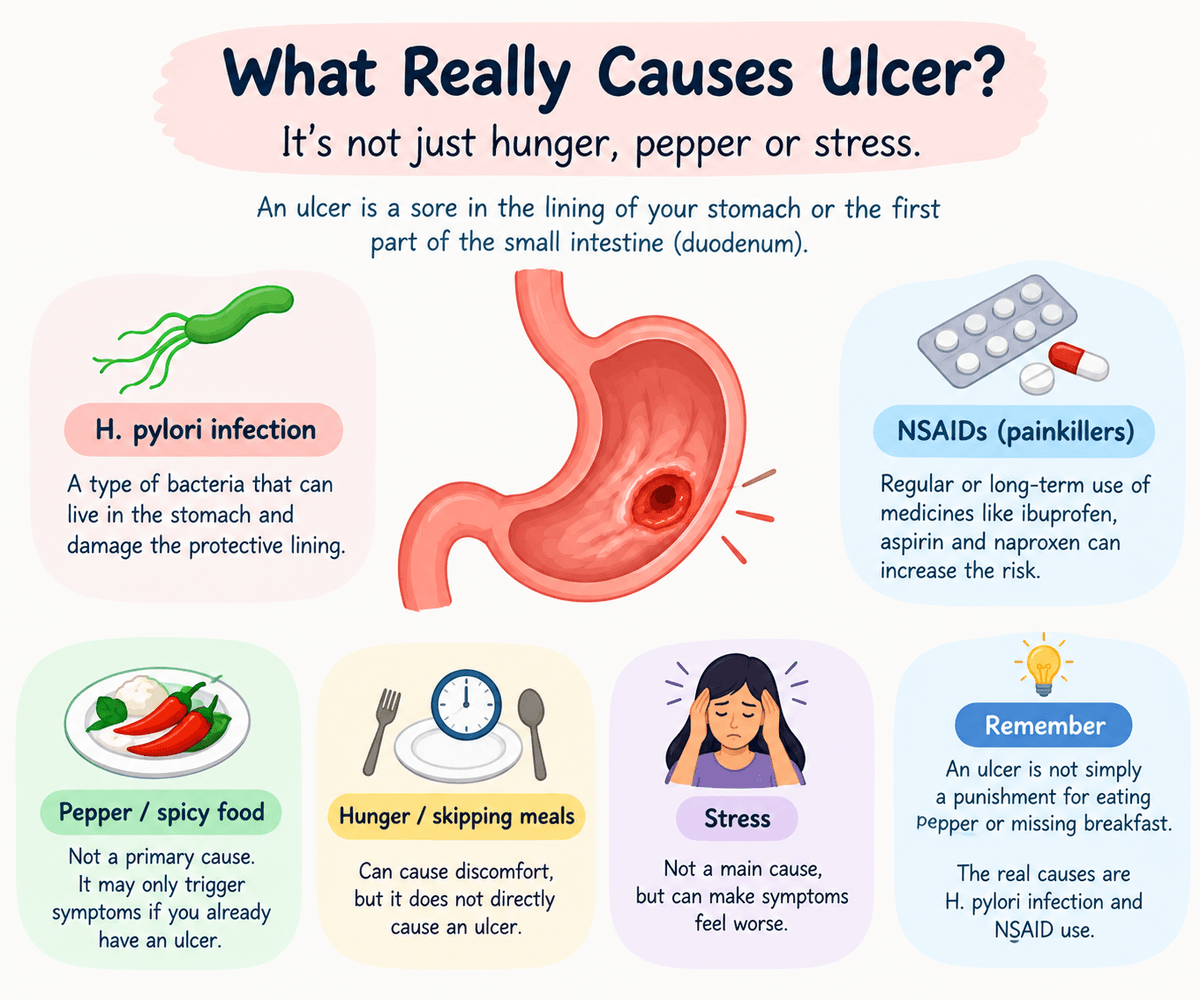
ULCER SERIES 2
What Really Causes Ulcer? Is It Hunger, Pepper or Stress?
Yesterday, we started with a simple question: What exactly is an ulcer?
Today, let's talk about something even more interesting.
You tell someone you have stomach pain and the first question might be:
“Do you usually stay hungry?”
Another person may ask:
“You eat too much pepper, abi?”
Someone else may say:
“It's because you worry too much.”
And before you know it, three different people have given you three different explanations.
But what does medical evidence actually say?
First, staying hungry does not directly create an ulcer
This is one of the most common beliefs we hear, especially when someone skips breakfast or goes several hours without eating.
Going without food can make some people experience stomach discomfort or make existing symptoms more noticeable. But hunger itself is not considered one of the main causes of peptic ulcers.
An ulcer is an actual sore in the lining of the stomach or duodenum. The two major causes are Helicobacter pylori (H. pylori) infection and the regular use of certain painkillers called NSAIDs.
So if you have been skipping breakfast because of school, work or a busy schedule, don't immediately conclude, “I have given myself ulcer.”
Then what is H. pylori?
This is where the story becomes more interesting.
H. pylori is a type of bacteria that can live in the stomach.
Many people infected with it may not even know they have it. However, in some people, the infection can damage the stomach's protective lining and contribute to the development of an ulcer.
This is one reason why repeatedly treating stomach pain without finding the underlying cause may not solve the problem.
Sometimes, the issue isn't simply “too much acid.” There may be an infection that needs to be identified and treated.
What about painkillers?
This one surprises many people.
Some medicines we commonly use when we have headaches, body pain or menstrual cramps belong to a group called NSAIDs.
Examples include ibuprofen, aspirin and naproxen.
When these medicines are used regularly, especially at high doses or for a long time, they can make the stomach lining more vulnerable to damage and increase the risk of ulcers.
That doesn't mean you should be afraid of every painkiller.
It means we should stop treating medication casually.
If you frequently need painkillers, especially NSAIDs, it is worth discussing their use with a healthcare professional.
So, does pepper cause ulcer?
This is where we need to separate cause from trigger.
Spicy foods are not considered a primary cause of peptic ulcers.
However, if someone already has an ulcer or another digestive problem, spicy food may make their symptoms feel worse.
So when someone says, “Whenever I eat pepper, my stomach starts burning,” that discomfort is real.
But it doesn't automatically mean the pepper created an ulcer.
And stress?
Stress gets blamed for almost everything these days.
But ordinary emotional stress is not considered one of the main causes of peptic ulcers.
That doesn't mean stress is irrelevant.
Stress can make digestive symptoms feel worse, and serious physical illness can damage the stomach lining in ways that are different from everyday emotional stress.
The bigger lesson
Sometimes we have been given health explanations for so long that we stop questioning them.
“I didn't eat on time, so I have ulcer.”
“I ate pepper, so I have ulcer.”
“I was stressed, so I have ulcer.”
But your body deserves more than guesses.
Stomach pain has different possible causes.
If the pain keeps returning, becomes severe, or comes with other concerning symptoms, don't keep treating yourself based on what someone told you years ago. Get properly assessed.
And remember: an ulcer is not simply a punishment for eating pepper or missing breakfast. There can be a real underlying cause that needs to be identified.
