 Writers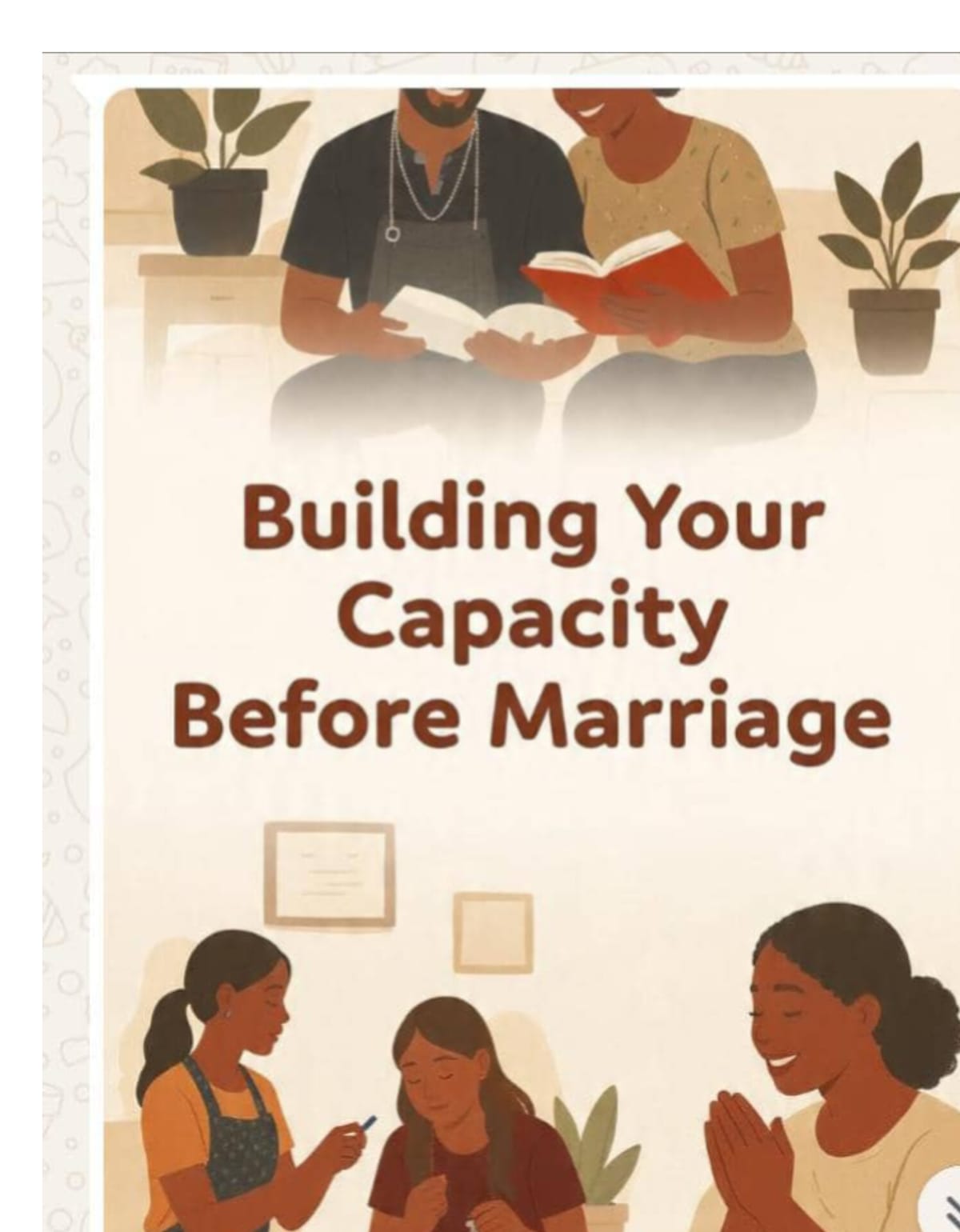
Build Capacity Before Marriage
Introduction
Marriage is an important stage of life that requires preparation, maturity, responsibility, and commitment. Before entering marriage, a person should work on building the capacity needed to handle the responsibilities that come with it. Building capacity before marriage means developing the knowledge, skills, character, emotional maturity, financial discipline, and other abilities needed to contribute positively to a healthy family.
Marriage should not be viewed simply as a way to escape loneliness or satisfy social expectations. It is a partnership that requires two people who are willing to learn, communicate, solve problems, respect each other, and take responsibility for their decisions.
Meaning of Capacity
Capacity is the ability, strength, knowledge, or preparation required to handle a responsibility effectively.
Therefore, building capacity before marriage means preparing yourself to handle the responsibilities and challenges of married life.
Areas of Capacity to Build Before Marriage
1. Emotional Capacity
A person should develop emotional maturity before marriage. This includes learning how to control anger, manage disappointment, express feelings appropriately, and handle disagreements peacefully.
Emotional maturity does not mean never becoming angry or sad. It means knowing how to respond to emotions without hurting yourself or others.
2. Financial Capacity
Money is one of the practical issues that couples must learn to manage. Before marriage, it is useful to develop good financial habits such as:
Learning to budget.
Avoiding unnecessary debt.
Learning to save.
Understanding basic financial planning.
Developing useful work or career skills.
Learning to distinguish needs from wants.
Financial capacity does not mean becoming wealthy before marriage. It means developing responsible habits and having a realistic plan for supporting yourself and contributing to family responsibilities.
3. Educational Capacity
Education can help a person develop knowledge, reasoning skills, and better opportunities. Young people should take their education seriously and develop skills that can help them become productive adults.
Education is not limited to school certificates. It can also include learning trades, technology, communication, business, agriculture, or other useful skills.
4. Character Development
Good character is extremely important in marriage. A person should work on qualities such as:
Honesty
Patience
Respect
Responsibility
Faithfulness
Kindness
Self-discipline
Humility
Forgiveness
A person's character often affects how they treat others when things become difficult.
5. Communication Capacity
Healthy relationships require effective communication. Before marriage, a person should learn how to:
Listen carefully.
Speak respectfully.
Explain problems clearly.
Ask questions instead of making assumptions.
Disagree without insulting the other person.
Apologize when wrong.
Discuss important decisions openly.
Good communication can prevent many misunderstandings.
6. Social Capacity
Marriage involves relationships with other people, including relatives, friends, neighbours, colleagues, and members of the wider community.
A person should therefore learn how to maintain healthy relationships while also respecting appropriate boundaries.
7. Domestic Skills
Basic household skills can be useful for everyone. Depending on the situation, these may include:
Cooking simple meals.
Cleaning and organizing.
Doing laundry.
Managing household items.
Planning daily activities.
Taking care of personal belongings.
These responsibilities should not automatically belong to only one person. Couples can share household duties fairly.
8. Decision-Making Capacity
Marriage involves many decisions. A mature person should learn to think carefully before making important choices.
Good decision-making involves:
Understanding the problem.
Considering possible options.
Thinking about consequences.
Seeking reliable advice when necessary.
Making a responsible decision.
Accepting responsibility for the outcome.
9. Conflict-Resolution Capacity
Disagreements can happen in any relationship. The important thing is how they are handled.
A person preparing for marriage should learn to resolve disagreements through calm discussion rather than threats, insults, intimidation, or violence.
If a disagreement becomes unsafe or abusive, seeking help from a trusted adult, counselor, or appropriate professional is important.
10. Spiritual and Moral Capacity
For people who follow a religion, spiritual preparation may also be important. This can involve understanding one's values, developing self-discipline, practicing compassion, and learning principles that encourage responsible family life.
However, spiritual maturity should also be accompanied by practical preparation.
Why Build Capacity Before Marriage?
1. It Promotes Responsibility
Preparation helps a person understand that marriage involves responsibilities, not just enjoyment.
2. It Builds Confidence
A person who has developed useful skills and good habits is generally better prepared to face adult responsibilities.
3. It Reduces Avoidable Problems
Learning about communication, money, responsibilities, and decision-making can help prevent some common relationship difficulties.
4. It Encourages Independence
Before taking on responsibility for a family, a person should learn to take reasonable responsibility for their own life.
5. It Encourages Healthy Partnerships
When both partners are developing themselves, marriage can become a partnership in which each person contributes rather than depending completely on the other.
What Young People Can Do Before Marriage
Young people do not need to rush into marriage. They can use their teenage and young-adult years to prepare for adulthood by:
Taking school seriously.
Learning useful skills.
Developing good character.
Learning how to communicate respectfully.
Practicing responsible money habits.
Understanding personal boundaries.
Learning about healthy relationships.
Building positive friendships.
Learning household responsibilities.
Setting realistic future goals.
Seeking guidance from trusted adults.
Conclusion
Build capacity before marriage is a powerful principle because marriage requires preparation. A successful future family is not built only with love; it also requires maturity, responsibility, communication, patience, knowledge, and practical skills.
The best time to prepare for future responsibilities is before those responsibilities arrive. Young people can therefore spend their formative years developing their education, character, skills, emotional maturity, and sense of responsibility.
Marriage should be entered thoughtfully and at an appropriate age, when a person is legally able and genuinely prepared for its responsibilities—not simply because of pressure from friends, family, or society.
In summary: prepare yourself before taking on responsibilities. Build your capacity first, then use that capacity to build a strong and responsible family.