 Writers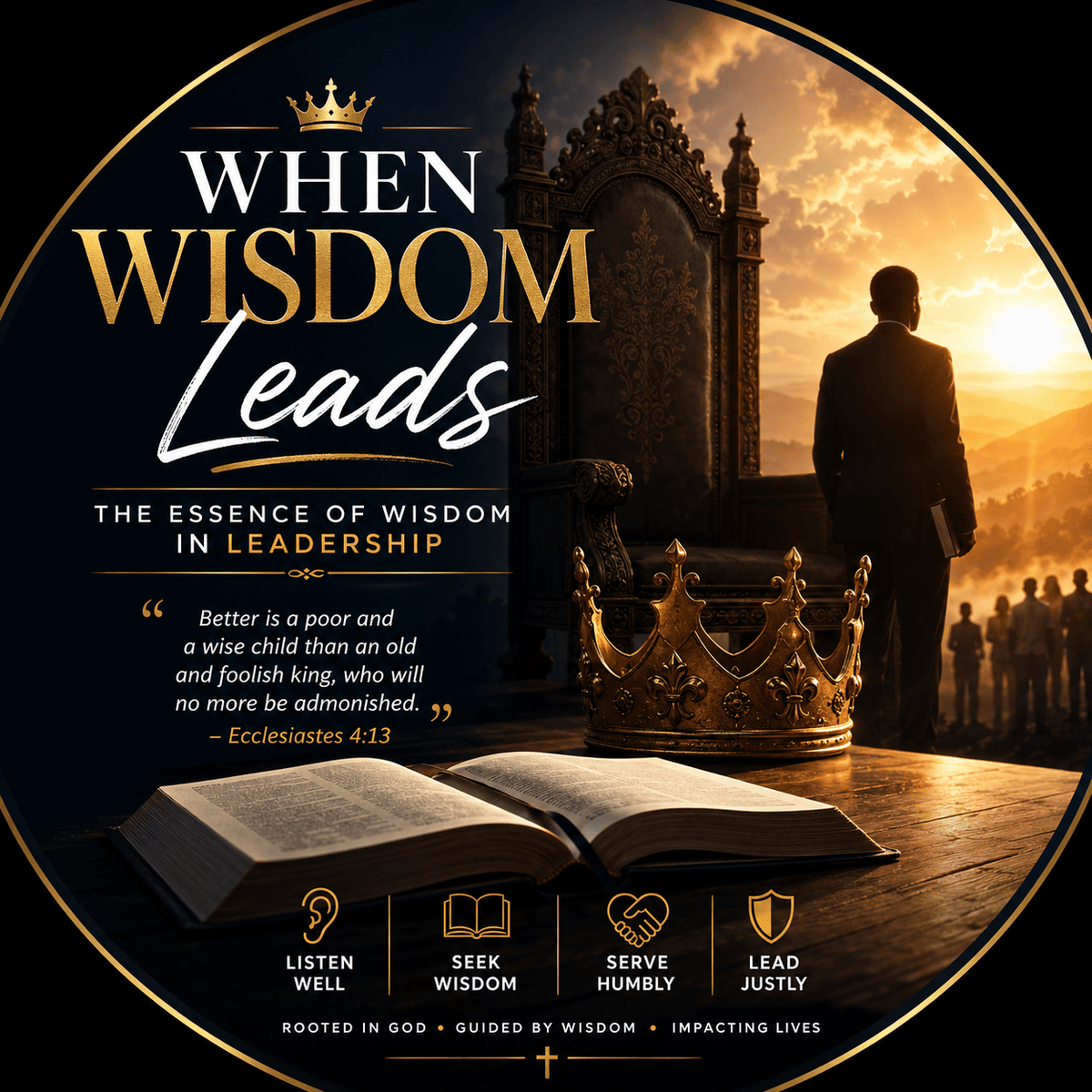
Leadership becomes truly meaningful when it moves beyond authority and embraces responsibility.
A person may have the ability to command people, but that does not automatically mean he knows how to lead them. True leadership requires more than the ability to give instructions. It requires wisdom, character, humility, compassion, discipline, and an understanding of responsibility.
This is where the example of Jesus Christ becomes essential.
Jesus was the greatest Leader to walk the earth, yet His leadership looked completely different from the leadership many people pursue today. He possessed all authority, yet He demonstrated humility. He had every reason to demand service, yet He served others.
Jesus said:
“For even the Son of man came not to be ministered unto, but to minister, and to give his life a ransom for many.” — Mark 10:45
This statement challenges our understanding of leadership.
Christ showed that leadership is not fundamentally about asking, “What can these people do for me?” It is about asking, “What can I do for these people?”
A leader who understands this principle will approach authority differently.
Such a leader does not see people merely as numbers, followers, employees, members, voters, or supporters. He sees them as people whose lives can either become better or worse because of his decisions.
That is why leadership without wisdom can be so destructive.
When selfish ambition becomes the foundation of leadership, people eventually become the ones who pay the price. A leader may protect his reputation while his followers carry the consequences of his mistakes. He may pursue personal comfort while those under his authority experience hardship. He may defend his position at the expense of the people he was appointed to serve.
Scripture gives us a sober reminder:
“When the righteous are in authority, the people rejoice: but when the wicked beareth rule, the people mourn.” — Proverbs 29:2
Leadership affects people.
A father who leads his home without wisdom can create confusion within his family. A church leader who refuses correction can mislead people spiritually. A business leader who places profit above integrity can damage the lives of employees and customers. A national leader who places personal ambition above the welfare of citizens can create suffering that extends far beyond his own generation.
The consequences of leadership are rarely limited to the leader.
This is why wisdom must accompany authority.
But biblical wisdom is more than intelligence. A person may be highly educated and still lack wisdom. Someone may have impressive credentials and still make destructive decisions. Someone may understand strategy but lack character.
The Bible says:
“The fear of the LORD is the beginning of wisdom: and the knowledge of the holy is understanding.” — Proverbs 9:10
True wisdom begins with God.
A leader who understands that his authority is ultimately accountable to God will not treat leadership casually. He will understand that integrity matters even when nobody is watching.
He will ask not only, “Is this legal?” but also, “Is this right?”
He will ask not only, “Will this benefit me?” but also, “Who will be affected by this decision?”
He will not measure success solely by applause, money, numbers, or popularity. He will consider character, justice, truth, and the wellbeing of the people entrusted to him.
This is the kind of wisdom that transforms leadership.
James 1:19 gives another practical principle:
“Let every man be swift to hear, slow to speak, slow to wrath.”
Imagine what could happen in our homes, churches, organisations, and communities if leaders genuinely embraced this instruction.
Many conflicts begin because people respond before they understand. Many decisions are made in anger and regretted later. Many relationships are damaged because someone was more interested in winning an argument than understanding another person's perspective.
Wisdom slows us down.
It teaches us to listen before reacting, understand before judging, and consider consequences before making decisions.
A wise leader does not have to know everything. He simply needs to know where to seek understanding.
And perhaps this brings us back to the warning of Ecclesiastes 4:13.
The tragedy of the old king was not that he lacked a throne. He had one.
It was not that he lacked experience. He had plenty.
It was not that he lacked authority. He possessed it.
His tragedy was that he had become unwilling to be corrected.
May we never become so comfortable in our positions that we stop learning. May we never become so celebrated that we become unreachable. May we never become so experienced that we believe we have nothing left to learn.
Whether we lead a family, church, business, organisation, community, or simply influence a few people around us, wisdom must remain at the centre of our leadership.
The world does not merely need more leaders. It needs wiser leaders.
It needs leaders who can listen without feeling threatened, receive correction without becoming offended, serve without seeking applause, and exercise authority without forgetting responsibility.
Most importantly, it needs leaders whose wisdom is rooted in God.
For leadership is not ultimately proven by how many people stand behind us. It is revealed by what happens to the people entrusted to us.
So, before we ask God for a bigger platform, perhaps we should ask Him for a wiser heart.
Before we seek greater authority, perhaps we should seek greater character.
Before we demand that people follow us, perhaps we should examine whether our lives are worth following.
A crown may place a person on a throne, but only wisdom can teach him how to sit there well.
May God give us the grace to lead with humility, serve with compassion, listen with patience, accept correction with maturity, and walk in the wisdom that comes from Him.
And when our leadership is tested, may it be evident that we did not merely possess a position—we possessed the wisdom to use it for the good of those entrusted to us and for the glory of God. Amen.