Writers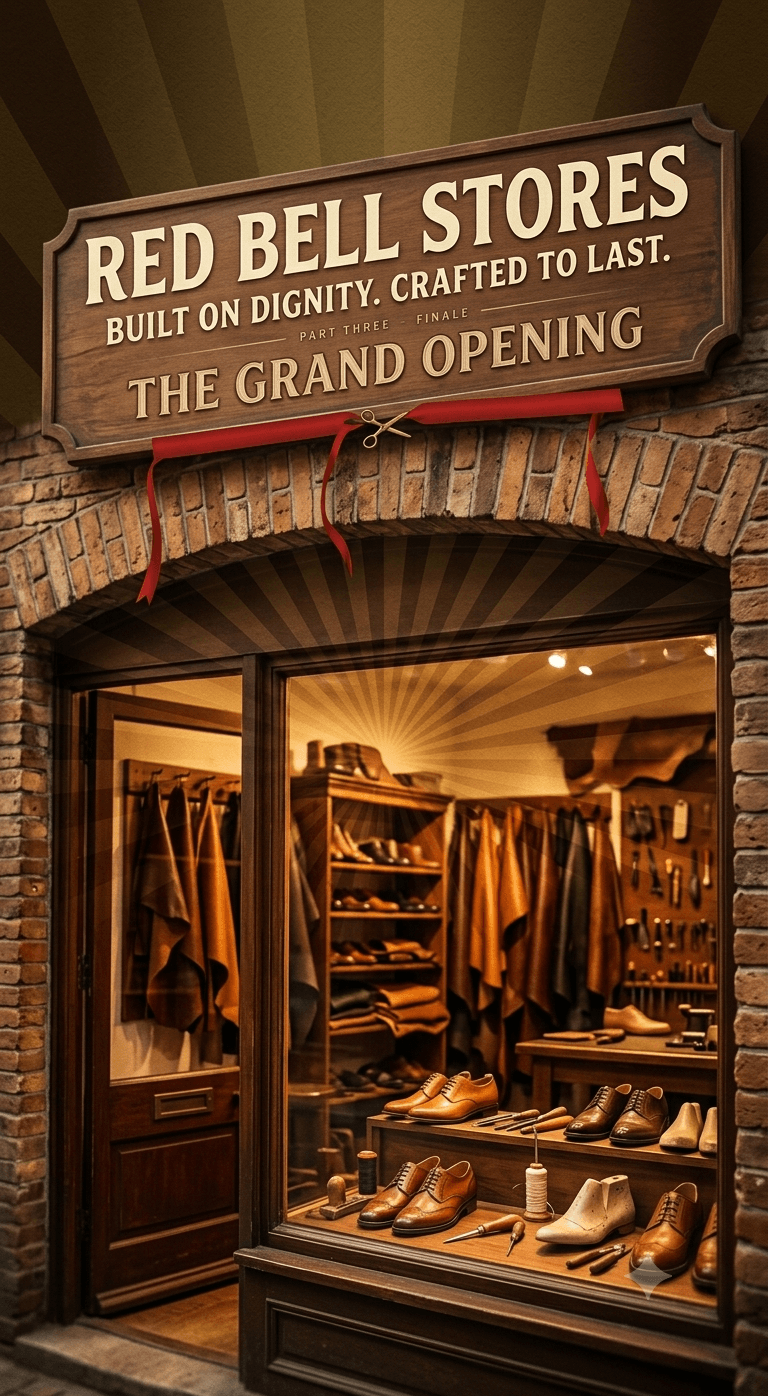
It's a bright Saturday morning on Mandela Road, and Red-Bell Stores is finally ready to officially open. The once-empty concrete room now feels warm and finished — smelling of fresh paint, cedar oil, and polished wood. A handmade wooden sign hangs on the back wall, carved by Pa Timothy himself, reading: "Red-Bell Stores — Built on Dignity. Crafted to Last." The shop is fully stocked with Samuel's leather sandals, sturdy school shoes, and small leather accessories, all neatly displayed.
Kelvin stands in the middle of it all, dressed sharply, nervous but composed.
By mid-morning, a crowd starts gathering outside — market women, cobblers, timber merchants, curious passersby. Then a small group walks up together: Kelvin's mother in her nicest outfit, glowing with pride; Pa Timothy, dressed formally and leaning on his walking stick; and Samuel, Raba, and Ibrahim, the men who helped build the drainage system for the shop.
Kelvin steps out to greet everyone. Looking at the crowd, he doesn't just see customers — he sees the actual people who helped him get here: the market women who once extended him credit, Raba who dug the drainage trench in the heat, Ibrahim who supplied materials, Samuel whose craftsmanship gives the shop its identity, and Pa Timothy, who kept guiding him with wisdom along the way.
He gives a short, heartfelt speech to the crowd. He admits that two years ago, he believed success only came from money, strict discipline, and guarding every naira tightly. Now he knows that was wrong — a business isn't really built from bricks and glass, it's built on trust, dignity, patience, and honoring the people around you. He tells the crowd that this store doesn't just belong to him — it belongs to everyone who helped him carry a shovel, lay a brick, or simply stood by him with integrity.
He hands his mother a pair of ceremonial scissors. She steps forward, emotional, and announces the opening of the store to the crowd before cutting the ribbon stretched across the doorway.
The crowd cheers, and people flood into the shop. Within minutes, it's full of activity — people admiring the shoes, examining the stitching, kids peering into the glass counters. By noon, half of the opening stock is already sold, with Kelvin carefully logging every sale in a new ledger using a pen Pa Timothy gave him as a gift.
Later that afternoon, while Samuel is explaining the leather-making process to a customer, Kelvin notices a young boy lingering near the shop entrance. The boy, maybe fourteen, is holding a tray of cheap plastic keychains, looking uncertain and hesitant, like he expects to be told to leave.
Instead of ignoring him or shooing him away, Kelvin grabs a cold drink and goes to sit with the boy right on the front steps. The boy is surprised but grateful, and shares that his name is David — he's selling keychains to help pay for his school books.
Kelvin smiles, pulls out a small notebook, and hands David the pen. Instead of brushing him off, Kelvin offers to teach him something valuable — how to properly keep track of his own sales in a ledger, before the boy sells another single keychain.