Writers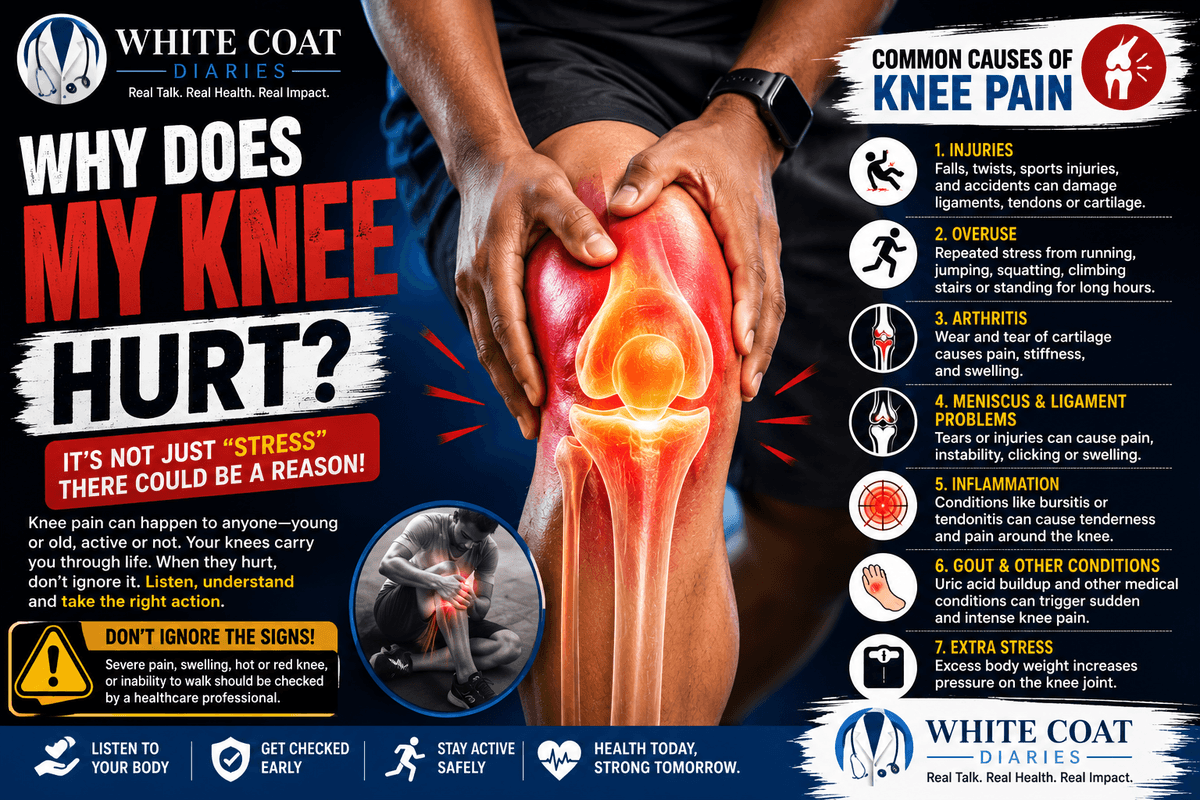
WHEN YOUR KNEE STARTS TO HURT: WHAT IS YOUR BODY TRYING TO TELL YOU?
Knee pain is often associated with aging, but it can affect people of all ages, including young adults.
It may begin as mild discomfort when climbing stairs or present as sharp pain after exercise, prolonged walking, or rising from a chair.
But what causes knee pain?
The knee is one of the body’s most active joints. It enables us to walk, run, jump, sit, stand, and climb stairs. Because it bears a significant portion of our body weight and is involved in numerous movements, it can be affected by injuries, overuse, inflammation, and various medical conditions.
1. Injuries
Falls, accidents, sudden twisting movements, and sports-related incidents can damage the knee. Ligaments, tendons, cartilage, and other internal structures may be affected.
Depending on the nature and severity of the injury, symptoms may include pain, swelling, stiffness, difficulty walking, or a sensation of instability.
2. Overuse
Knee pain does not always result from a fall or direct impact.
Repetitive activities such as running, jumping, squatting, climbing stairs, or engaging in intense exercise can place excessive stress on the knee. In some cases, pain develops gradually rather than suddenly.
For this reason, increasing physical activity too quickly can be problematic. The body requires adequate time to adapt.
3. Arthritis
Arthritis is another common cause of knee pain. Osteoarthritis, for example, occurs when the protective cartilage within a joint gradually deteriorates.
This can result in pain, stiffness, swelling, and reduced mobility.
Although arthritis becomes more common with age, knee problems are not limited to older adults.
4. Meniscus and Ligament Problems
The knee contains several structures that provide cushioning and stability.
The meniscus helps absorb shock, while the ligaments help stabilize the joint. Injuries to these structures may cause pain, swelling, clicking, or a sensation that the knee may give way.
5. Inflammation
Inflammation around the knee can make movement painful.
Conditions such as bursitis and tendon disorders may cause localized tenderness and discomfort, particularly during movement or when pressure is applied to the affected area.
6. Gout and Other Conditions
Knee pain may also result from conditions that affect the joints.
Gout, for example, can cause sudden, severe pain accompanied by swelling, redness, and warmth. Other inflammatory conditions may also affect the knee.
7. Additional Stress on the Joint
The knees bear much of the body’s weight during movement. Excess body weight can therefore increase the mechanical stress placed on the knee joints.
However, knee pain can affect people of all body types. Weight is only one potential contributing factor and does not explain every case.
WHEN SHOULD YOU SEEK MEDICAL ATTENTION?
Not every episode of knee pain indicates a serious problem, but persistent or severe symptoms should not be ignored.
Seek medical attention if you experience severe pain, significant swelling, visible deformity following an injury, an inability to bear weight on the affected leg, or a knee that becomes hot and red—particularly if these symptoms are accompanied by a fever.
If mild knee pain recurs or does not improve, a medical evaluation can help identify the underlying cause.
YOUR KNEES DESERVE ATTENTION TOO
We often take our knees for granted because they support us quietly throughout the day.
However, when pain develops, do not immediately dismiss it as “just stress” or “a normal part of aging.”
Pay attention to your body.
Knee pain is a symptom, not a diagnosis. Identifying the underlying cause is essential because appropriate treatment depends on the source of the pain.
Sometimes, your body whispers before it screams. Learn to listen while it is still whispering.
White Coat Diaries 🩺