 Writers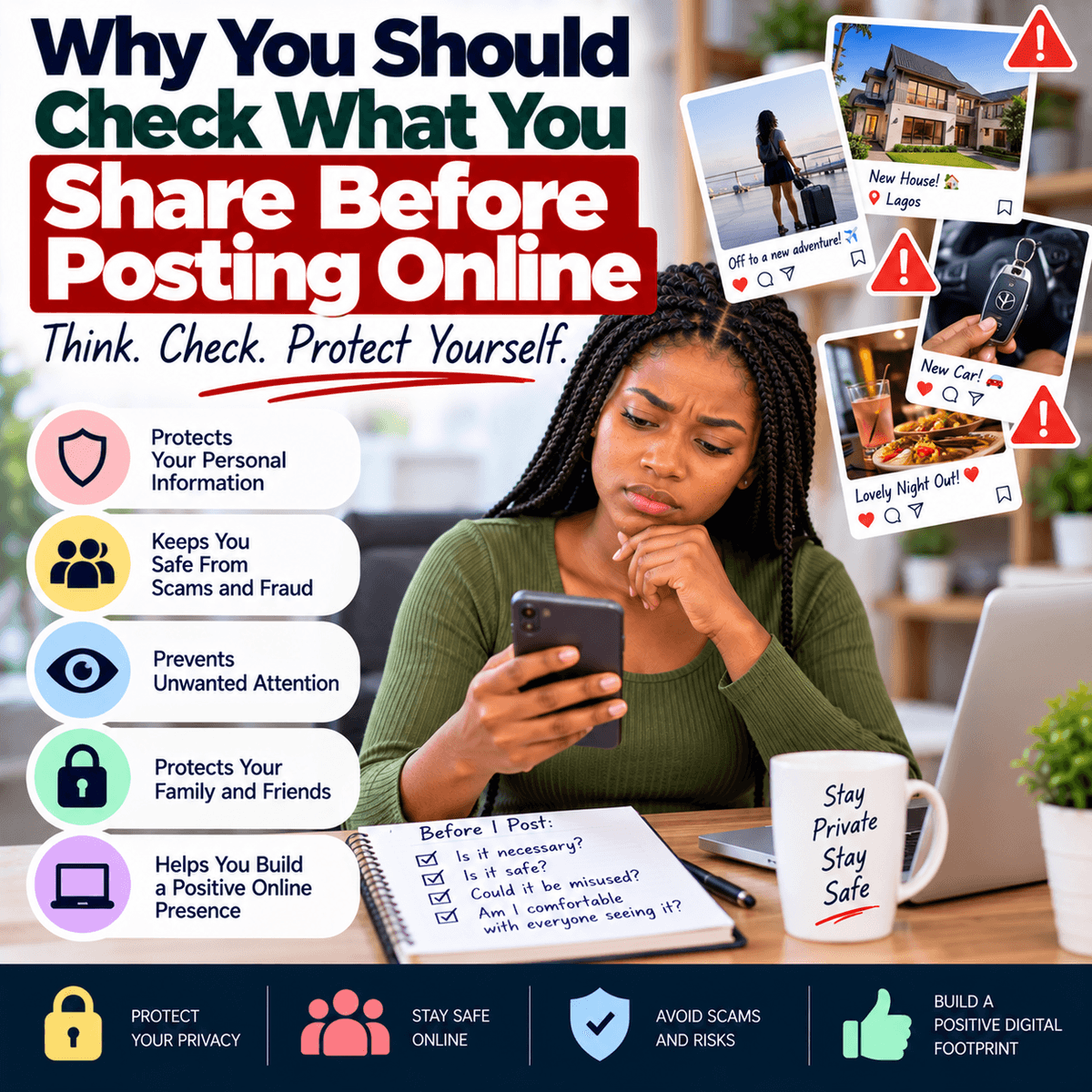
Social media and other online platforms have made it easy to share information within seconds. You can take a photograph, write a short message or record a video and immediately make it available to friends, colleagues or thousands of people you have never met. This convenience has many benefits, but it can also encourage people to share information without considering what may happen afterward. A post that feels harmless today could reveal personal information, affect your professional image or create a security problem later. This is why checking what you are about to share before posting it is an important digital habit. Start by looking beyond the main subject of a photograph or video. A picture taken at home may accidentally show a document containing your full name, phone number or other private information. A photograph taken at work could reveal information on a computer screen, customer records or confidential documents. A travel post may tell a large number of people that you are away from home. Even something as simple as sharing a photograph of a ticket, identification document or receipt can expose information that was never meant for the public. Before posting, take a few seconds to examine the entire image, read your message again and ask who could see it. Also remember that your intended audience may not always be the final audience. Someone can take a screenshot, forward a message or save an image. Privacy settings can reduce who normally sees your posts, but they cannot guarantee that information will remain within the group you originally selected.
Personal information deserves particular care because individual pieces of information can become more useful when they are combined. You may not consider your birthday, workplace, phone number, hometown or family information highly sensitive when each detail is shared separately. However, a person who collects information from several of your public posts may be able to build a detailed picture of you. This information can sometimes be used to make fraudulent messages more convincing. For example, a message that includes your real name, workplace or another detail you have publicly shared may appear more trustworthy than a completely random message. Be careful about posts that ask people to publicly answer questions about their first school, childhood nickname, mother's name or other personal details. Some of these may look like harmless games, but similar information has traditionally been used in account recovery questions. You should also think carefully before posting identification cards, bank information, payment cards, travel documents or documents containing account numbers. If you need to send a document to a legitimate organisation, use the official method provided by that organisation rather than posting it publicly or sending it through an unverified account. The same care should apply to information about other people. A photograph may include a friend, colleague or family member who does not want the image posted. Children's information deserves particular care because they may not fully understand or control the digital record being created about them. Before sharing another person's private information, photographs or personal situation, consider whether you have a good reason and whether they would be comfortable with the post.
Your location is another type of information that can be revealed without you noticing. Many people intentionally share their location when visiting a restaurant, hotel, event or tourist attraction, but location information can also appear in photographs, captions and other details. A street sign, building name, vehicle registration number or familiar landmark in the background can show where a picture was taken. Some devices and services may also store location information with photographs depending on their settings. You do not need to become afraid of sharing every travel photograph or public event. The important point is to think about whether posting your exact location in real time is necessary. If you are travelling, for example, you may prefer to share some photographs after leaving a location rather than publicly announcing exactly where you are at every moment. Review the location permissions and privacy settings of the apps you use so that you understand what information they can access and what may be attached to your posts. You should also be careful when sharing information about your home. Photographs showing house numbers, security arrangements, access points or other details may reveal more than you intended. Business owners and employees have an additional responsibility when posting from the workplace. A casual photograph can accidentally show internal documents, customer details, passwords written on a board or information about a project that has not been made public. Before posting an image from a work environment, check the background carefully and follow any rules your organisation has about sharing workplace information online.
What you post online can also affect how other people see you in professional and personal situations. This does not mean you need to create a false image of yourself or make every social media account completely formal. It simply means recognising that online content can travel beyond its original context. A comment written during an argument may remain available long after you have calmed down. A joke that makes sense among a small group of friends may be misunderstood when copied and shared elsewhere. An angry post about a workplace, customer or colleague can create problems if it reveals confidential information or becomes connected to your professional identity. Before posting when you are angry or upset, it can help to wait until you have had time to think about what you want to say. Ask yourself whether the post contains information that should remain private, whether it could unnecessarily harm another person and whether you would be comfortable with it being seen outside your intended audience. You should also check information before sharing it as fact. False stories, edited images and misleading claims can spread quickly because people often share content after reading only the headline. If a post makes a surprising claim, look for the original source and check whether reliable sources support it before forwarding it. Removing a post later does not guarantee that every copy disappears because other people may already have saved or shared it. A short review before publishing is usually easier than trying to control information after it has spread.
Developing safer sharing habits does not mean you have to stop using social media or avoid expressing yourself online. The goal is to make deliberate choices about what becomes public. Before posting, check the text, image, video and background for information you did not intend to reveal. Consider whether your current location needs to be shared immediately. Avoid publishing passwords, verification codes, financial information, identification numbers or other sensitive details. Review your account privacy settings periodically because platforms can introduce new features and you may also change how you use an account over time. Remove old applications or connected services that you no longer use where appropriate, and protect important accounts with strong, different passwords and additional sign-in security such as two-factor authentication. Remember that privacy settings are useful but should not be your only protection. Once another person can see something, they may be able to copy it. It is therefore better to avoid posting information that could cause serious problems if it reached a wider audience. This simple question can help before you publish anything: would I still be comfortable if this post were seen by someone outside the group I intended? If the answer is no, reconsider what you are sharing or remove the sensitive part. Technology makes publishing almost instant, but you do not have to make the decision instantly. Taking a few seconds to review what you share can help protect your privacy, your accounts, other people's information and your professional reputation while still allowing you to enjoy the benefits of communicating online.
