Writers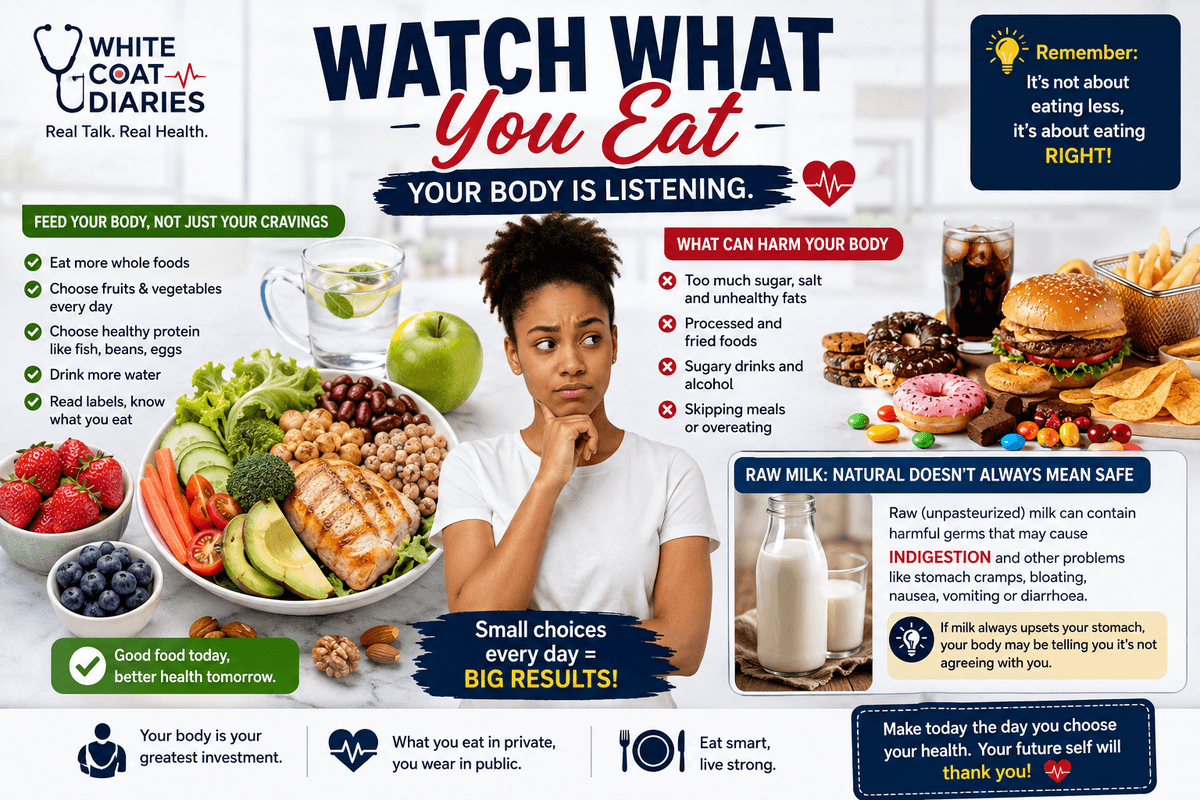
You may forget what you ate yesterday, but your body doesn’t.
Every day, we make food choices. Sometimes we choose what is healthy, but other times we eat simply because something looks delicious, smells amazing, or is readily available.
But here is something we often forget: your taste buds enjoy the food for a few minutes, but your body has to deal with the consequences afterward.
Food is not just about filling your stomach. Your body uses what you eat to produce energy, build and repair tissues, support your immune system, and keep your organs functioning properly.
So, what are you feeding your body?
NOT EVERYTHING THAT TASTES GOOD IS GOOD FOR YOU
This doesn't mean you can never enjoy fried food, snacks, sweets or your favourite treats. The problem comes when these foods become the major part of your everyday diet.
Eating too many foods high in added sugar, salt and unhealthy fats while eating very few fruits, vegetables, legumes and other nutritious foods can make it harder for your body to get the nutrients it needs.
Your stomach can be full while your body is still saying, “I need better food!”
AND YES, WATCH WHAT YOU DRINK TOO
Sometimes we pay attention to our food but completely ignore what is inside our cups.
Soft drinks, sugary beverages and some energy drinks can contain large amounts of added sugar. Drinking them frequently can add a lot of sugar and calories to your diet.
Don't wait until you're extremely thirsty before thinking about hydration.
Water is one of the simplest choices you can make for your body.
WHAT ABOUT RAW MILK?
Let's talk about something many people consider “natural” and therefore automatically safe: raw milk.
Raw milk is milk that has not been pasteurized. Because it hasn't undergone pasteurization, it can contain harmful germs that may cause foodborne illness.
These germs can lead to symptoms such as stomach pain, cramps, nausea, vomiting and diarrhoea. For some people, drinking milk can also cause bloating, gas and abdominal discomfort because of lactose intolerance.
So if you drink milk and your stomach starts behaving like it has declared war on you, don't simply ignore the pattern.
And remember: raw milk isn't automatically healthier just because it is natural.
Choosing pasteurized milk is generally safer because pasteurization reduces harmful microorganisms.
DON'T LET YOUR EYES DO ALL THE CHOOSING
Food advertisements and attractive packaging can make almost anything look irresistible.
But before grabbing that snack, drink or meal, ask yourself:
“What exactly am I putting into my body?”
Read food labels when available. Pay attention to serving sizes, added sugars and sodium. Look for foods that provide useful nutrients rather than choosing something simply because the package looks attractive.
BUILD A BETTER PLATE
You don't need an expensive diet to eat better.
Try to include different nutritious foods in your meals. Fruits and vegetables provide important vitamins, minerals and fibre. Beans and other legumes can provide protein and fibre. Eggs, fish and other protein foods help support growth and tissue repair. Whole grains and other high-fibre foods can provide energy and nutrients.
The goal isn't perfection.
The goal is making better choices more often.
So, the next time you're about to eat something, pause for a moment.
Ask yourself:
“Is this feeding my body, or am I only feeding my cravings?”
Your body is working for you every second—while you sleep, work, walk, laugh and live.
Give it something worth working with.
Watch what you eat. Watch what you drink. Listen to your body.
Because good health isn't built from one perfect meal.
It is built from the choices you make repeatedly.
🤍 White Coat Diaries — Real Talk. Real Health.