Writers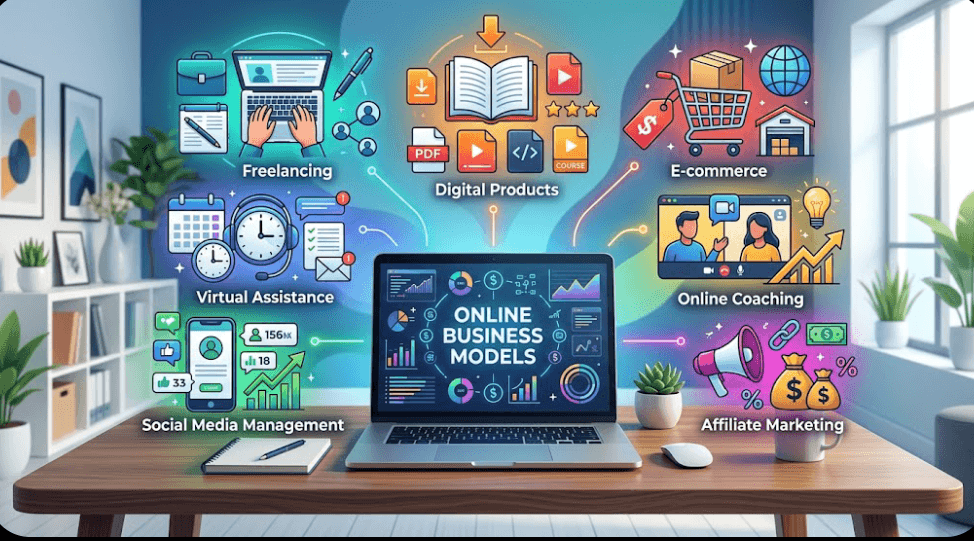
Thinking about starting an online business but not sure where to begin? You're not alone. Between the cost of living and the appeal of flexible work, more people than ever are looking for ways to earn income on their own terms — without quitting their day job or draining their savings.
The good news: you don't need a business degree, a warehouse full of inventory, or tens of thousands of dollars to get started. Many online businesses can be launched with a laptop, an internet connection, and a willingness to learn.
Below are seven realistic online business models you can start now, along with what each one actually involves.
1. Freelance Writing or Content Creation
Businesses of all sizes need content — blog posts, website copy, email newsletters, product descriptions, and more. If you can write clearly and meet deadlines, this is one of the fastest ways to start earning.
How to start: Build a small portfolio (even 2–3 sample pieces written for practice), then look for clients on platforms like Upwork, Contra, or LinkedIn. Many writers also land work through cold outreach to small businesses that don't yet have a blog or consistent content.
Reality check: Rates vary widely based on niche and experience. Specializing in a profitable area — like finance, health, or B2B software — tends to command higher pay than general blogging.
2. Virtual Assistant Services
Entrepreneurs and small business owners often need help with tasks like email management, scheduling, customer service, or basic bookkeeping, but can't afford a full-time hire. That's where virtual assistants (VAs) come in.
How to start: Identify a skill set you already have — organization, communication, familiarity with tools like Google Workspace or Notion — and offer it as a service. Facebook groups, VA agencies, and referrals from your existing network are common ways to find first clients.
Reality check: This business scales well once you niche down, such as specializing in real estate VA work or podcast management, where you can charge more for specialized knowledge.
3. Print-on-Demand or Dropshipping Store
If you've ever wanted to sell products online without managing inventory, print-on-demand and dropshipping models let you do exactly that. A supplier handles production and shipping; you handle marketing and the storefront.
How to start: Platforms like Shopify, combined with print-on-demand services such as Printful or Printify, let you set up a store selling custom apparel, mugs, or accessories in a day. Dropshipping works similarly but with a wider range of general products through suppliers.
Reality check: Margins can be thin, and competition is real. Success usually comes down to finding an underserved niche and investing time in marketing rather than just listing products and hoping for sales.
4. Online Tutoring or Coaching
If you have expertise in a subject — academic, professional, or a specific skill like a language or an instrument — online tutoring lets you turn that knowledge into income.
How to start: Platforms like Preply, Wyzant, or Outschool connect tutors with students. Alternatively, you can go independent and market directly through social media or a simple website, which allows you to set your own rates without a platform fee.
Reality check: Building a personal brand (through short videos or content demonstrating your expertise) tends to attract higher-paying clients than platform listings alone.
5. Digital Products (Templates, Guides, or Courses)
Digital products are appealing because you create them once and can sell them repeatedly. Templates, ebooks, planners, and mini-courses are popular formats, especially for creators with an existing audience or niche expertise.
How to start: Identify a specific problem your target audience faces — for example, a budgeting spreadsheet for freelancers or a resume template for career changers. Tools like Canva, Gumroad, or Etsy make it possible to design and sell these products without technical skills.
Reality check: The biggest challenge isn't creating the product — it's getting eyes on it. Digital products tend to perform best when paired with content marketing or an existing email list.
6. Social Media Management
Many small businesses know they should be active on social media but don't have the time or expertise to do it well. If you understand platforms like Instagram, TikTok, or LinkedIn, you can offer your services as a social media manager.
How to start: Offer to manage social accounts for a local business or a business owner in your network, even at a discounted rate initially, to build case studies. From there, use results (follower growth, engagement, leads generated) to pitch higher-paying clients.
Reality check: This role has evolved beyond just posting content — clients increasingly expect strategy, analytics understanding, and sometimes basic content creation like short-form video editing.
7. Affiliate Marketing Through Content
Affiliate marketing involves promoting other companies' products and earning a commission on resulting sales. It's commonly done through blogs, YouTube channels, or niche websites that recommend products relevant to a specific audience.
How to start: Choose a niche you're genuinely knowledgeable about, create helpful content (reviews, comparisons, how-to guides), and join affiliate programs relevant to that niche through networks like Amazon Associates, ShareASale, or direct brand partnerships.
Reality check: This model typically takes longer to generate meaningful income since it depends on building traffic and trust first. It rewards patience and consistency over quick wins.
Which Online Business Is Right for You?
There's no single "best" option — the right choice depends on your existing skills, the time you can commit, and how much risk you're comfortable taking on.
If you want income quickly, service-based businesses like freelance writing or virtual assistant work tend to generate revenue faster since you're trading time and skill directly for payment. If you're more interested in building something scalable over time, digital products or affiliate marketing may be worth the patience they require.
The most important step is simply starting. Pick the option that best matches your current skills and available time, set a realistic first goal — such as landing one client or making one sale — and build from there. Every successful online business started with someone taking that first small step.