Writers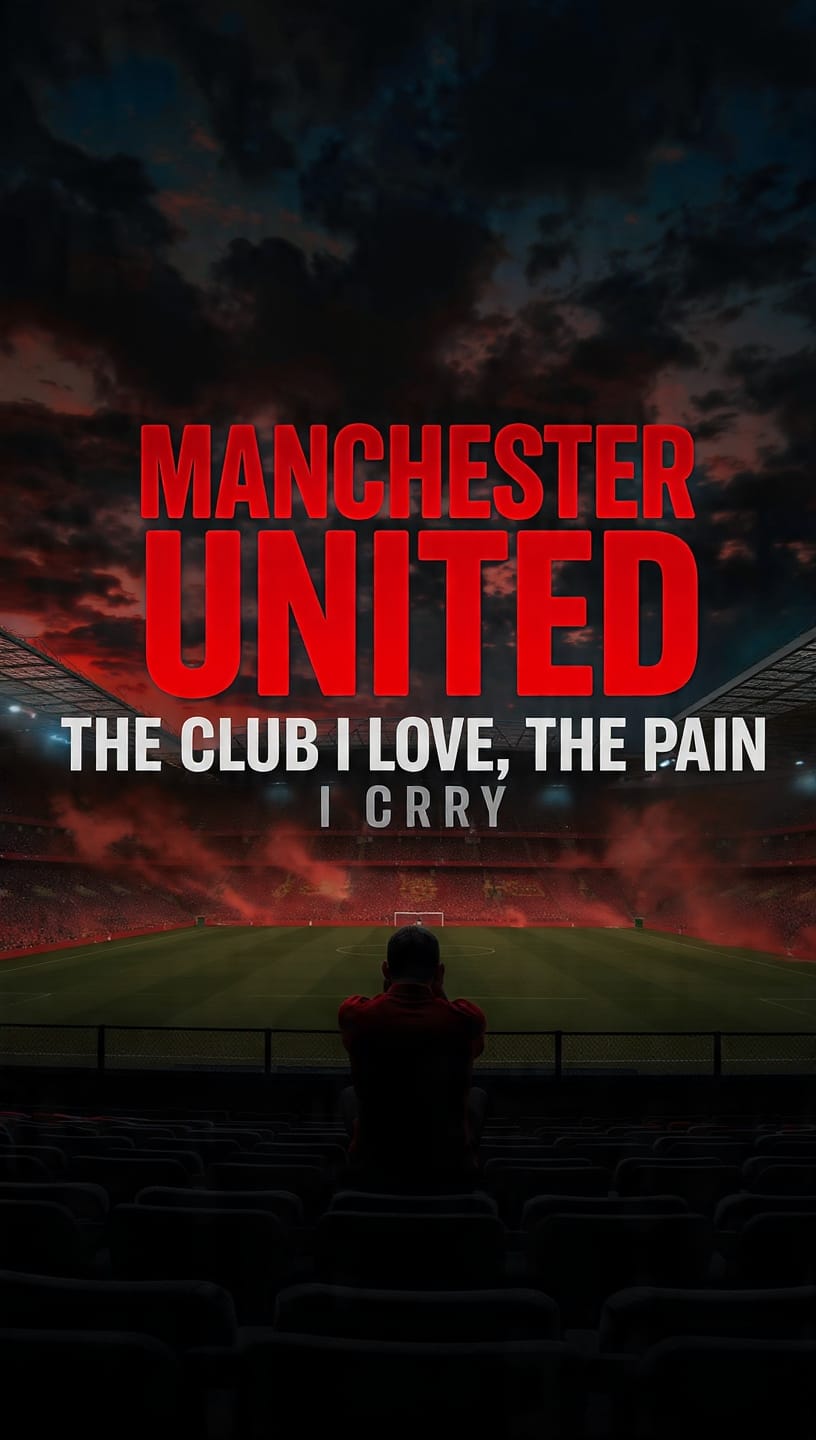
Manchester United: The Club I Love, The Pain I Carry
There are football clubs you support, and then there are football clubs that become part of who you are.
For me, Manchester United is more than a football club. It is emotion. It is memories. It is the joy of celebrating goals, the pain of losing matches, the arguments with friends, the late nights watching football and the feeling that, no matter what happens, you will always come back.
That is why the post-Sir Alex Ferguson era has hurt so much.
When Ferguson retired in 2013, I don't think any Manchester United supporter truly understood what was coming. We had just won the Premier League. We were used to success. We were used to seeing United fight until the final whistle. We were used to believing that somehow, someway, Manchester United would find a way.
Then the greatest manager in the club's history walked away—and everything changed.
The Day the Dream Started Fading
David Moyes came in with the impossible responsibility of replacing Ferguson. The appointment did not work. Then came Louis van Gaal, José Mourinho, Ole Gunnar Solskjær and Erik ten Hag.
Each manager arrived with hope.
Each arrival made us believe again.
We bought players. We watched preseason games. We discussed tactics. We imagined trophies. We told ourselves, "This could finally be the beginning of something special."
And then, slowly, the same disappointment returned.
Some managers won trophies. Some produced memorable moments. Some brought back hope for a while. But none could restore the Manchester United we had known.
That is perhaps the most painful part.
We were no longer afraid of Manchester City, Liverpool, Chelsea or Arsenal.
Instead, we began fearing ordinary league matches.
A fixture against a supposedly weaker opponent could leave United supporters nervous. A 1–0 lead no longer felt safe. A difficult away game felt like a crisis waiting to happen.
How did Manchester United become this?
The Glazers and the Anger of the Supporters
For many supporters, the problem goes beyond the players and managers.
The Glazer ownership became a symbol of everything that had gone wrong.
Manchester United remained one of the biggest commercial brands in world football, yet the footballing side of the club appeared increasingly disconnected from its history and ambitions.
The money was there. The global support was there. The commercial power was there.
But where was the footballing vision?
Old Trafford, the home of so many unforgettable nights, needed serious attention. The club's football structure struggled to maintain consistency. Recruitment became a source of frustration, with huge amounts spent on players who often failed to justify their price tags.
As a supporter, you begin to ask yourself questions.
How can one of the richest and most famous football clubs in the world look so poorly managed?
How can a club that once seemed to have a plan for everything repeatedly appear to have no clear direction?
And perhaps the hardest question:
What happened to Manchester United?
INEOS: A New Hope or Another False Dawn?
When Sir Jim Ratcliffe and INEOS entered the picture, I wanted to believe again.
Perhaps this was the change we had been waiting for.
But the reality is important: INEOS did not completely buy Manchester United. It acquired a 25% stake and took control of football operations while the Glazer family remained majority owners.
For supporters, however, what mattered was whether this new football leadership could finally bring professionalism, accountability and a long-term vision.
New executives arrived. The football structure began changing. Recruitment and sporting operations were reorganised.
But rebuilding Manchester United is not like changing a light bulb.
You cannot simply switch something off and turn it back on.
The damage accumulated over more than a decade.
There are contracts to deal with. Players to move on. Young players to develop. Recruitment mistakes to correct. Facilities to improve. A footballing culture to rebuild.
And above everything else, there is trust to rebuild with the supporters.
We Miss the Manchester United We Knew
Sometimes I miss the old United more than I can explain.
I miss the confidence.
I miss watching a United team and believing we could beat anybody.
I miss the mentality of never giving up.
I miss those dramatic comebacks when opponents thought the game was finished but United somehow found another gear.
I miss the feeling that the badge itself carried weight.
Of course, football has changed. The Premier League has become more competitive. Manchester City has built an extraordinary footballing machine. Liverpool have rebuilt themselves. Arsenal have returned to serious contention.
But Manchester United cannot use the changing football landscape as an excuse forever.
The club must look in the mirror.
The problem is not simply one manager.
It is not simply one player.
It is not simply the Glazers.
It is not simply recruitment.
It is a combination of years of decisions that gradually took Manchester United away from the identity that made it great.
Can Manchester United Rise Again?
I don't know.
And perhaps that is what makes this period so painful.
But I still believe.
Because supporting Manchester United has never been about supporting the club only when it is winning.
Anybody can celebrate when trophies are coming.
Real supporters stay when the club is hurting.
I want Manchester United to build something properly this time. Not another temporary project. Not another cycle of buying expensive players, changing managers and starting all over again.
I want a football structure with a clear identity.
I want young players given opportunities.
I want recruitment based on footballing intelligence rather than reputation.
I want Old Trafford restored to the magnificent home it deserves to be.
And most importantly, I want players to understand what that red shirt represents.
Manchester United does not need to become Manchester United of 1999 overnight.
It simply needs to become a club that knows who it is again.
To My Beloved Manchester United
Maybe the glory days are gone.
Maybe the road back will take years.
Maybe there will be more heartbreak before the happiness returns.
But I refuse to believe that our story is over.
Manchester United has survived generations, crises and changing eras. It has fallen before and found a way to rise.
So I will continue to watch.
I will continue to complain.
I will continue to celebrate the goals.
I will continue to suffer through the defeats.
And, perhaps most importantly, I will continue to believe.
Because Manchester United is not just about the trophies in the cabinet.
It is about the memories in our hearts.
And one day, when this great club finally finds its way back to the top, I hope we will look back at these difficult years and say:
"We survived it. We never stopped believing. And Manchester United came back."
Glory, glory, Manchester United.