Writers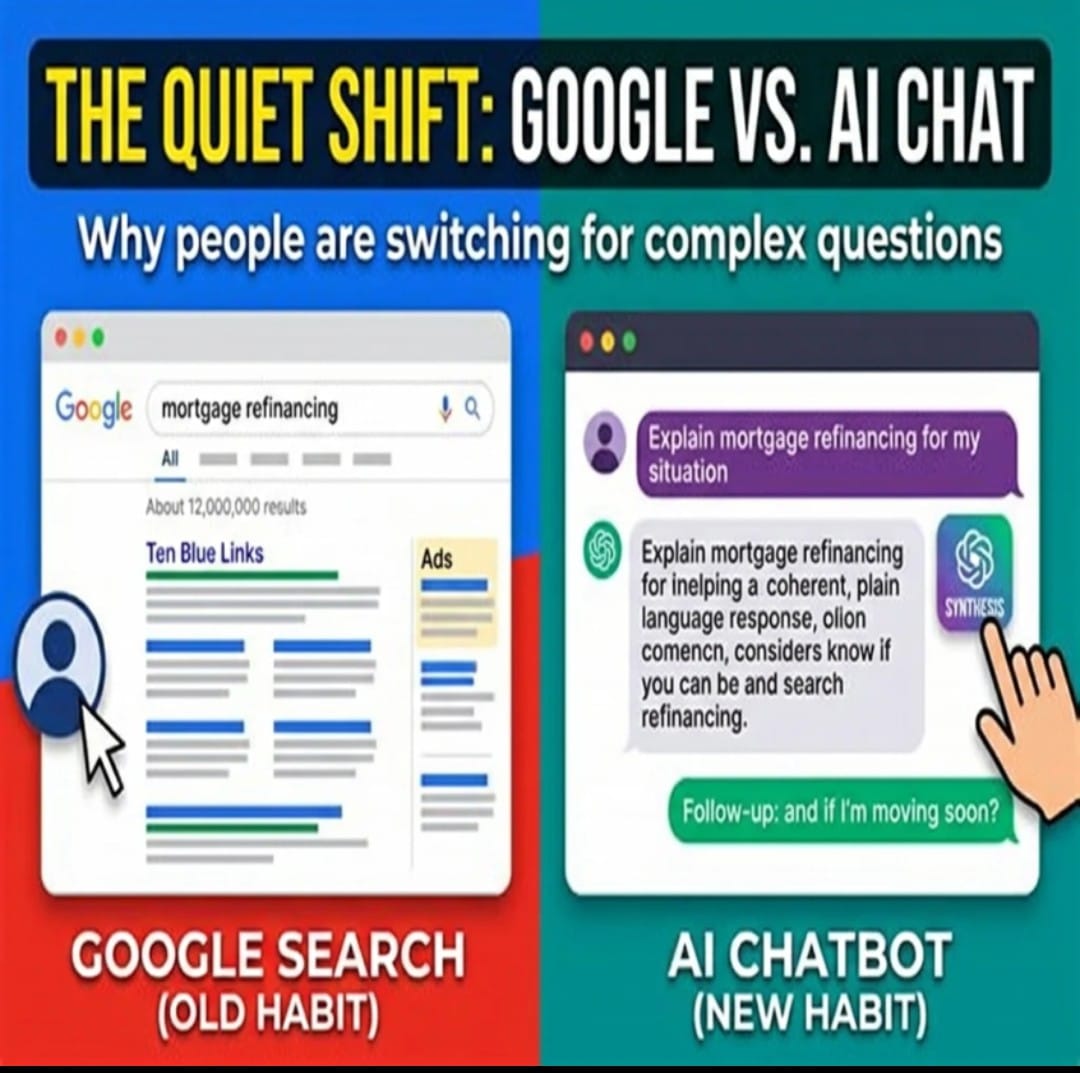
A few years ago, "Google it" was shorthand for "look it up." Today, a growing number of people open ChatGPT instead. Not for everything but for the questions that actually take thought to answer, it's often the first tab they reach for.
This isn't a dramatic takeover. Google still handles the overwhelming majority of searches worldwide, and it isn't going anywhere. But something real has shifted in how people research, learn, and make decisions online, and it's worth understanding why.
## WHY PEOPLE ARE SWITCHING
Type a question into Google and you get ten blue links, ads, and a wall of "search intent" content written to rank rather than to help. You still have to click through, skim, compare, and stitch the answer together yourself.
Ask ChatGPT the same question and you get a direct answer, in plain language, tailored to what you actually asked. If it's not quite right, you don't reformulate your search terms — you just say so, and it adjusts.
That difference matters most for a specific category of question: the ones where you don't just want a fact, you want it explained, compared, or applied to your situation.
## PRACTICAL EXAMPLES OF WHERE THESE SHOWS UP
- Research and learning: Instead of opening five articles to understand how mortgage refinancing works, someone can ask ChatGPT to explain it, then follow up with "what if my rate is fixed?" or "does this make sense if I'm moving in two years?" The back-and-forth replaces the browser tabs.
- Troubleshooting: A developer hitting a cryptic error message used to paste it into Google and dig through old forum threads hoping someone had the same problem. Now they paste it into ChatGPT and get a direct diagnosis, often with the fix already written out though it's still worth testing before trusting it blindly.
- Comparisons and decisions: "Should I get a standing desk or a desk converter?" isn't a query Google answers well; it returns product listings and reviews you have to read yourself. An AI assistant can lay out the actual trade-offs based on what you tell it about your space and budget.
- Explaining unfamiliar topics: A parent helping with a confusing homework question, or someone trying to understand a medical term from a doctor's note, often gets a clearer explanation from a conversational answer than from the first search result, which may be written for a different audience entirely.
## WHERE GOOGLE STILL WINS CLEARLY
It would be inaccurate to say AI chatbots have replaced search. They haven't, and for good reason.
- Local and transactional searches: finding a nearby restaurant, checking store hours, getting directions — are still faster and more reliable through Google Maps and traditional search.
- Current events and fast changing facts: stock prices, today's weather, breaking news — are Google's strength, since it indexes the live web. AI chatbots can be slower to reflect what just happened, and some don't browse the web at all unless a search feature is explicitly turned on.
- Buying things: comparing prices, reading verified reviews, checking availability — still benefits from Google Shopping and retailer sites directly.
- Verifying something important: AI answers can sound confident and still be wrong. For anything with real consequences — medical, legal, financial. The safer habit is to treat an AI answer as a starting point, then check it against a source you trust.
## THE BIGGER SHIFT: FROM SEARCH TO CONVERSATION
The real change isn't that one tool is beating another. It's that "search" is splitting into two different habits.
When you know roughly what you're looking for, typing it into Google is still the fastest path. When you're trying to *understand* something, or you need an answer shaped around your specific situation, a conversation gets you there faster than a list of links.
This is why the shift feels quiet rather than sudden. Most people haven't consciously decided to abandon Google. They've just noticed that for a certain kind of question, opening a chat window saves time, and they've started doing it without thinking twice.
## WHAT THIS MEANS IF YOU ARE ONE SEARCHING
A few habits are worth adopting if you're using AI tools alongside search rather than instead of it:
1. Use AI for synthesis, Google for facts: Ask the chatbot to explain, compare, or draft. Use search to confirm names, dates, prices, or anything you're about to rely on.
2. Follow up instead of researching: The advantage of a conversation over a search bar is that you can refine. If the first answer misses your context, add it — don't start over with a new query.
3. Ask for sources when it matters:; If you're using an AI answer for anything important, ask it to point you to where the information comes from, or search separately to double-check.
4. Don't assume it's current: Unless the tool explicitly says it searched the web, treat its knowledge as having a cutoff date, especially for anything recent.
Google isn't being replaced, it's being narrowed. It remains the default for finding things: places, products, pages, and fresh information. But for the slower, more thoughtful searches a growing number of people are quietly choosing a conversation instead of a search bar.
That's not a headline-grabbing revolution. It's just a habit changing, one question at a time.