Writers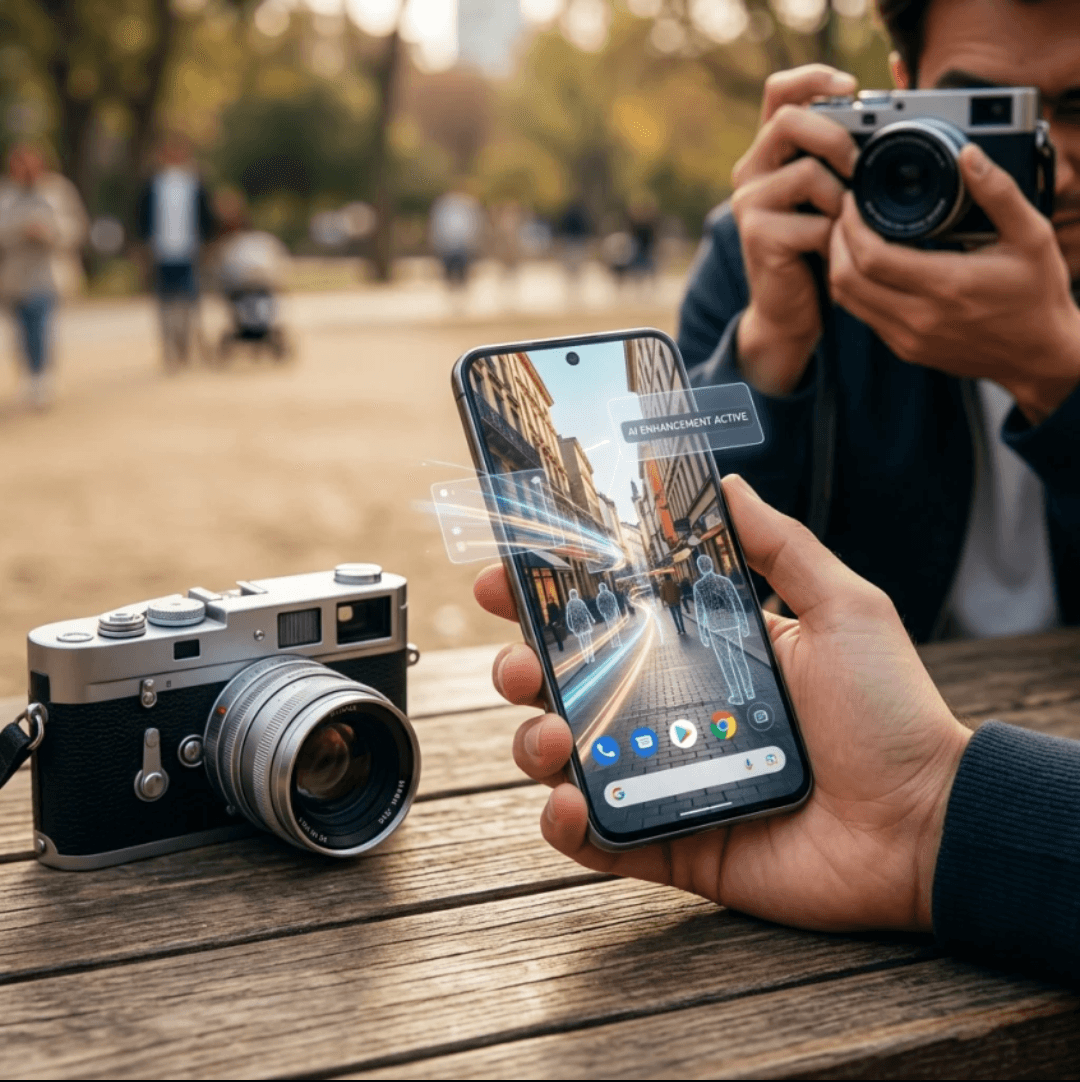
For over a decade, "better camera" has been the main reason people upgrade their phones. But lately, the story has gotten more complicated. AI can now generate a photorealistic image from a text prompt, dedicated cameras are seeing a comeback among younger buyers, and some phone makers lean so heavily on software processing that two phones with similar hardware can produce very different-looking photos. So is the smartphone camera era actually ending, or is it just changing shape? It's closer to the second — but the changes are worth understanding, because they affect how you should think about your next phone.
When people talk about the smartphone camera era, they usually mean the period when phone cameras got good enough to replace point-and-shoot cameras for most everyday users. That shift was genuine: compact camera sales dropped sharply once phones like the iPhone and early Android flagships made carrying a separate camera feel unnecessary for casual photography.
The biggest shift isn't in the camera hardware — it's in what happens after you press the shutter. Features like AI-based "Best Take" (which combines multiple shots of a group photo so everyone's eyes are open) or generative fill (which lets you extend a photo's background or remove objects convincingly) blur the line between a photograph and an edited image.
Here's a practical example: say you take a photo of a birthday cake and use your phone's AI tool to remove a stranger who walked into the background. Is that still "your photo"? Technically the cake, the candles, and the person blowing them out are real. But part of the image was generated by an algorithm, not captured by a lens. That distinction matters more as these tools get built directly into camera apps, rather than offered as optional edits you choose to apply.
This doesn't make smartphone cameras worse. For most people, it makes them more useful — fewer ruined shots, less time editing. But it does mean the camera is becoming less of a recording device and more of an image-creation tool.
You may have noticed more people carrying compact digital cameras, or even film cameras, again — particularly younger users on social media. This isn't a sign that smartphone cameras are failing; it's a style and intentionality choice. A dedicated camera forces you to think about a shot before taking it, produces a different look (especially with film or certain sensor types), and separates "documenting a moment" from "posting immediately," since you usually have to transfer the photos before sharing them.
For example, someone at a concert might use their phone to film a quick video for their story, but bring a small digital camera for the photos they actually want to keep and edit later. The phone is for speed and sharing; the dedicated camera is for a slower process or a specific look.
This trend is genuine, but limited. It's mostly visible among photography hobbyists and certain online communities, not the general public. Most people still take the overwhelming majority of their photos on their phone, simply because it's the device they already have with them.
Smartphone camera hardware faces a real constraint: phones need to stay thin and light, which limits how large a camera sensor and lens can be. Larger sensors capture more light and detail, which is part of why dedicated cameras can still outperform phones in certain situations.
Manufacturers work around this with computational photography: taking multiple exposures and combining them with software, or using AI to sharpen and denoise images after capture. This is genuinely effective for everyday use. But it's also why some phone photos in tricky lighting can look slightly "over-processed" — unnaturally smooth skin, halos around edges, or skies that look painted rather than photographed. That's a software trade-off, not a hardware failure, and it's one area where phone cameras haven't fully caught up to dedicated cameras yet.
If you're deciding whether any of this actually matters to you, here's a practical way to think about it:
- If you mainly share photos on social media or in messages, none of this changes much for you. Your phone camera, combined with its built-in AI processing, is more than capable, and will likely keep improving in ways you'll barely notice day to day.
- If you print large photos, shoot in consistently low light, or care about images looking unedited, it's worth knowing which AI features your phone applies automatically. Many phones let you turn off aggressive processing (like extra sharpening or "beauty" filters) in the camera settings — check there if your photos look artificial.
- If you're getting into photography as a hobby, a dedicated camera still offers manual control and image quality that phones haven't matched, even though it comes with a bigger price tag. Wanting one isn't a downgrade — it's a different tool for a different goal.
Smartphone cameras aren't disappearing, and they're not getting worse. What's ending is the idea that camera quality is just about megapixels and lenses. The bigger story now is about AI processing, and the growing question of how much of a "photo" is actually captured versus generated. That's a more interesting shift than a decline — and one worth keeping in mind the next time you're comparing phones, or looking at a photo you're not sure you can trust.