 Writers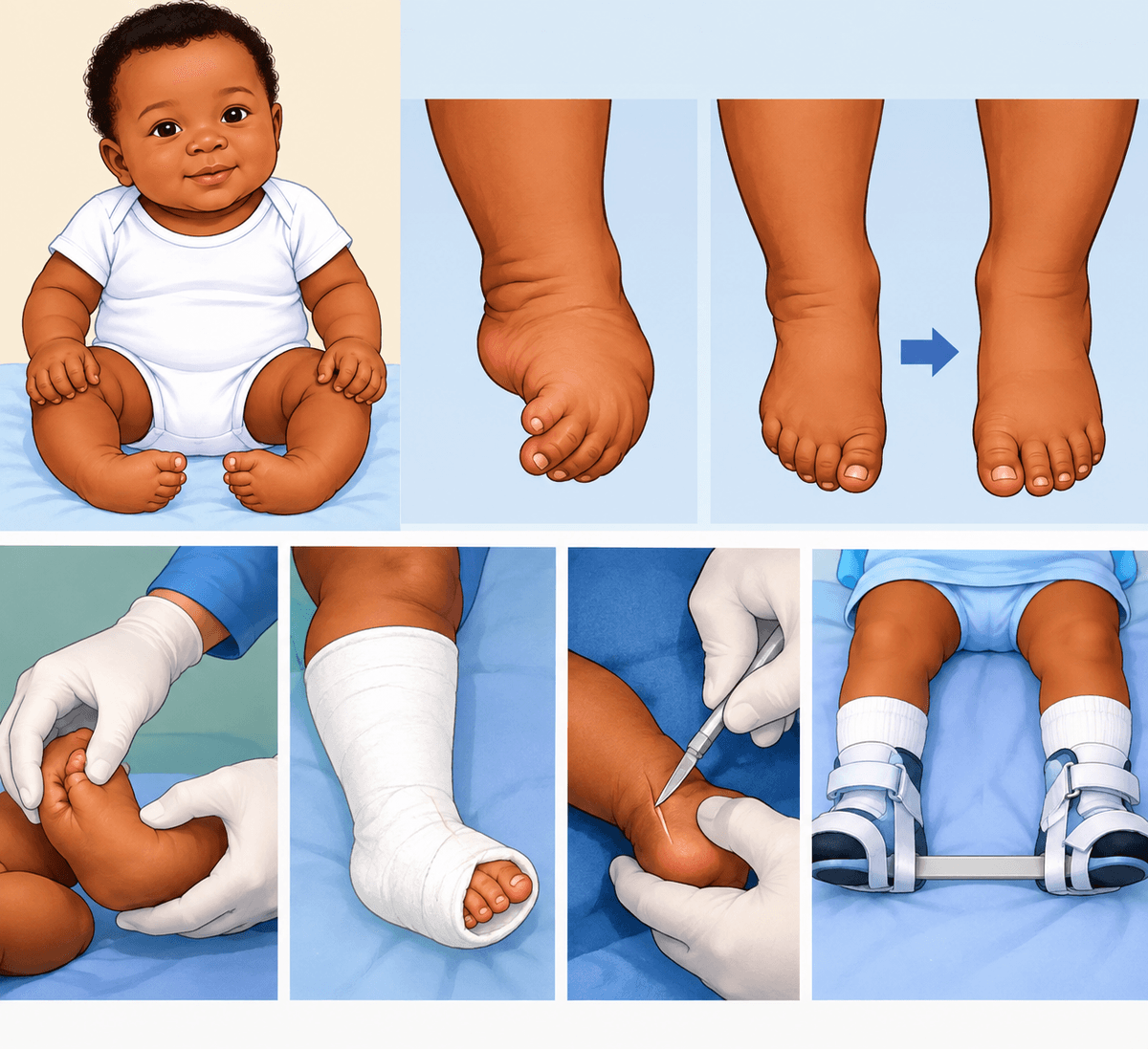
Clubfoot is a condition where a newborn's feet are pointed inward or downward. The medical term for clubfoot is congenital talipes equinovarus (CTEV). One of the most prevalent birth abnormalities of the foot is this one. Clubfoot is treatable, particularly when treatment starts early, even though its appearance can be concerning for parents.
What Is the Cause of Clubfoot?
The precise cause of most instances of clubfoot is unclear. A combination of environmental and genetic variables may be the cause. The condition may happen more often in some households. Certain genetic, muscular, or neurological disorders may also be accompanied by clubfoot.
Significantly, parents need to know that clubfoot is not caused by anything they did or did not do during pregnancy.
Step 1: Determine if you have clubfoot.
An ultrasound scan can occasionally identify clubfoot during pregnancy. It is typically confirmed once the infant is delivered, nevertheless.
The impacted foot may appear smaller than the other foot, with the sole pointing inward or downward. Furthermore, the foot and ankle could appear rigid and challenging to return to their original position.
Medical Examination: Step 2
After birth, a medical expert checks the baby's feet and legs. The doctor determines the foot's flexibility and if one or both feet are involved.
The doctor might also check the baby for clubfoot-related issues. Further pictures are frequently not required.
Step 3: Begin Treatment Early
Typically, therapy is begun during the first few weeks of life. The Ponseti approach, which includes softly shifting the foot into the correct posture and applying a plaster cast to keep it there, is one of the most often utilized strategies.
The cast is typically changed on a regular basis as the foot gradually straightens. It may be necessary to have multiple casts.
Achilles tendon repair is the fourth step.
A tight Achilles tendon is present in some infants with clubfoot. In order to let the foot into a better position, a little surgery called an Achilles tenotomy may be necessary after the foot has been progressively corrected.
Even though this is typically a short operation, it should only be done by a healthcare professional who has had the right training.
Step 5: Maintaining the Correction
Only a portion of the therapy involves mending the foot. The clubfoot might reappear if the corrected posture is not maintained.
Usually, special foot-abduction braces are worn by the infant after casting. The corrected position for the feet is maintained by these braces. According to the healthcare provider's recommendations, they are frequently worn for extended periods at first and then during naps or sleep.
Is it possible for a clubfoot kid to walk normally?
Yes. Many children born with clubfoot can walk, run, and participate in regular activities if they receive the correct care and follow-up. Its function can be quite excellent, however the treated foot may still be a little smaller or seem a little different.
Conclusion
While clubfoot can be alarming at first glimpse, it is a curable disease that provides youngsters with a great chance for normal foot function if addressed early. Parents shouldn't attempt to straighten the baby's foot on their own. Instead, they should consult a pediatric orthopedic expert or another certified healthcare professional as soon as they can.
Strong and functional feet can be developed in a child with clubfoot if they are diagnosed early, treated properly, use braces consistently, and follow up regularly.
