Writers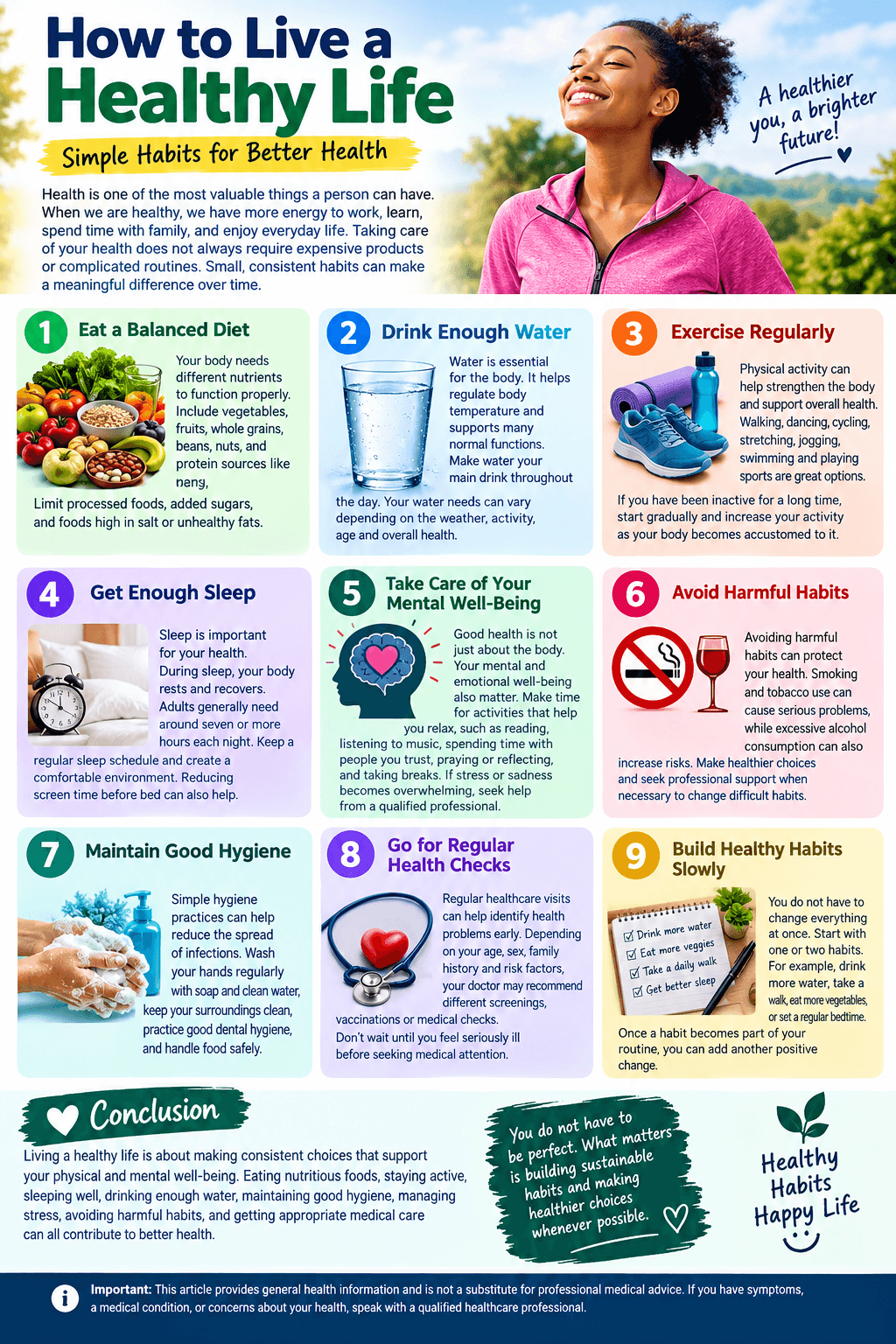
How to Live a Healthy Life: Simple Habits for Better Health
Health is one of the most valuable things a person can have. When we are healthy, we have more energy to work, learn, spend time with family, and enjoy everyday life. Taking care of your health does not always require expensive products or complicated routines. Small, consistent habits can make a meaningful difference over time.
1. Eat a Balanced Diet
One of the most important parts of a healthy lifestyle is eating a balanced diet. Your body needs different nutrients to function properly.
Try to include vegetables, fruits, whole grains, beans, nuts, and other nutritious foods in your meals. Protein sources such as eggs, fish, beans, poultry, and other foods can also be part of a balanced diet.
It is also helpful to limit excessive amounts of highly processed foods, added sugars, and foods that are very high in salt or unhealthy fats.
2. Drink Enough Water
Water is essential for the body. It helps regulate body temperature and supports many normal body functions.
Make water your main drink throughout the day. Your water needs can vary depending on factors such as weather, physical activity, age, and overall health.
3. Exercise Regularly
Physical activity can help strengthen the body and support overall health. You do not necessarily need expensive gym equipment to become more active.
Walking, dancing, cycling, stretching, jogging, swimming, and playing sports are examples of activities that can help you stay active.
If you have been inactive for a long time, start gradually and increase your activity as your body becomes accustomed to it.
4. Get Enough Sleep
Sleep is an important part of good health. During sleep, the body gets an opportunity to rest and recover.
Adults generally need around seven or more hours of sleep each night, although individual needs can vary. Try to maintain a regular sleep schedule and create a comfortable environment that helps you sleep.
Reducing unnecessary screen time before bed may also help some people sleep better.
5. Take Care of Your Mental Well-Being
Good health is not only about the body. Mental and emotional well-being are also important.
Make time for activities that help you relax, such as reading, exercising, listening to music, spending time with people you trust, praying or reflecting if that is meaningful to you, and taking breaks when necessary.
If stress, anxiety, sadness, or other emotional difficulties become overwhelming or interfere with daily life, consider talking to a qualified healthcare professional.
6. Avoid Harmful Habits
Avoiding harmful habits can protect your health. Smoking and tobacco use can cause serious health problems, while excessive alcohol consumption can also increase health risks.
Making healthier choices and seeking professional support when necessary can help people change difficult habits.
7. Maintain Good Hygiene
Simple hygiene practices can help reduce the spread of infections. Wash your hands regularly with soap and clean water, especially before eating and after using the toilet.
Keeping your surroundings clean, practicing good dental hygiene, and handling food safely are also important parts of maintaining good health.
8. Go for Regular Health Checks
Regular healthcare visits can help identify certain health problems early. Depending on your age, sex, family history, and individual risk factors, a healthcare professional may recommend different screenings, vaccinations, or medical checks.
Do not wait until you feel seriously ill before seeking medical attention.
9. Build Healthy Habits Slowly
You do not have to change everything in your life at once. Trying to make too many changes at the same time can become overwhelming.
Instead, choose one or two habits to work on first. For example, you could begin by drinking more water, taking a daily walk, eating more vegetables, or establishing a regular bedtime.
Once a habit becomes part of your routine, you can introduce another positive change.
Conclusion
Living a healthy life is about making consistent choices that support your physical and mental well-being. Eating nutritious foods, staying active, sleeping well, drinking enough water, maintaining good hygiene, managing stress, avoiding harmful habits, and getting appropriate medical care can all contribute to better health.
You do not need to be perfect. What matters is building sustainable habits and making healthier choices whenever possible.
Important: This article provides general health information and is not a substitute for professional medical advice. If you have symptoms, a medical condition, or concerns about your health, speak with a qualified healthcare professional.