Writers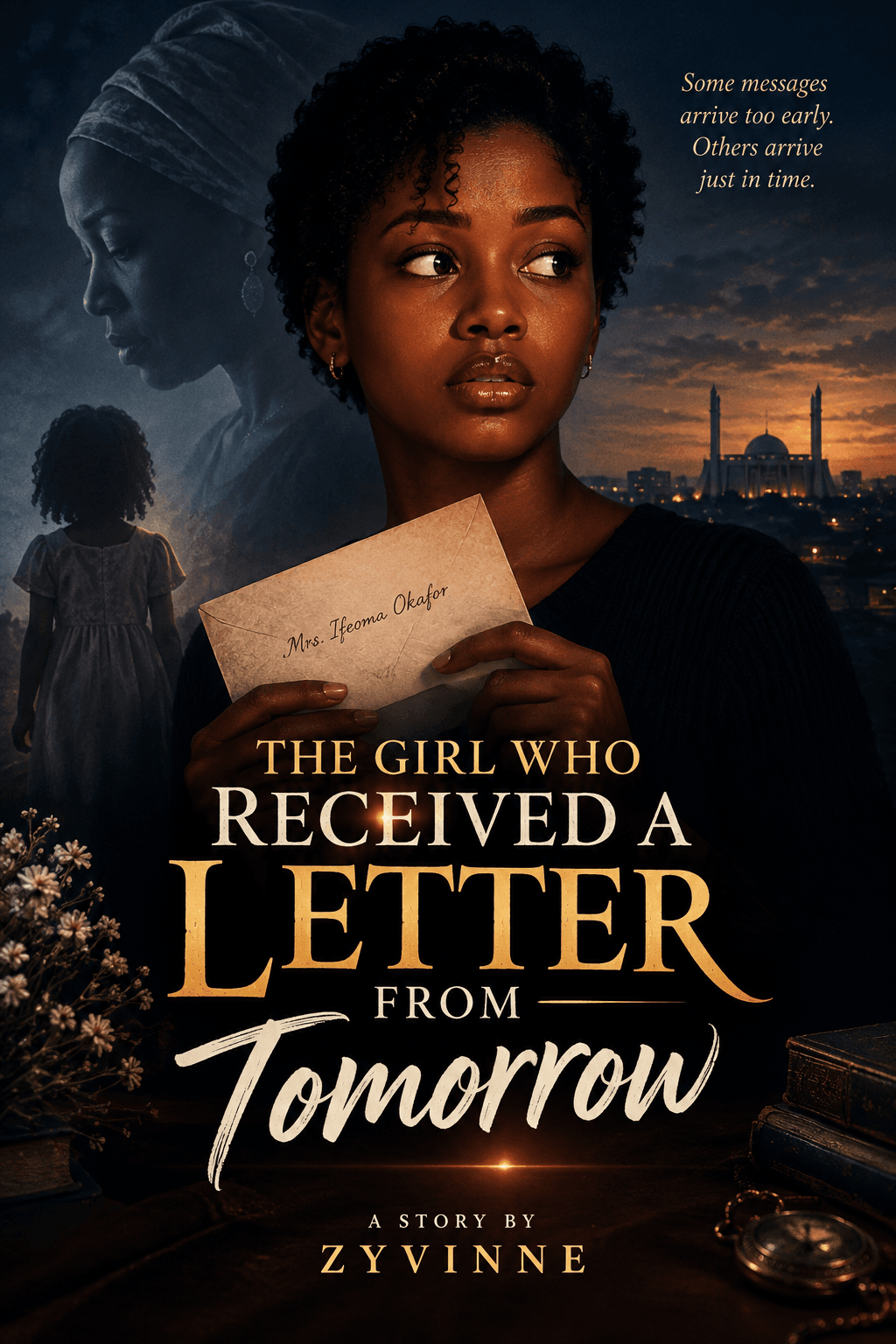
CHAPTER FIVE: THE MAN WHO KNEW TOMORROW
By Zyvinne
The metal door opened slowly.
Dr. Daniel Adebayo stood at the top of the stairs.
His hair was grey, his face deeply lined, and a walking stick rested beneath his right hand.
But his eyes were exactly as they had appeared in the photograph.
Cold.
Observant.
Almost amused.
"Amara," he said. "You've grown."
Amara stepped in front of Nneka.
"Stay away from us."
The old man smiled.
"If I had wanted to hurt you, I would have done so years ago."
"You're the reason our mother disappeared."
"Your mother made her own choices."
Nneka moved beside Amara.
"You told us she was dead."
"I told the world what it needed to believe."
"You lied!"
Dr. Adebayo sighed.
"Your mother was brilliant. Too brilliant for her own good. She believed she could control something that had never been meant to be controlled."
He descended the stairs.
"Do you know what happens when a person discovers tomorrow before today has finished?"
Neither girl answered.
"People begin making different choices. They try to prevent accidents, avoid betrayals, and escape consequences. But every attempt to change the future creates another possibility."
He looked at the letters.
"Your mother discovered that the machine could preserve impressions of future events. She became obsessed with it."
Amara frowned.
"Then why are the letters appearing now?"
"Because the machine has been activated again."
"By whom?"
Dr. Adebayo looked directly at her.
"You."
Amara shook her head.
"I've never touched any machine."
"You opened the first letter."
"That doesn't make sense."
"The letters respond to the people connected to them. Your mother designed the system around the memories of her children."
He placed a small device on the table.
A red light blinked across its surface.
"The machine has been dormant for years. But recently, someone began sending messages through it."
"Who?" Amara demanded.
Dr. Adebayo looked towards Nneka.
"Your sister."
Amara turned.
Nneka's expression had changed.
"Nneka?"
Her twin looked down.
"I was trying to find you."
"By sending letters from tomorrow?"
"I didn't know how else to reach you."
Amara felt betrayed.
"You knew where I was all this time?"
"Not exactly. I knew where the machine believed you would be."
Dr. Adebayo interrupted.
"Enough."
He removed a folder from his coat.
Inside were photographs, medical reports, and documents covered in handwritten notes.
He placed them on the table.
"Your mother made a terrible mistake the night of the fire. She used the machine to separate two possible versions of the same event."
Amara stared at him.
"Two versions?"
"Two possible outcomes. In one, both girls escaped the fire. In another, one girl remained trapped inside the room."
Nneka whispered, "No."
Dr. Adebayo continued.
"The experiment created two sets of memories. One belonged to the life you remember. The other belonged to a life that almost happened."
Amara felt sick.
"Are you saying Nneka isn't real?"
"No," he replied. "I am saying that reality is more complicated than either of you understands."
He opened the folder.
The first document was a birth record showing that two girls had been born to Ifeoma Okafor on 6 June 2007.
The second was a medical report from the night of the fire.
The third was a photograph of their mother standing beside the machine.
On the back, she had written:
If the girls begin to remember, shut everything down.
Amara looked at Dr. Adebayo.
"Why did you keep this place?"
"Because I was waiting for the experiment to become stable enough to finish."
"Finish what?"
He pointed towards the device.
"Bring your mother's final message into the present."
Nneka shook her head.
"You promised you would destroy it."
"I promised many things."
Dr. Adebayo turned on the device.
The lights flickered.
The clock on the wall began moving backwards.
A sound like distant thunder filled the room.
Amara clutched the table.
"What are you doing?"
"Opening the last recording."
The machine emitted a sharp tone.
Then a woman's voice filled the room.
"Daniel, if you are hearing this, you have failed to destroy the machine."
Amara stopped breathing.
It was her mother.
"Amara. Nneka. If both of you are listening, then I am sorry."
The recording crackled.
"I have spent years trying to protect you from the truth. I thought forgetting would save you. I was wrong."
Amara began to cry.
"Mummy?"
The recording continued.
"The letters were never intended to predict the future. They were designed to warn you about choices that could change it."
A pause.
"The fire was my fault. I believed I could control time. I believed I could save everyone. But when the machine malfunctioned, I had to choose between saving my daughters and preserving the experiment."
The sound of the recording distorted.
"I chose my daughters."
The machine suddenly went dark.
Dr. Adebayo slammed his hand against the device.
"No!"
The room fell silent.
Amara looked at him.
"What happened to our mother?"
For the first time, the old man's expression changed.
He looked afraid.
"She entered the machine's final chamber during the fire."
Nneka whispered, "And never came out."
Dr. Adebayo nodded.
"Her body was never found."
Amara stared at the dark device.
"So she's not dead?"
"I don't know."
A new letter slid from the typewriter.
Amara picked it up.
The handwriting was hers.
Amara, you have one chance to bring your mother home.
But if you do, you must choose which memory to keep.
The memory of the girl who survived.
Or the memory of the girl who disappeared.
At the bottom were two words.
CHOOSE TOMORROW.
Amara looked at Nneka.
Her twin was crying silently.
For the first time, Amara understood that Nneka wasn't merely a mystery to solve.
She was a person who had spent her entire life searching for a sister who might not remember her.
Amara reached for her hand.
"We're getting our mother back."
Nneka looked up.
"How?"
Amara held up the letter.
"We find out what tomorrow wants from us."
Behind them, the machine switched on by itself.
And the voice of their mother whispered through the speakers.
"Girls, don't trust the man in the room."
They turned.
Dr. Adebayo was gone.
The metal door stood open.
On the floor lay his walking stick.
And beside it was a fresh pool of blood.
CHAPTER SIX: THE CHOICE
By Zyvinne
Amara and Nneka ran upstairs.
The house was silent.
The front door stood open, but the garden beyond it was empty.
Dr. Adebayo had disappeared.
"Where did he go?" Amara whispered.
Nneka shook her head.
"I don't know."
They searched the rooms.
Nothing.
No footsteps.
No blood beyond the staircase.
No sign that anyone had entered or left.
Then Amara noticed a photograph lying beside the front door.
It showed a woman in a blue dress standing in front of the house.
Their mother.
On the back were three words.
SHE IS WAITING.
Nneka took the photograph.
"There's somewhere else we need to go."
"Where?"
"The hospital."
Amara frowned.
"What hospital?"
"The one where we were born."
They left the house and found a taxi near the main road.
During the journey, neither spoke much.
Amara watched the city pass by, trying to organise the impossible events of the previous two days.
Her mother might still be alive.
Her twin sister might have memories that did not belong to the same version of reality.
And a machine buried beneath an abandoned house appeared capable of sending messages across time.
It was too much.
Yet the one thing Amara couldn't ignore was the feeling that she had been here before.
Not the hospital.
Not the city.
The moment itself.
A strange familiarity surrounded everything.
The traffic lights.
The sound of the taxi's engine.
The woman selling oranges beside the road.
It all felt like a memory she had already lived.
They arrived at the hospital shortly before noon.
Nneka led Amara through the entrance and towards the records office.
After several arguments and a long wait, a nurse brought out an old file.
The birth certificates were genuine.
Both girls had been born on the same day.
Both had been registered as daughters of Ifeoma Okafor.
But the file contained another document.
A report written by a doctor who had examined them after the fire.
Amara read it slowly.
Patient A exhibits memory fragmentation and recurring dreams of a second child.
Patient B reports events that have not yet occurred.
Both patients should be monitored for symptoms associated with the experimental exposure.
Amara looked at Nneka.
"What does this mean?"
Nneka shook her head.
"I don't know."
But she was lying.
Amara could see it.
"You know something."
Nneka lowered her eyes.
"I remember the machine."
"Tell me."
"I remember our mother placing us inside a room. She said she needed to protect us. Then everything went white."
She paused.
"When I woke up, you were gone."
Amara felt her throat tighten.
"What do you mean, I was gone?"
"The doctors told me I had been the only child found after the fire. Aunt Grace told me you had died."
"But I'm here."
"I know."
Nneka began crying.
"For years, I thought I had imagined you. Then the letters started arriving."
Amara sat beside her.
"How long have you been receiving them?"
"Since I was sixteen."
"Why didn't you find me sooner?"
"Because every time I tried, something happened. A road closed. A phone stopped working. Someone would tell me that you had moved."
She looked at Amara.
"Then I received a letter telling me that if I found you before your twentieth birthday, the experiment would collapse."
Amara remembered the silver key.
The warning.
The letters.
"What happens when it collapses?"
Nneka looked towards the hospital window.
"Whatever the machine has been holding together will finally become one reality."
Amara's stomach tightened.
"And what does that mean for us?"
Nneka did not answer.
They returned to the records office.
The nurse had left another envelope on the desk.
It was addressed to Amara.
The date on it was tomorrow's date.
Amara opened it.
The truth is not hidden in the machine.
It is hidden in the person who remembers the fire.
Ask your sister what she did when the room began to burn.
Amara slowly lowered the paper.
She turned towards Nneka.
"What did you do?"
Nneka stared at her.
"What?"
"The night of the fire. What did you do?"
Her twin's expression changed.
For a moment, Amara thought Nneka might deny everything.
Instead, she whispered, "I closed the door."
The words struck Amara like a physical blow.
"What?"
"I closed the door because I was afraid."
Amara stepped backwards.
"You left me inside?"
"I thought you were already outside!"
"You told me I pushed you!"
"I thought you did!"
Nneka covered her face.
"We were children, Amara. We were terrified. I remembered you letting go of my hand. You remembered me closing the door. We both believed the other had abandoned us."
Amara felt tears spill down her cheeks.
Neither of them had been lying.
They had been remembering different pieces of the same terrible night.
The door.
The fire.
The choice.
And the machine that had turned their fear into a lifetime of separation.
Amara sat down.
For several minutes, she could not speak.
Then she reached for Nneka's hand.
"I don't want to spend the rest of my life blaming you."
Nneka looked at her through tears.
"I don't want to spend the rest of mine without you."
Amara squeezed her hand.
"Then let's stop running from the truth."
They returned to the abandoned house that evening.
The machine was waiting.
A fresh letter lay on the table.
Tonight, you will see your mother.
But only one of you can enter the chamber.
Amara read it aloud.
Nneka shook her head.
"No."
"What?"
"We're not doing this."
"She's our mother."
"And we've already lost too much."
Amara looked at the staircase.
"What if this is our only chance?"
Nneka grabbed her hand.
"What if it's another trap?"
Amara had no answer.
Then a voice came from the darkness.
"Both of you must enter."
They turned.
A woman stood at the bottom of the staircase.
She wore a blue dress.
Her hair was tied back.
Her eyes were filled with tears.
Amara's heart stopped.
Nneka whispered a name.
"Mummy?"
The woman smiled.
"My girls."
Amara took one step forward.
Then another.
"Are you real?"
The woman reached for her.
"More real than you know."
Amara began to cry.
For eleven years, she had imagined this moment.
She had imagined running into her mother's arms, asking why she had left, demanding to know why nobody had told her the truth.
But now that her mother stood before her, all she could manage was a whisper.
"Why didn't you come back?"
Her mother's smile faded.
"Because I was afraid of what you would remember."
The lights flickered.
The machine began to hum.
And the woman in the blue dress looked at both daughters.
"Listen carefully. We have very little time."
She reached into her pocket and produced a final envelope.
"Tomorrow, one of you will disappear."
Amara looked at Nneka.
Their mother shook her head.
"No. That is what the machine wants you to believe."
She held out the envelope.
"The only way to save both of you is to destroy it."
Amara took the letter.
"How?"
Their mother looked towards the chamber.
"By remembering everything."
CHAPTER SEVEN: THE LAST LETTER
By Zyvinne
The woman in the blue dress led them into the chamber.
Amara could hardly believe what she was seeing.
The room was filled with glass panels, wires, and a large circular device suspended above the floor.
In its centre was a small silver compartment.
The same symbol of seven stars appeared on its surface.
Their mother stood beside it.
"Ifeoma," Nneka whispered. "What happened to you?"
Their mother closed her eyes.
"After the fire, I tried to shut down the experiment. But it had already begun recording different versions of what happened that night."
She turned towards Amara.
"One version remembered you both escaping. Another remembered Nneka closing the door. A third remembered you running back to save your sister."
Amara stared at her.
"So which one is real?"
"All of them began as possibilities. But the machine kept them alive by connecting them to your memories."
Their mother took a breath.
"I was trapped inside the chamber because I refused to let it decide which version of my daughters deserved to exist."
Nneka wiped her tears.
"Why didn't you tell us?"
"Because every attempt to contact you created another memory. I was afraid that if I reached you too soon, the machine would use your love for me to keep itself alive."
Amara looked at the silver compartment.
"What happens if we destroy it?"
"The false memories will disappear. The truth will remain."
"And what about you?"
Their mother was silent.
Amara felt a terrible fear rise inside her.
"What happens to you?"
"I don't know."
Nneka shook her head.
"No. We can't lose you again."
Their mother reached for both daughters.
"You have already spent too many years grieving someone who was never allowed to say goodbye."
Amara began to cry.
"I don't want to lose you."
"You may not."
"May not?"
Their mother smiled sadly.
"That is the part of tomorrow nobody can promise."
The machine began to shake.
A warning light flashed.
The room filled with the sound of ticking clocks.
Amara looked at the letter in her hand.
It had changed.
The original message was gone.
In its place were three sentences.
One daughter remembers the fire.
One daughter remembers the door.
Both must remember the truth.
Amara looked at Nneka.
"What do we do?"
Their mother pointed towards the silver compartment.
"Place your hands on it."
The sisters approached the machine.
Amara's palms trembled.
Nneka took her hand.
For the first time in their lives, neither girl let go.
Their mother began speaking.
"Remember the night of the fire."
Amara closed her eyes.
She saw the room.
The smoke.
The glowing machine.
Her mother shouting.
Nneka running towards the door.
Then she remembered something she had never understood.
She had not been trying to escape.
She had been trying to return for her sister.
"Nneka," she whispered.
Her twin squeezed her hand.
"I remember."
Amara saw herself holding the silver key.
She remembered opening the chamber.
She remembered their mother pushing both girls towards the exit.
She remembered Nneka reaching for her.
And she remembered letting go.
Not because she wanted to abandon her sister.
But because the machine had pulled her backwards.
She had been trying to save Nneka when the door slammed shut between them.
Amara opened her eyes.
"I didn't leave you."
Nneka was crying.
"I know."
"I tried to come back."
"I know."
Their mother placed her hands over theirs.
"And I tried to save you both."
The machine roared.
The walls trembled.
The clock began spinning.
Letters flew from the shelves, filling the air like frightened birds.
Amara saw fragments of her life.
A birthday cake.
A school uniform.
A lonely bedroom.
A photograph of a mother who had supposedly died.
A little girl crying outside a locked door.
Then she saw another memory.
Aunt Grace standing in the hospital corridor, holding two blankets.
One contained Amara.
The other contained Nneka.
Grace was crying.
A doctor was speaking.
Their mother was nowhere to be seen.
The memory changed.
Grace was older, standing in front of Amara's bedroom.
She placed a letter beneath the bed.
Then she whispered:
"I'm sorry, my darling."
Amara gasped.
"Aunt Grace knew."
Their mother nodded.
"Grace helped me protect you. She believed that separating your memories would give you both a chance to live ordinary lives."
"But she lied to us."
"She did what she thought was necessary."
Amara shook her head.
"No one should have made that choice for us."
The machine emitted a deafening sound.
A crack appeared across the silver compartment.
Their mother stepped backwards.
"Now!"
The sisters pressed their hands against the device.
Together, they spoke the truth.
"We remember."
The compartment shattered.
A wave of light swept through the chamber.
The clocks stopped.
The letters fell.
The machine went silent.
And for the first time in eleven years, there was no voice telling them what tomorrow would bring.
Amara opened her eyes.
Nneka was still holding her hand.
Their mother was on the floor.
"Mummy!"
They rushed towards her.
She was breathing.
Weakly, but breathing.
Amara knelt beside her.
"Please, don't leave us."
Their mother opened her eyes.
"My girls."
Nneka began to sob.
Amara held her mother's hand.
For a long moment, nobody spoke.
Then their mother smiled.
"You remembered."
Amara nodded through her tears.
"We remembered everything."
Outside, rain began to fall.
For the first time since they had arrived, the abandoned house sounded ordinary.
Water tapped against the windows.
Wind moved through the trees.
And somewhere in the distance, a clock struck midnight.
But this time, nobody was afraid.
CHAPTER EIGHT: A TOMORROW OF THEIR OWN
By Zyvinne
Six months later, Amara received another letter.
It arrived on a Tuesday morning.
There was no stamp.
No return address.
No explanation.
Only her name written in familiar handwriting.
She stood in the small bakery she had recently opened, staring at the envelope while sunlight spilled through the windows.
Her hands were covered in flour.
A half-decorated birthday cake sat on the counter.
Outside, Abuja was busy as usual.
People hurried past the shop.
Cars honked.
A woman argued with a fruit seller.
Life continued.
And for the first time, Amara was grateful for how ordinary everything seemed.
She opened the envelope.
Inside was a single sheet of paper.
My darling Amara,
You have spent too much of your life being afraid of what tomorrow might take from you.
You cannot control every mistake. You cannot protect everyone from pain. And you cannot build a life by trying to predict every ending.
But you can choose what you do with the time you have.
Love your sister.
Forgive yourself.
And never forget that you were brave enough to face the truth.
Love always,
Mum.
Amara read the letter twice.
Then she smiled.
She had no idea whether it was a message from the past, a final impression left by the machine, or simply a letter her mother had written long before the experiment began.
For once, she did not need to know.
Some mysteries were no longer worth being afraid of.
"Amara!"
Nneka's voice came from the doorway.
She entered carrying two bags of groceries and wearing the expression of someone who had already decided what everyone would eat for lunch.
"Please tell me you haven't forgotten about today."
Amara folded the letter.
"Forgotten what?"
Nneka stared at her.
"Our mother's birthday!"
Amara gasped.
"Oh, my goodness!"
"You promised to bake her cake."
"I've been busy!"
"You've been busy decorating other people's cakes while your own mother waits for hers."
Amara laughed.
"She's not waiting. She's at home."
"Exactly. And she has already called me twice."
They both burst into laughter.
Their mother was recovering slowly.
The years she had spent trapped within the experiment had left her weak, but she was alive.
Real.
And finally free.
Aunt Grace had returned two weeks after the machine was destroyed.
She had been found at a small clinic outside Abuja, confused and exhausted, with no memory of how she had arrived there.
When Amara confronted her, Grace cried for hours.
She admitted that she had helped their mother hide the truth because she believed the girls would be safer if they never remembered the fire.
Amara had not forgiven her immediately.
Some wounds could not be healed by a single apology.
But she had listened.
And eventually, she had chosen to let the past stop controlling the future.
Dr. Adebayo was never found.
The police searched the abandoned house, but there was no sign of him.
No body.
No footprints.
No evidence that he had ever been there.
Sometimes Amara wondered whether he had escaped.
Sometimes she wondered whether he had become another memory trapped inside the experiment.
But she no longer spent her nights searching for answers.
She had a bakery to run.
A sister to annoy.
A mother to love.
And a future that belonged to her.
That afternoon, the three women gathered around a small table at home.
Amara placed the cake in front of her mother.
It was decorated with white icing and seven tiny silver stars.
Their mother stared at it for a long moment.
Then she smiled.
"It's beautiful."
Amara felt warmth spread through her chest.
"I made it myself."
"I can tell."
Nneka leaned forward.
"She nearly destroyed the kitchen."
"That is a lie!"
"You used three bowls for one batch of icing."
"Because somebody kept distracting me!"
Their mother laughed.
The sound filled the room.
Amara closed her eyes for a moment, committing it to memory.
Not because she was afraid of losing it.
But because she wanted to remember how it felt to have her family together.
After lunch, she returned to the bakery.
The shop was quiet.
She placed the letter inside a small wooden box beside the photographs of herself and Nneka.
Then she opened her notebook and began writing.
She wrote about the night the first letter arrived.
The mysterious woman.
The fire.
The house where the rain never fell.
The machine.
And the girl who had spent her life believing that tomorrow was something to fear.
When she finished, she looked at the title she had written at the top of the page.
THE GIRL WHO RECEIVED A LETTER FROM TOMORROW.
She smiled.
Then she added one final sentence.
The future had never been a letter waiting to be opened.
It was a story waiting to be written.
Amara closed the notebook.
Outside, the afternoon sun shone over Abuja.
A customer entered the bakery and asked for a birthday cake.
Amara greeted her with a smile.
"What size would you like?"
The woman hesitated.
Then she asked, "Do you ever give away cakes for free?"
Amara paused.
For a moment, she remembered the elderly woman who had appeared outside the bakery months earlier.
The woman who had asked for a cake she could not afford.
The woman who had known her mother's name.
Amara looked at the customer.
"Sometimes," she answered. "But only when I choose to."
The woman smiled.
"That's a good answer."
She placed an envelope on the counter.
Amara's smile disappeared.
The envelope was cream-coloured.
It had no stamp.
No return address.
And written across the front, in unmistakable handwriting, were four words.
FOR AMARA, TOMORROW.
Her heart began to pound.
Slowly, she opened it.
Inside was a single sentence.
This time, the choice is yours.
Amara stared at the paper.
Then she looked up at the customer.
The woman was gone.
The bakery door stood open.
Outside, the street was empty.
Amara glanced at the clock.
11:47 a.m.
She looked at the envelope again.
For a long moment, she considered calling Nneka.
Then she laughed softly.
She folded the letter, placed it inside the wooden box, and returned to her work.
Tomorrow could wait.
For once, she was exactly where she wanted to be.
And that was enough.
THE END.