 Writers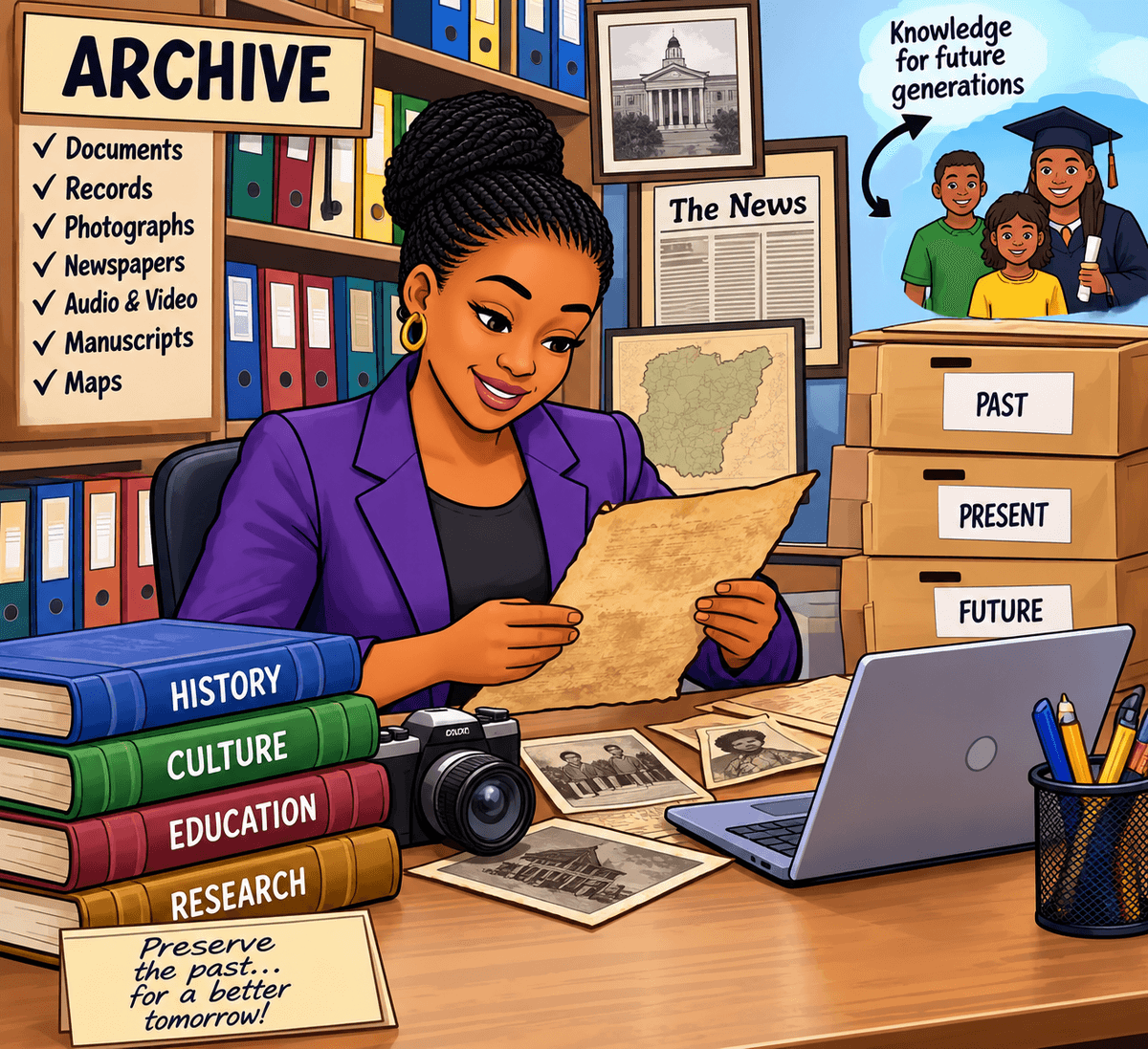
An archive is a collection of records, documents, images, recordings, novels, correspondence, and other items that are preserved due to their historical value. Archives enable people, organizations, communities, and nations to maintain their history and make crucial information accessible for future use.
Every culture has a background. Part of that history are our forefathers' tales, major events, governmental actions, cultural customs, and individual experiences. Numerous of these tales risk fading away over time if there aren't sufficient records. Because of this, archives are essential. Between the past, present, and future, they provide a link.
Different types of materials may be found in archives. These may include birth and marriage records, newspapers, government publications, pictures, maps, manuscripts, audio recordings, videos, and electronic files. The majority of archives were previously stored physically, but technology has transformed how information is kept. Many companies today are creating digital archives where papers may be scanned, uploaded, and kept digitally.
The protection of history is one of the key values of an archive. Understanding the growth of one's community and nation can be facilitated by historical records. Historians, academics, and researchers typically rely on archived materials to learn about important events. Old newspapers and government documents, for instance, might offer valuable information about Nigeria's economic, political, and social progress.
Furthermore, archives are helpful for education and research. Archived materials are available for use by researchers and students to bolster their academic efforts. They can study original papers and records from prior years rather than depending just on contemporary sources. This can improve their understanding of the evolution of concepts, policies, and events.
Protecting the memory of an organization is another crucial duty of archives. Every day, a significant volume of data is generated by governmental organizations, commercial enterprises, academic institutions, and other organizations. When staff leave or when firms change, valuable knowledge may be lost if these records are not kept well. When required, significant judgments, rules, reports, and correspondence can still be found thanks to good archiving.
Archives have cultural value as well. The identity of communities can be preserved via traditional photos, tunes, tales, works of art, and records of festivals. Proper documentation may assist younger generations in comprehending and appreciating their cultural heritage in Nigeria, which has a wealth of customs from many ethnic groups.
However, archives encounter a number of challenges. Valuable records may be lost due to poor storage, lack of money, untrained staff, water and fire damage, and technological improvements. Cyberattacks, hardware failures, and unintentional deletions are also issues with digital archives. Archives should therefore be well preserved and frequently supported up.
To sum up, an archive is more than simply a storage location for ancient artifacts. It is a storehouse of information, history, culture, and institutional memory. We allow future generations to comprehend their origins and the growth of their community by preserving records today. Archives serve as a reminder that the past should not be forgotten since it offers essential lessons for creating a better future.
Hence, archives serve two purposes: they safeguard historical records and empower individuals to make wise choices by drawing lessons from the past.
In a world that is quickly changing, good archiving is still very important to preserve knowledge and make sure that important information is never lost
