 Writers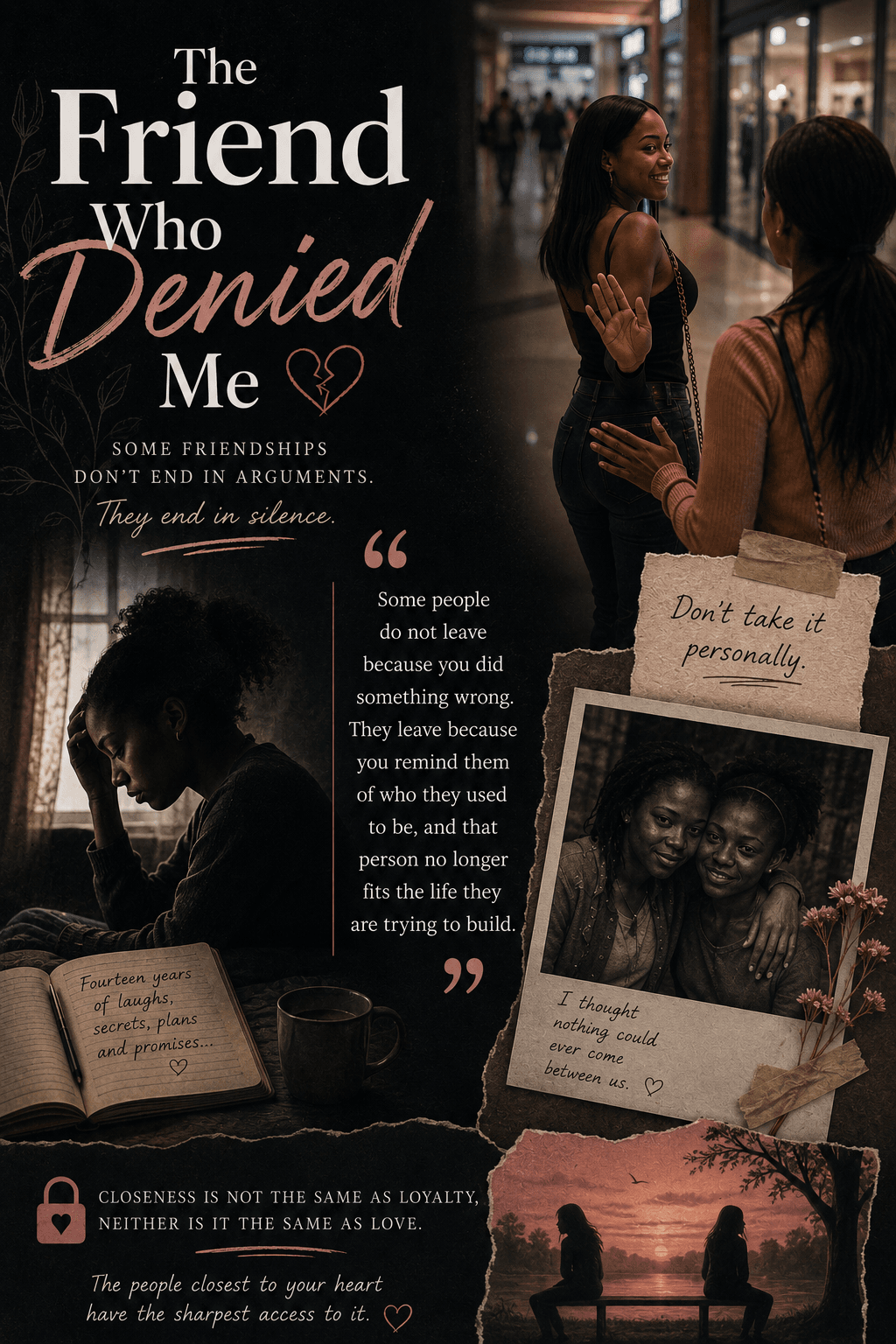
She turned when I called her name. For half a second, something flickered across her face. Then she smiled the tight, polite smile you give a stranger. "Sorry, do I know you?"
Fourteen years, and she looked at me like I was asking her for change on the street.
I trusted her with everything. That was my first mistake.
We had been friends since our primary school days. We attended the same primary school and secondary school. We were neighbours. Our friendship had grown to the extent that our parents sometimes did not bother looking for us because they knew we would always be together. Then came the time for tertiary institution. We chose the same school, the same course, and received admission to the same school. We became roommates, and life continued. At this time, our friendship was already about fourteen years old, so we sometimes addressed ourselves as siblings.
Our first year went well. We studied together, shared notes, prayed before exams, and celebrated when our results came out well. I thought nothing could ever come between us. I have always imagined having the kind of friendship that stays for about twenty years, then on my big day or that of my friend, we would both celebrate ourselves and the existence of our friendship.
Then everything changed the day Ruth met Emeka.
According to her, she just wanted to explore. New people, new experiences, nothing serious. I did not think much of it at first. Everyone deserves new connections. But exploring turned into disappearing. She started coming home late, then some nights she did not come home at all. Our conversations, once long and easy, became short replies sent hours later. Our Sunday plans, the ones we had kept for years, quietly stopped existing. I told myself she was adjusting. New relationship, new demands on her time. I understood. I had been there before, or so I thought.
Then came the day I saw her at the mall. She was with him and two other girls I did not recognise, dressed in a way I had never seen her dress, laughing in a voice I had never heard her use. I called her name, certain she would turn and hug me the way she always did.
She did not.
I did not argue. I did not make a scene. I simply said, "Sorry, I mistook you for someone else," and walked away with my hands shaking so badly I had to sit down on a bench outside the mall before I could drive home.
Later that night, she sent a message. No apology. Just, "You know how it is now, my dear. New environment, new people. Don't take it personally."
Don't take it personally. As if fourteen years could be folded into a single sentence and dismissed like an inconvenience. As if the girl who once shared a single plate of rice with me, because neither of our parents had sent money that week, had never existed.
I used to think loyalty grew with time, that the longer you knew someone, the safer you became in their life. Ruth taught me something different. Some people do not leave because you did something wrong. They leave because you remind them of who they used to be, and that person no longer fits the life they are trying to build.
Friendship, real friendship, is supposed to be a kind of shelter. A place where your back is safe because someone else has chosen to guard it. What Ruth taught me is that choosing to be close is not the same as loyalty, neither is it the same as love.
I do not hate her. I only mourn the version of her that would never have denied me, not to mention in public, just for the sake of impressing strangers.
Some friendships end in an argument, and some even end because of malice, but mine ended in silence, in a quiet moment I never thought would exist. The long and painful truth is that the people closest to your heart have the sharpest access to it.