Writers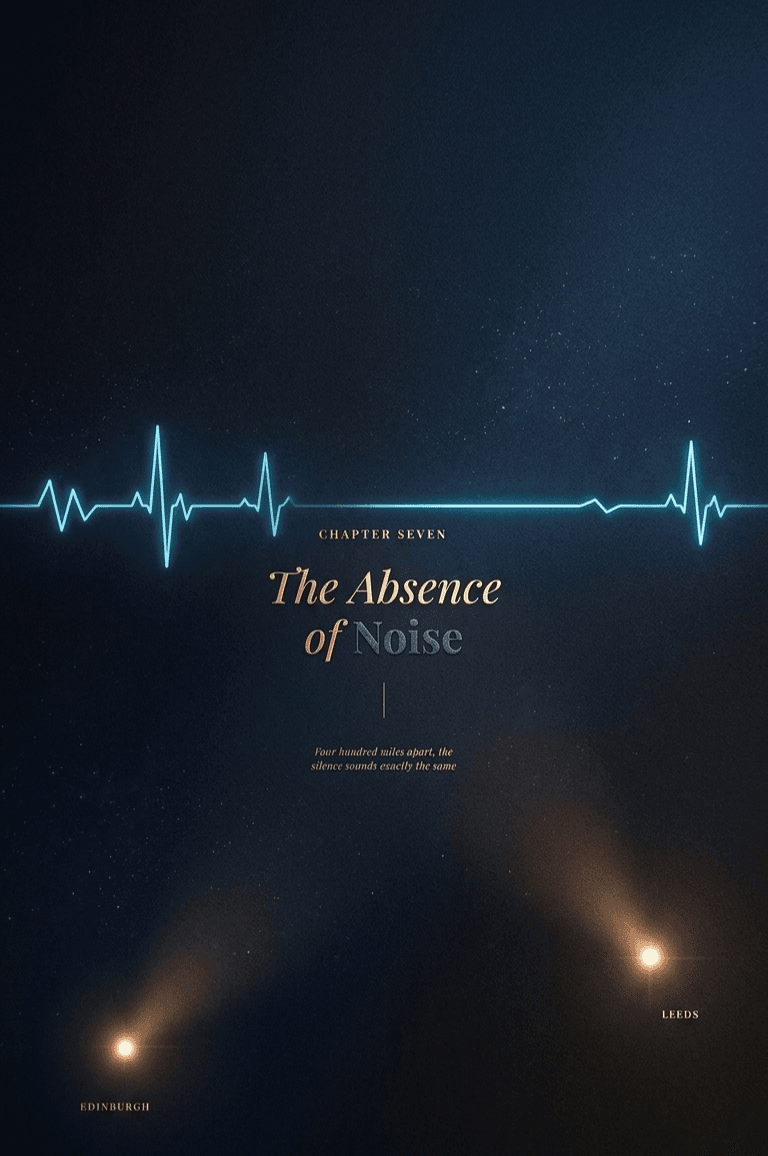
It's January in Edinburgh, and it's brutally cold. Maya is now working at this huge old estate library outside the city — a grand, historic mansion with acres of hand-carved wood paneling that's been damaged by years of a hidden roof leak. It's exactly the kind of technical, hands-on restoration work she's trained her whole life for, and for the first two weeks, she throws herself into it completely — working from early morning until late at night, barely stopping.
But when the workday ends and the room goes quiet, she notices something. The silence here isn't like the silence back at her shop in Leeds. Back home, even in quiet moments, there was always some kind of background life — buses outside, her heater humming, and for months, the small comforting sounds of Julian being there: turning a page, opening his thermos. Here, the silence is just… empty. There's nothing filling it.
She sits with a cooling cup of bad coffee, looking at her hands — no longer stained with the coppery tones from her old work, just chalky wood filler now. Her phone sits face-down nearby.
She and Julian haven't spoken since the night he walked out into the snow. No texts, no calls, nothing — just her frantic last-minute packing, a long train ride north, and now two weeks of total silence between them.
She checks their old text thread. The very last message is from Julian, from before she even left — something small and ordinary about him bringing almond pastries instead of her usual egg tarts because the bakery ran out. She wants to text him something, anything — that the mahogany she's working on is incredible, or simply that she made it to Scotland safely. But everything she thinks to say feels too small and too late to bridge the distance she created. She puts the phone back down without sending anything.
Meanwhile, back in Leeds, life has gone back to being completely normal for Julian — quiet, predictable, orderly. No surprise visits, no financial stress to worry about, no sawdust on his clothes. On paper, this is exactly the stable life he always wanted.
He's at his desk in the archive basement, carefully logging old property records into a ledger by hand. Then he writes down an address — 14 Kirkgate — and stops cold, because Maya's shop, The Foundry, is at 22 Kirkgate, just a few doors down on the same street.
He sets his pen down and takes a moment. His whole adult life has been built around the comfort of the past — the idea that history is already finished, already safe, and any damage can be neatly repaired with the right archival methods. But Maya was never like that. She was loud, messy, independent, completely unpredictable — nothing like a tidy, indexed record. And somehow, for three months, she made his careful, quiet world feel more alive than it ever had before.
Now, without her around, his workplace — which used to feel like a peaceful refuge — just feels like a cold, empty vault instead.
He checks the time. It's the exact hour he'd normally be heading out to meet her — either grabbing food at the pub or just sitting near her workbench, watching her work. Instead, he's sitting completely alone in the archive's sterile, quiet air, and it finally hits him: the safe, orderly life he fought so hard to protect isn't enough for him anymore. Not without her in it.