Writers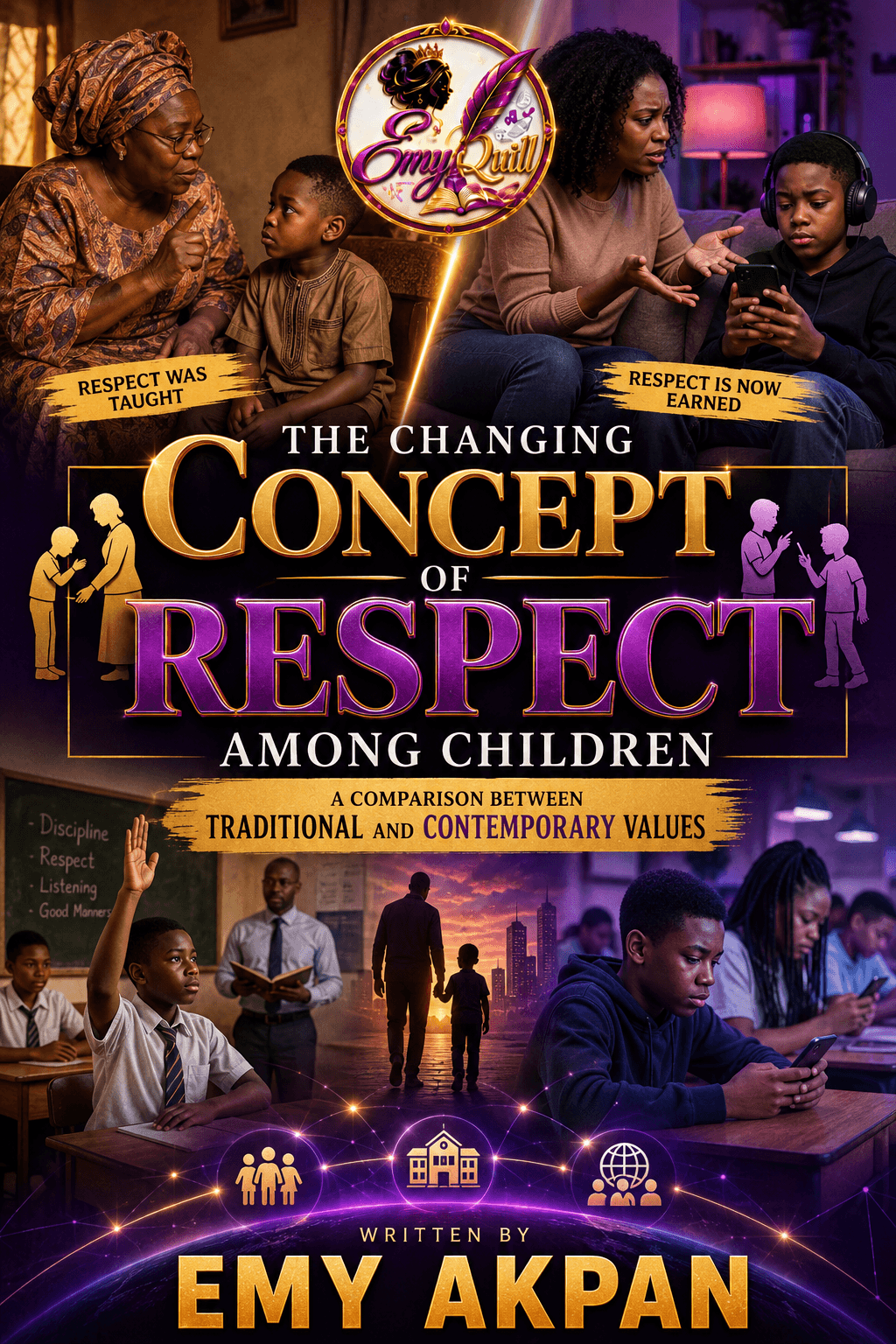
A Comparison Between Traditional and Contemporary Values
When “Good Morning, Sir” Became Optional
“Good morning, sir.”
Those three words used to be almost automatic.
A child could be walking into a compound, entering a classroom, passing an elderly neighbour on the street, or meeting a parent's friend, and the greeting would come naturally.
Sometimes, the child did not even have to be reminded.
But today, things can be different.
A teacher walks into a classroom.
“Good morning, class.”
“Good morning, ma.”
And then someone at the back mutters something.
Another child is busy with a phone.
Someone else keeps talking.
The teacher pauses.
“Did you hear me?”
The student looks up and says, “Yes, ma.”
There is no obvious intention to insult anyone. The child simply does not seem to understand why the adult is offended.
And that small moment captures a much bigger change taking place around us.
The meaning of respect among children is changing.
But has respect disappeared?
Or are children simply learning to express it differently?
That is a question worth asking.
When Respect Was a Lesson at Home
For many Nigerian families, respect was once taught almost as carefully as reading and writing.
Children were expected to greet adults properly.
They were taught to use words such as sir, ma, aunty, uncle, mummy and daddy when addressing older people.
An older person could correct a child, and the child was generally expected to listen without arguing.
In many homes, children were expected to remain quiet when adults were speaking.
You did not casually interrupt an adult conversation.
You did not speak to your parents as though you were their equal.
You certainly did not insult a teacher and expect to walk away without consequences.
Respect was connected to age, position, experience and responsibility.
A child might not even agree with an adult, but there was an accepted way of expressing disagreement.
That distinction was important.
You could disagree without being disrespectful.
But Something Has Changed
Walk into some classrooms today and you will notice a different relationship between children and adults.
Children are more willing to ask questions.
They challenge instructions.
They want explanations.
They may ask, “Why?”
And sometimes, they ask that question repeatedly.
To an older generation, this can look like disobedience.
To the child, it may simply be curiosity.
This is one of the most interesting changes in the idea of respect.
Traditionally, respect often meant obedience.
Today, many children understand respect more as mutual consideration.
A child may think:
“If you want me to respect you, you should also listen to me.”
That idea is not necessarily wrong.
In fact, there is something healthy about teaching children that respect should not depend on fear.
The problem begins when children confuse having a voice with having no boundaries.
The Influence of Technology
We cannot discuss today's children without discussing the digital world.
A child can open a phone and watch videos created by people from America, Britain, South Africa, Ghana, India or anywhere else in the world.
They see different cultures.
They hear different opinions.
They watch people challenge authority.
They see young people speaking confidently to adults.
They encounter content where age and status do not automatically determine who gets heard.
Social media has also changed the way young people communicate.
Online, a teenager may speak to a stranger in another country with the same casual language used with a close friend.
The internet does not always recognise the traditional boundaries that exist in Nigerian homes.
And when a child spends several hours in that environment, those ideas can eventually influence how the child behaves offline.
A child may begin to think:
“Why should I behave differently simply because this person is older?”
That question would have sounded strange to many previous generations.
Today, it is increasingly common.
Parents Have Changed Too
It would be unfair to blame everything on children.
Parents have changed.
Life has changed.
Many parents today spend long hours working. Some commute for hours. Some run businesses. Others work remotely. Some are raising children with little support from extended family.
The old village-style system in which several adults participated in raising children is also not as strong in many urban communities as it once was.
A child may grow up in a nuclear family with fewer daily interactions with grandparents, uncles, aunties and older neighbours.
That matters.
A child who once learned social behaviour from an entire community may now receive most of their influence from parents, school, friends and the internet.
And sometimes those influences disagree with one another.
Mummy says one thing.
A friend says another.
A favourite influencer says something completely different.
The child has to decide which voice to follow.
The Changing Parent-Child Relationship
There is also a growing emphasis on giving children a voice.
Many parents today encourage their children to express their feelings.
Instead of simply saying, “Because I said so,” some parents explain why a rule exists.
Instead of automatically punishing a child, they may ask what happened.
This approach can be positive.
A child who is allowed to speak may become more confident.
A child who is listened to may learn how to communicate.
A child who understands why a rule exists may be more likely to follow it willingly.
But there is a line.
Listening to a child does not mean allowing the child to control the household.
Giving children a voice does not mean giving them unlimited authority.
A child can say, “I don't agree with this,” without saying, “You are stupid.”
A teenager can question a rule without insulting the parent who created it.
Respect should make room for conversation without removing boundaries.
What Happened in Schools?
The classroom has become one of the places where this generational difference is most visible.
Teachers today may encounter students who are much more outspoken than previous generations.
Some students feel comfortable telling a teacher when they believe something is unfair.
That can be useful.
Teachers are human beings. They can make mistakes.
Children should be able to report bullying, unfair treatment or inappropriate behaviour without being afraid.
But there is a difference between speaking up and speaking down.
A student saying,
“Ma, please, I don't understand why I was marked wrong. Could you explain it to me?”
is exercising communication.
A student saying,
“You don't know what you're doing,”
is something else.
Both students are questioning the teacher.
Only one is doing it respectfully.
This distinction is becoming increasingly important in modern classrooms.
Traditional Values Had Their Problems Too
It is tempting to say that everything was better in the past.
It wasn't.
Traditional approaches to respect sometimes placed too much power in the hands of adults.
Children were sometimes expected to obey even when an adult was clearly wrong.
A child could be discouraged from asking questions simply because “children should be seen and not heard.”
In some homes and schools, fear was mistaken for respect.
A child who was terrified of a teacher might appear perfectly obedient without actually developing good character.
And that is an important lesson.
Fear can produce silence, but silence is not necessarily respect.
A child should not have to be afraid of an adult before behaving properly.
The Modern Approach Has Problems Too
Contemporary parenting and education have brought valuable ideas, but they can also be misunderstood.
Some children have learned the language of “boundaries” without understanding responsibility.
They may know how to say, “You cannot talk to me like that,” but not understand that they also cannot talk to others carelessly.
They may demand respect while giving very little in return.
Some parents are also reluctant to correct their children because they want to be their friends.
But children need more than friendship from parents.
They need guidance.
They need boundaries.
They need correction.
They need adults who can say no when necessary.
A child who is never corrected at home may struggle when the outside world refuses to accommodate their behaviour.
Respect Has Moved From Fear to Choice
Perhaps the biggest change is this:
The old system often said,
“Respect people because they are older than you.”
The newer approach increasingly says,
“Respect people because every human being deserves dignity.”
There is something valuable in both ideas.
Age deserves consideration because older people have experiences younger people may not have.
But age does not automatically make someone right.
Likewise, being young does not make someone worthless or incapable of having a good idea.
The goal should not be to return entirely to the old system or completely abandon it.
Perhaps we need to build something better from both.
Teach children to greet.
Teach them to listen.
Teach them to disagree politely.
Teach them to ask questions.
Teach them that teachers deserve respect.
Teach them that parents deserve respect.
But also teach them that they deserve respect too.
What We Should Be Teaching Children Now
Perhaps we need to stop defining respect simply as obedience.
A respectful child should know how to speak to people without insulting them.
They should know how to listen without interrupting.
They should understand that authority does not mean someone is beyond question.
They should know how to question authority appropriately.
They should understand that disagreement does not require disrespect.
They should know that being angry does not give them permission to be cruel.
And they should understand that respect is not something we demand only from people younger than us.
It is something we demonstrate.
A parent who insults a child while demanding politeness is sending a confusing message.
A teacher who humiliates students while demanding dignity is doing the same.
Children learn more from what adults do than from what adults say.
The Child Who Watches Everything
Imagine a young child watching the adults around them.
They see how their parents speak to each other.
They hear how adults talk about teachers.
They watch how people speak to waiters, drivers, cleaners and security guards.
They observe how an older person is treated when they make a mistake.
They see how disagreements are handled.
Then one day, someone tells that child:
“Respect people.”
The child may already have learned what respect means—not from the instruction, but from observation.
That is why changing children's behaviour requires more than correcting children.
Adults must examine themselves too.
So, What Does Respect Look Like Now?
Perhaps respect in this generation should not be about returning to the exact behaviour of the past.
It should be about preserving the values that mattered while correcting the things that no longer serve us.
A respectful child can be confident.
A respectful teenager can ask questions.
A respectful student can disagree with a teacher.
A respectful child can have boundaries.
But confidence should not become arrogance.
Questions should not become insults.
Boundaries should not become selfishness.
Freedom should not become lawlessness.
And independence should not mean refusing every form of guidance.
The world has changed, and children are changing with it.
That does not mean we have lost respect forever.
Perhaps we are simply being challenged to redefine it.
The child of yesterday was taught:
“Respect your elders.”
The child of today should also be taught:
“Respect everyone—and learn how to earn respect through the way you treat people.”
Because in the end, the goal should not be to raise children who are simply afraid to speak.
It should be to raise children who know when to speak, how to speak, when to listen, when to question, and when to show humility.
That is not the death of respect.
Perhaps it is the beginning of a more mature understanding of it.