 Writers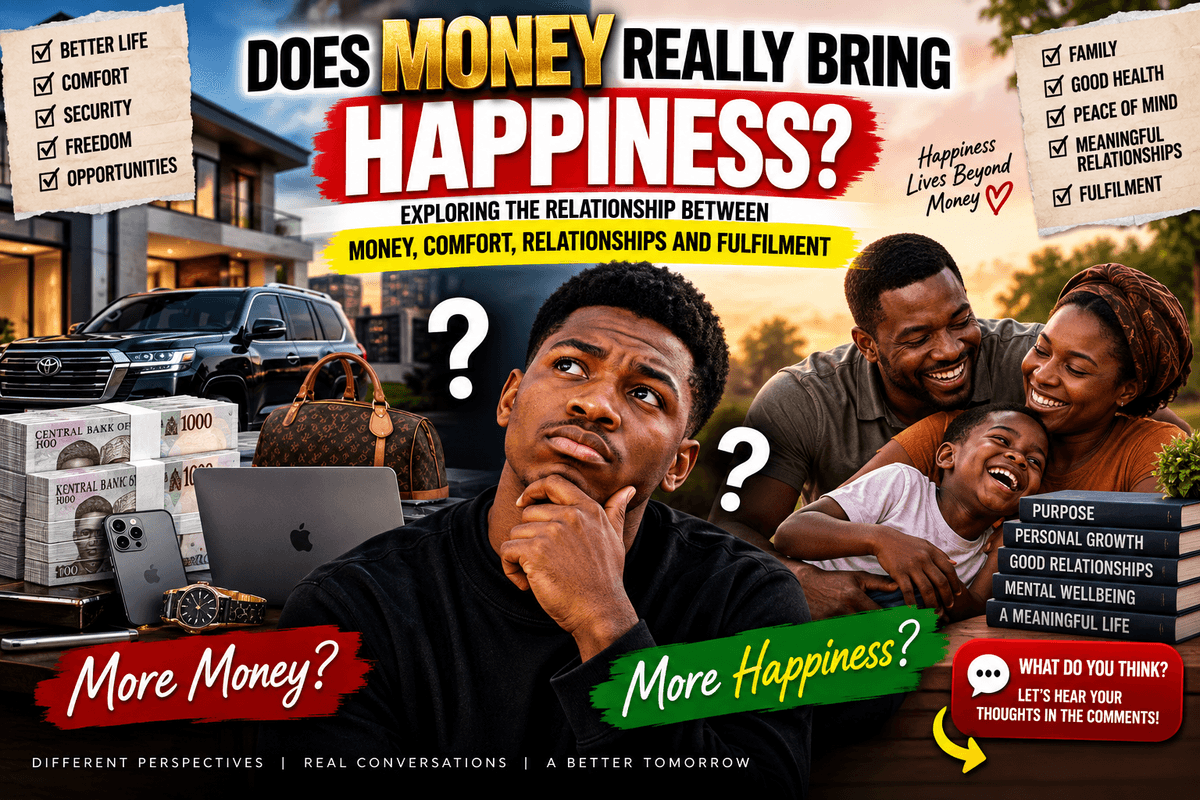
If someone asked you, “Would you rather be rich or happy?”, what would your answer be?
At first, the question may sound simple. Many people would probably choose happiness immediately. But when we look closely at everyday life, the relationship between money and happiness becomes more complicated.
Money may not be able to buy happiness directly, but it can certainly influence our comfort and quality of life.
Imagine someone struggling to pay rent, feed their family, pay school fees or afford medical treatment. Telling that person that “money doesn't matter” may sound unrealistic. Financial security can reduce some of the stress that comes with not having enough to meet basic needs.
Money can provide access to better housing, food, education, healthcare, transportation and other necessities. It can also give people the freedom to make certain choices without constantly worrying about their next meal or unpaid bills.
But does having more money automatically make someone happier?
Not necessarily.
There are wealthy people who experience loneliness, broken relationships, stress and dissatisfaction. A person may have a beautiful house, expensive cars and plenty of money but still feel empty inside.
This shows that money can provide comfort, but comfort is not the same thing as fulfilment.
Relationships also play an important role in our happiness. Having people who genuinely care about us can provide emotional support that money cannot easily replace.
Imagine having millions in your bank account but having nobody you can trust or share your experiences with. Financial wealth may make life comfortable, but human connection can give life meaning.
There is also the issue of contentment.
Someone who earns ₦200,000 may feel happy with their income today but become unhappy after constantly comparing themselves with someone earning ₦2 million. Another person earning ₦2 million may feel poor when comparing themselves with someone earning ₦20 million.
If happiness is always based on having more than someone else, there may never be enough money.
This does not mean people should stop pursuing financial success. Financial stability is important, and there is nothing wrong with wanting a better life.
The important thing is to understand that money should be a tool, not the entire purpose of life.
Use money to improve your life, support your family, develop yourself, build something meaningful and create opportunities. But don't sacrifice every relationship, your values or your peace of mind simply to accumulate wealth.
Sometimes, happiness can be found in things that cost very little: spending time with family, having a meaningful conversation with a friend, helping someone in need, learning something new, achieving a personal goal or simply having peace of mind.
Perhaps the better question is not “Does money bring happiness?”
Maybe it is:
“How can we use money to create a better life without allowing money to become the measure of our entire happiness?”
Money matters. Happiness matters. Relationships matter. Personal fulfilment matters.
A truly meaningful life may require finding a balance between all of them.
Now I want to hear from you:
