Writers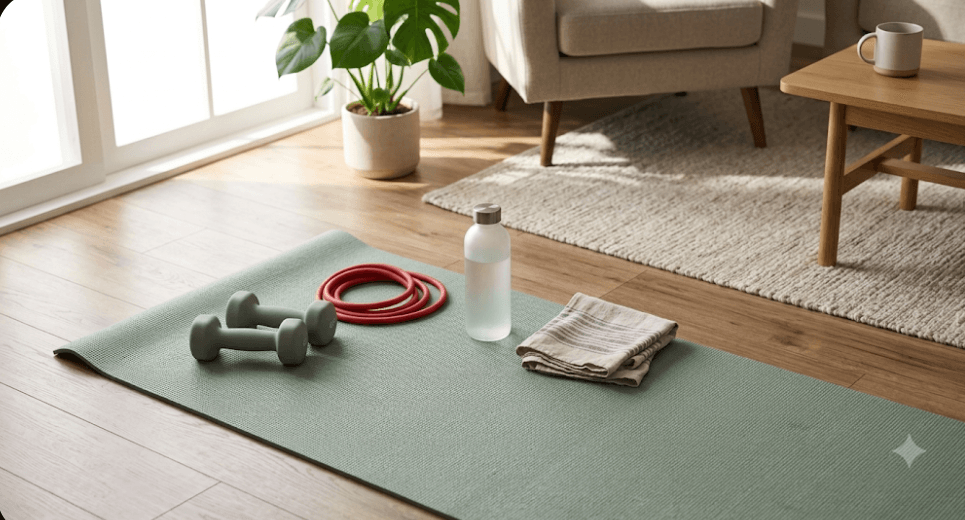
Between long workdays, gym fees, and full schedules, the gym is often the first thing to slip. The good news is that you don't need a membership, a garage full of equipment, or an hour a day to become fitter. You need a routine simple enough to repeat.
This guide covers seven practical ways to get fit at home using little or no equipment. Each one can be started today and fitted into a busy week.
1. Build Strength With Bodyweight Exercises
Bodyweight training uses your own weight as resistance, so it costs nothing and works in a small space. Squats, push-ups, lunges, and planks train most of the major muscle groups.
Try this 15-minute circuit:
10 squats
8 push-ups (on your knees or against a kitchen counter if needed)
10 lunges per leg
20-second plank
Complete the circuit three times with a short rest between rounds. As it gets easier, add repetitions, slow each movement down, or hold the plank longer.
2. Turn Your Home Into a Cardio Space
Cardio exercise raises your heart rate and improves endurance, and you don't need a treadmill for it. Marching in place, climbing your stairs, shadow boxing, and dancing to a favorite playlist all count.
Health organizations such as the World Health Organization recommend that adults aim for at least 150 minutes of moderate-intensity activity per week. That works out to about 30 minutes, five days a week. Splitting it into shorter sessions is fine.
Example: Play three upbeat songs and keep moving for the whole time. That is roughly ten minutes of cardio.
3. Use Interval Training for Short Workouts
Interval training alternates short bursts of effort with rest. It suits people with limited time because a session can be over in ten minutes.
A simple beginner format:
Work for 30 seconds, rest for 30 seconds
Rotate through jumping jacks, high knees, and fast bodyweight squats
Repeat for eight rounds
If jumping bothers your knees or you live in an apartment, use low-impact versions such as fast marching or step-backs. The point is to work at a challenging but controlled pace.
4. Add Affordable Equipment as You Progress
Bodyweight exercises take you a long way, but a few inexpensive tools add variety and let you keep progressing. Good starter options include:
Resistance bands: compact and useful for rows, presses, and leg work
Adjustable dumbbells or a single kettlebell: these allow heavier strength exercises
A jump rope: an efficient cardio tool that takes almost no space
You can also improvise. A backpack filled with books works for squats and rows, and a filled water jug works as a weight. Whatever you use, pick a load that lets you keep good form through every repetition.
5. Follow a Structured Workout Plan
A common reason people quit is not knowing what to do next. A structured plan removes that guesswork. Many free and low-cost video programs and fitness apps offer guided workouts for different levels, from complete beginners to experienced exercisers.
When choosing one, look for:
Instructors with recognized fitness qualifications
Clear demonstrations of proper form
Workouts matched to your current level and available time
Following a program also lets you see your progress over weeks instead of guessing whether you're improving.
6. Move More Throughout Your Day
Formal workouts matter, but so does what you do the rest of the day. Long stretches of sitting are common in modern life, and breaking them up is a simple way to stay active.
Try these "movement snacks":
Do a two-minute stretch or a set of squats every hour
Walk around the house during phone calls
Take the stairs when you can
Do calf raises while brushing your teeth or waiting for the kettle
These small actions won't replace a workout, but they add to your total activity and help you build the habit of moving.
7. Prioritize Consistency and Recovery
The best workout plan is the one you follow. Consistency usually matters more than intensity, especially in the first few months.
Habits that support progress:
Schedule your sessions. Treat them like appointments, and start with three per week.
Attach exercise to an existing habit. For example, work out right after your morning coffee.
Track your workouts. A notebook or phone note showing your reps or minutes keeps you motivated.
Rest properly. Sleep, hydration, and at least one or two rest days a week help your body recover and adapt.
Also listen to your body. Mild muscle soreness is normal, but sharp or persistent pain is a signal to stop and reassess.
If you are new to exercise, returning after a long break, or managing a health condition, speak with a doctor or qualified health professional before starting a new routine. Start gently and increase difficulty gradually.
Conclusion: Start Small, Start Today
Getting fit at home doesn't require perfect conditions. It takes a few simple exercises, a realistic schedule, and the willingness to begin. Bodyweight strength work, cardio, intervals, basic equipment, guided programs, daily movement, and steady habits together give you a complete approach that fits into real life.
Pick one or two of these ideas and try them this week. Do the 15-minute circuit tomorrow, or take a ten-minute movement break this afternoon. Small actions repeated over time are what build lasting fitness.