 Writers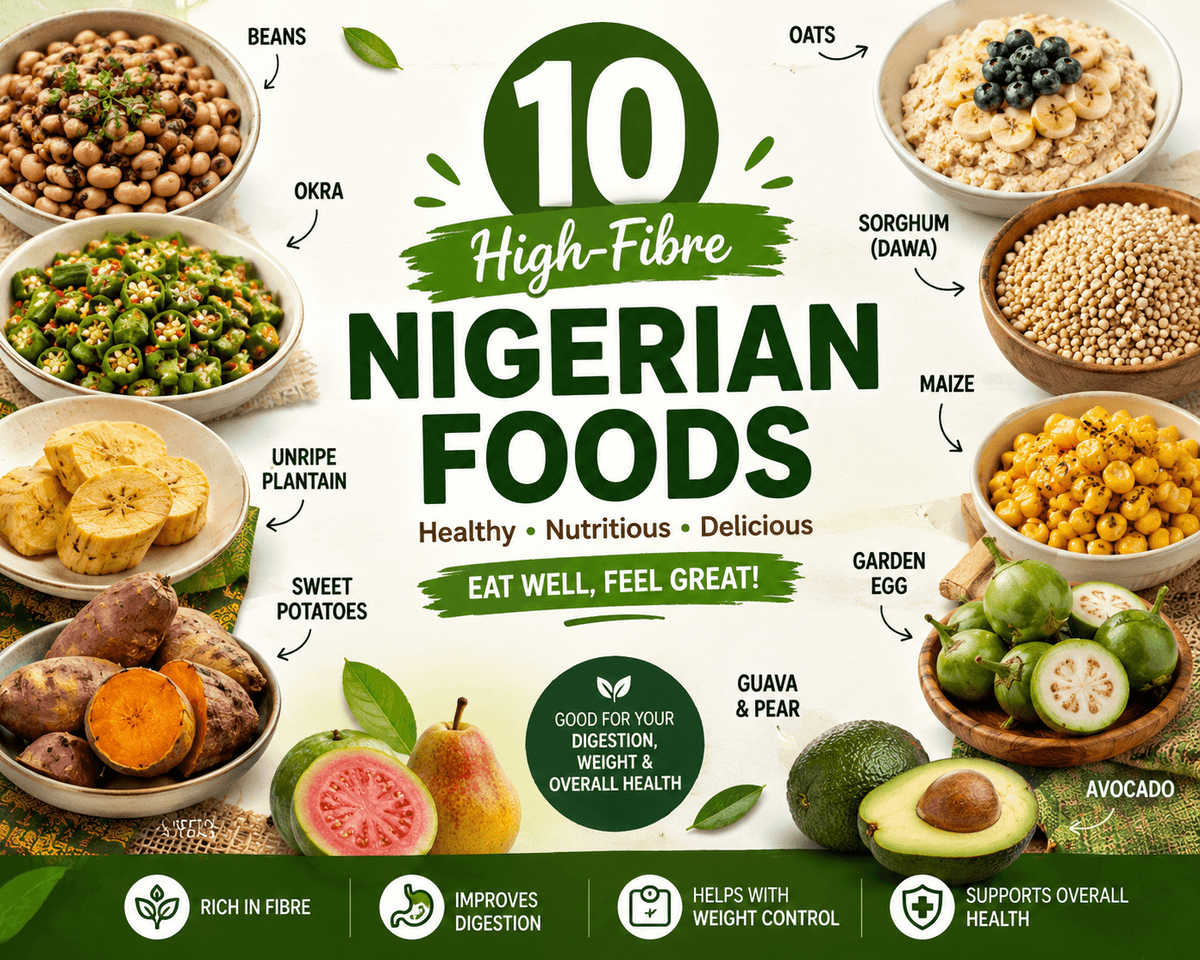
If you're looking for affordable Nigerian foods that can help increase your fibre intake, these are great options to include in your meals.
1. Beans 🫘
Beans are one of the best sources of dietary fibre. You can enjoy them as akara, moi moi, beans porridge, or plain cooked beans.
2. Okra
Okra contains soluble and insoluble fibre and can be used to prepare okra soup, okra stew, or vegetable soup.
3. Unripe plantain 🍌
Unripe plantain provides fibre and resistant starch. Try it boiled, steamed, or used in unripe plantain porridge.
4. Sweet potatoes 🍠
Sweet potatoes are a good source of fibre, especially when eaten with the skin after proper washing.
5. Oats
Oats contain soluble fibre, including beta-glucan, and can make a filling breakfast when combined with fruit, nuts or seeds.
6. Sorghum (Dawa)
Sorghum is a whole grain that provides dietary fibre. It can be used for pap, porridge, tuwo, or other traditional preparations.
7. Maize 🌽
Whole maize and minimally processed maize products can contribute fibre to the diet. Boiled corn with pear (ube) is a simple Nigerian combination.
8. Garden egg
Garden eggs provide fibre while adding relatively few calories. They can be eaten fresh or served with garden-egg sauce.
9. Avocado 🥑
Avocado contains fibre and healthy unsaturated fats. Add it to bread, salads, sandwiches or smoothies.
10. Fruits such as guava and pear 🍐
Whole fruits such as guava, African pear (ube), and oranges provide fibre. Eating the whole fruit rather than drinking only the juice generally gives you more fibre.
To increase your fibre intake, increase it gradually and drink enough water. Also try to choose whole or minimally processed grains, fruits and vegetables more often.
Why fibre is important
Improves digestion: Helps food move through the digestive tract and prevents constipation.
Maintains bowel health: Reduces the risk of digestive problems such as hemorrhoids and diverticular disease.
Helps control blood sugar: Slows the absorption of sugar, helping people with diabetes manage blood glucose levels.
Supports heart health: Helps lower LDL ("bad") cholesterol, reducing the risk of heart disease.
Aids in weight management: High-fibre foods keep you feeling full for longer, reducing overeating.
Promotes healthy gut bacteria: Acts as food for beneficial gut microbes, supporting overall gut health.
May reduce disease risk: A high-fibre diet is associated with a lower risk of colorectal cancer, type 2 diabetes, and cardiovascular disease.
How to add more fibre to your meals
You do not have to completely change your diet to eat more fibre. Add beans to rice, choose boiled or roasted corn as a snack, add vegetables to soups and stews, and eat whole fruits instead of taking fruit juice. You can also replace some refined grains with whole grains such as oats and sorghum.
For breakfast, try oats with fruit. For lunch, combine rice with beans and vegetables. For dinner, enjoy a vegetable-rich soup with a suitable portion of your preferred swallow. Snacks such as guava, garden egg, avocado or boiled sweet potato can also increase your fibre intake.
Remember that increasing fibre suddenly may cause bloating or discomfort. Increase your intake gradually and drink adequate water. A varied diet containing fruits, vegetables, legumes and whole grains can provide types of fibre and nutrients.