 Writers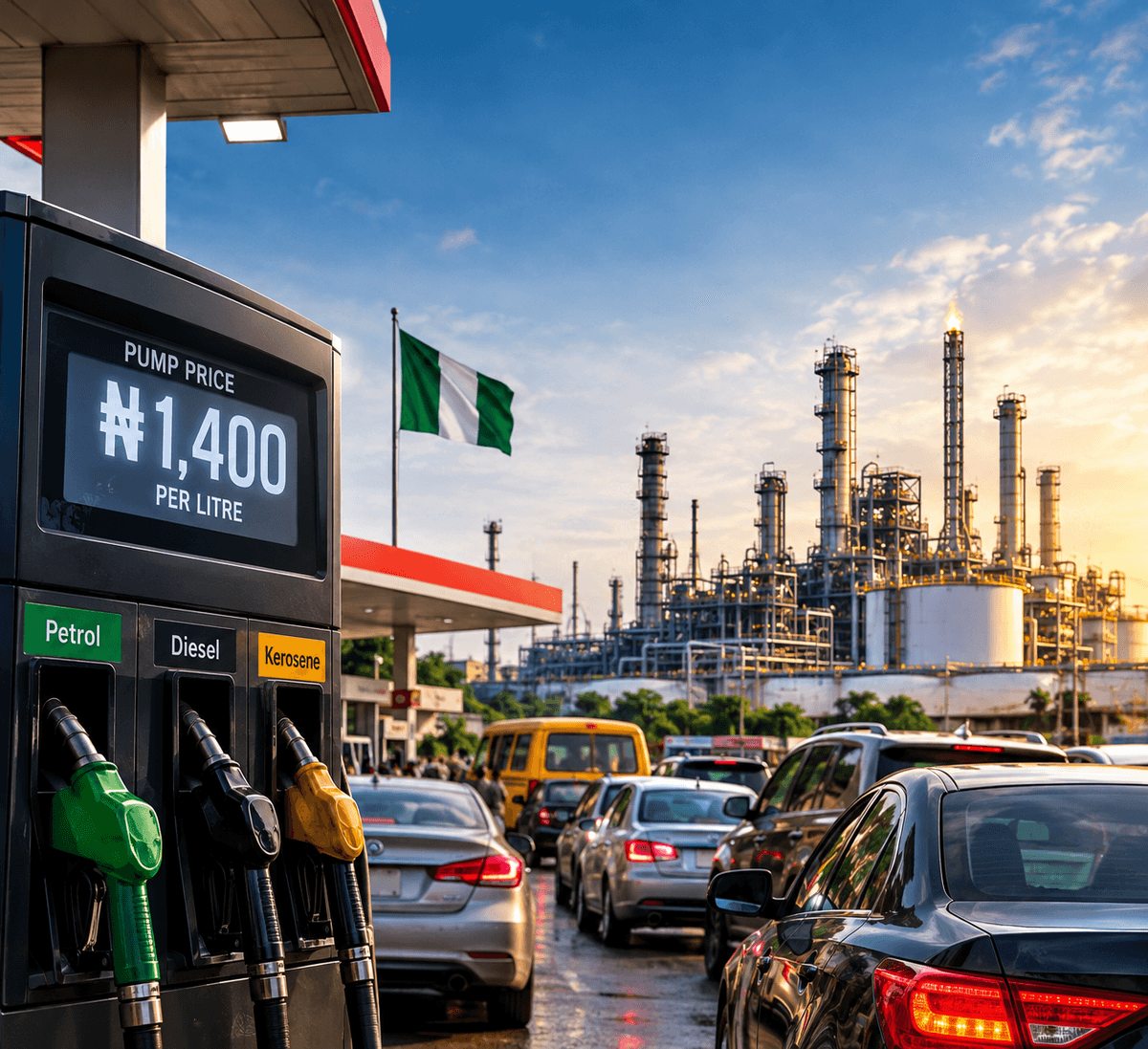
Nigeria’s Fuel Crisis: Why Petrol Is Rising Even With Dangote Refinery at Full Capacity
For millions of Nigerians, the price of petrol has once again become one of the biggest economic conversations in the country. What makes the latest increase particularly interesting is that Nigeria now has the Dangote Refinery operating at a scale capable of transforming the country’s fuel market.
Yet, despite this major development, petrol prices have climbed to around ₦1,400 per litre in Lagos and Abuja, while prices in some northern locations have reached about ₦1,500. Diesel prices have also moved above ₦2,000 per litre. Reuters reported that the increase is being driven largely by higher international oil prices and tensions affecting global energy markets.
The situation raises an important question: If Nigeria is producing more of its own fuel, why are Nigerians still paying so much for petrol?
The global oil market still matters
One major reason is that Nigeria’s domestic fuel market is not completely isolated from the international oil market.
Crude oil remains a globally traded commodity. When international crude prices rise, the cost of producing or acquiring petroleum products can also increase. Recent tensions in the Middle East have disrupted expectations around global energy supplies and pushed oil prices higher.
Reuters reported that the Dangote Refinery increased its wholesale petrol price to about ₦1,350 per litre as crude costs increased.
This means that having a large refinery does not automatically make Nigeria immune to global oil-price movements.
The Dangote factor
The Dangote Refinery has nevertheless changed Nigeria’s position in the petroleum industry.
The refinery, located in Lagos, has a stated capacity of 650,000 barrels per day and has increasingly supplied both the Nigerian market and international customers. Recent reports have also highlighted its growing role in global fuel markets.
In fact, the refinery has become an important exporter of refined petroleum products, particularly as disruptions in other parts of the world have affected fuel supply.
At the same time, the refinery is preparing for a major initial public offering, attracting considerable attention from Nigerian investors and the wider financial market.
This creates an unusual situation: Nigeria has a refinery capable of producing enormous quantities of petroleum products, while consumers are still feeling the effects of expensive fuel.
Why Nigerians still feel the pressure
Petrol does not affect only motorists.
It influences transportation, food distribution, farming, manufacturing, electricity generation and almost every part of the Nigerian economy.
When transport operators spend more on fuel, transportation costs can rise. When logistics becomes more expensive, traders and businesses may increase prices. When businesses depend on generators, higher diesel and petrol costs can increase operating expenses.
The result is that a change at the filling station can eventually appear in the price of food, clothing, services and other everyday necessities.
For ordinary households, the problem is therefore bigger than simply paying more to fill a fuel tank.
A refinery alone cannot solve everything
Nigeria’s experience demonstrates that domestic refining is important, but it is only one part of a much larger economic system.
The country still needs reliable crude supply, efficient transportation infrastructure, stable electricity, competitive distribution networks and policies that allow domestic production to operate effectively.
The Nigerian Midstream and Downstream Petroleum Regulatory Authority has also recently approved permits for six marketers to import a combined 830,000 metric tonnes of petrol during the fourth quarter, even as Dangote’s refinery increases domestic production. (Businessday NG)
That development shows that Nigeria’s petroleum market is still evolving rather than immediately becoming completely dependent on locally refined fuel.
What happens next?
The direction of international oil prices will remain important. If global energy tensions ease and crude prices fall, some pressure on fuel prices could also reduce. However, if international prices remain elevated, Nigerian consumers may continue to face higher costs.
For Dangote Refinery, the coming period could be equally significant. Its expanding role in domestic and international markets, combined with the proposed IPO, means the refinery is no longer simply a Nigerian industrial project. It is becoming an increasingly important player in the global energy business.
For Nigerians, however, the biggest question remains much simpler:
When will the country’s growing refining capacity translate into noticeable relief for the average consumer?
That is the real test. Nigeria has taken a major step toward producing more of its own petroleum products, but production capacity alone does not determine what Nigerians ultimately pay at the pump.
The next chapter will depend on crude prices, refinery economics, distribution, government policy and the wider global energy market.
And for millions of Nigerians, every movement in those factors will eventually be felt at the filling station.