Writers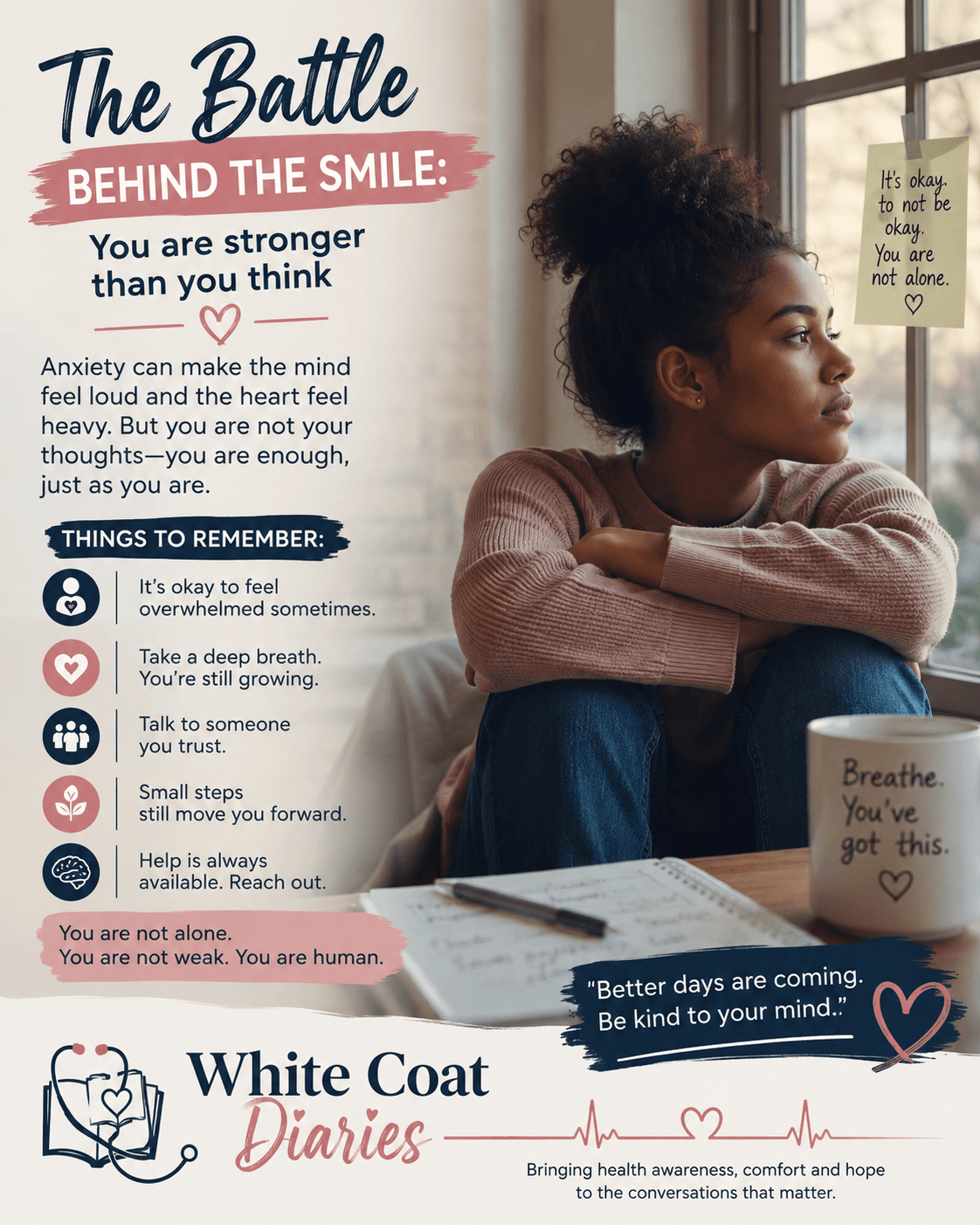
The Battle Behind the Smile
She looked fine.
She attended lectures, laughed with her friends, posted pictures online and responded to messages like everyone else. Nobody would have guessed that every night, when the noise around her disappeared, her mind became louder.
“What if I fail?”
“What if I disappoint everyone?”
“What if something goes wrong?”
“What if I am not good enough?”
These questions kept returning.
Sometimes, her heart would beat faster for no obvious reason. Her palms became sweaty. She felt restless and found it difficult to concentrate. At night, she could be physically tired but unable to stop thinking.
She began wondering if something was wrong with her.
There wasn't necessarily anything “wrong” with her. She could be experiencing anxiety.
Anxiety is a normal emotional response to stress, uncertainty or a perceived threat. Almost everyone experiences it at some point. Feeling nervous before an examination, an interview or an important event is normal. In certain situations, anxiety can even help us stay alert and prepare for challenges.
However, anxiety can become a problem when the fear or worry becomes excessive, difficult to control or begins interfering with everyday life.
Young people face many pressures that can contribute to anxiety. Academic expectations, financial struggles, family problems, relationship difficulties, bullying, loneliness, uncertainty about the future and pressure from social media can all become overwhelming.
Social media can make the situation even harder. Seeing other people's achievements, relationships, lifestyles and physical appearances may create the false impression that everyone else is doing better. A young person may begin comparing their real life with someone else's carefully selected online moments.
Anxiety does not always look like crying.
Sometimes it looks like avoiding people.
Sometimes it looks like constantly checking your phone.
Sometimes it looks like being unable to sleep.
Sometimes it looks like perfectionism, irritability or pretending that everything is fine.
Physical symptoms can also occur. A person may experience a racing heartbeat, trembling, sweating, stomach discomfort, headaches, difficulty concentrating, restlessness or shortness of breath.
This is why we should stop dismissing young people by saying, “You are too young to have problems.”
Young people have problems too.
If anxiety is persistent, overwhelming or interfering with school, work, relationships, sleep or daily activities, seeking help from a qualified healthcare or mental-health professional is important. Treatment and support can help people manage anxiety and improve their quality of life.
Friends and family also have an important role to play. Sometimes, the most helpful thing is simply listening without judgement.
You don't have to understand someone's entire struggle before you can show compassion.
And if you are struggling with anxiety, remember this:
You are not weak because you are struggling. You are human.
Asking for help is not a sign of failure. It is a sign that you care enough about yourself to seek support.
Behind some smiles is a battle nobody sees.
Let's make it safer for young people to talk about it.
White Coat Diaries — because sometimes, awareness is the first step toward healing.