 Writers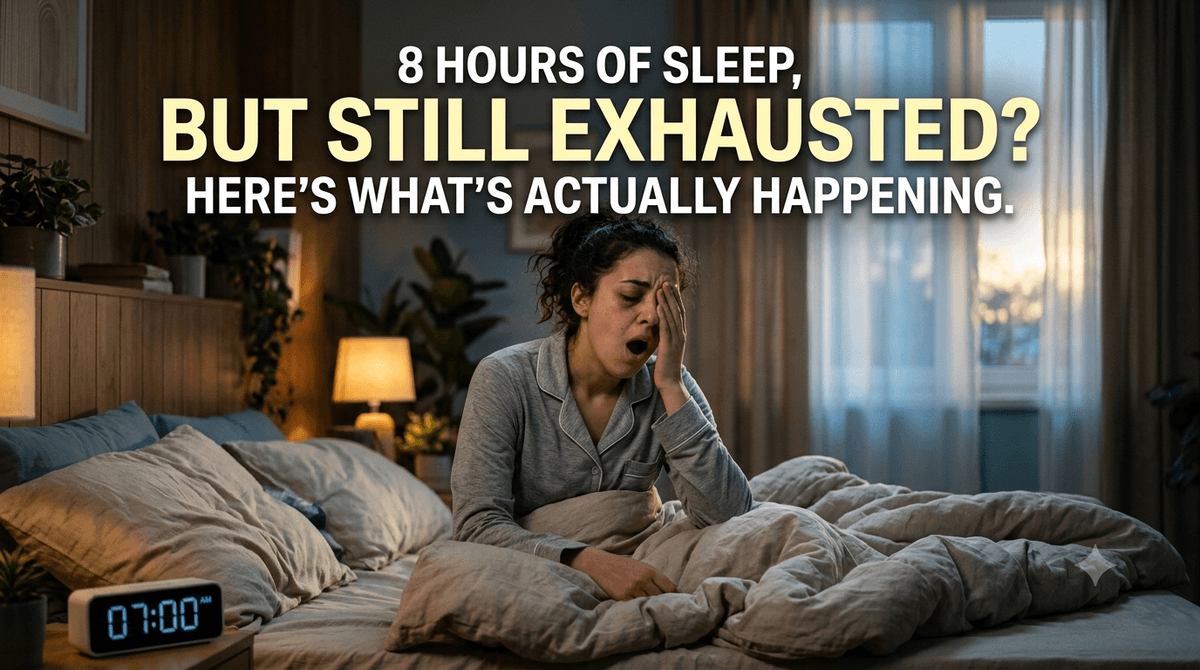
Have you ever slept for what felt like a reasonable number of hours, only to wake up and feel like your body has personally betrayed you?
You check the time and it's 7:00 a.m. You calculate it.
“Ah. I actually slept for eight hours.” So why do you still feel like you need another eight?
Sometimes, the problem is not how long you slept. It is how well you slept.
Sleep is not just one long period where your brain switches off. While you sleep, your body goes through different stages. Some stages are lighter, while others are deeper and more restorative. Your brain and body use this time to carry out several important processes, including memory consolidation, tissue repair and regulation of various hormones and body systems.
So, technically, you can spend eight hours in bed without getting eight hours of good-quality sleep.
For example, you may wake briefly several times during the night without remembering it in the morning. Noise, heat, an uncomfortable sleeping position, stress, an irregular sleep schedule or even certain substances can interfere with the quality of your sleep.
Then there is something called sleep inertia.
This is that heavy feeling you sometimes experience immediately after waking up. Your alarm has gone off, you are technically awake, but your brain is still behaving as if it has an appointment with sleep.
Sleep inertia is more likely to be noticeable when you wake from deeper sleep. That is why sometimes you can wake up after a short nap feeling surprisingly fresh, while another day you wake after several hours of sleep feeling as though somebody should carry you back to bed.
Your body also has an internal clock called the circadian rhythm. It helps regulate when you feel sleepy and when you feel awake. Sleeping and waking at wildly different times can interfere with this rhythm, making it harder to feel properly refreshed when you wake up.
And then there is stress.
You may be physically lying in bed, but your brain is busy revising tomorrow's problems.
“What if this happens?”
“Did I reply that message?”
“How am I going to finish everything?”
“Why did I say that three years ago?”
Suddenly, your body is resting while your brain is still busy.
So what can you do?
Try to keep a fairly regular sleep and wake time. Give yourself enough time to sleep. Make your sleeping environment comfortable and dark, and avoid things that interfere with sleep close to bedtime, especially caffeine late in the day.
Also do not underestimate the simple things either. Sometimes you wake up feeling terrible because you went to bed dehydrated, slept in an uncomfortable room or spent the last hour before bed scrolling through your phone instead of allowing yourself to wind down.
Of course, occasionally waking up tired is normal.
But if you consistently feel exhausted despite getting enough sleep, especially if you snore heavily, wake up gasping, have frequent morning headaches or struggle to stay awake during the day, it may be worth speaking to a healthcare professional. Persistent tiredness can sometimes be a sign of an underlying sleep or medical problem.
So the next time you wake up after eight hours and still feel like sleeping for another eight, do not immediately conclude that you are lazy.
Your body may simply be telling you:
“The number of hours was fine. The quality? That's another conversation.