 Writers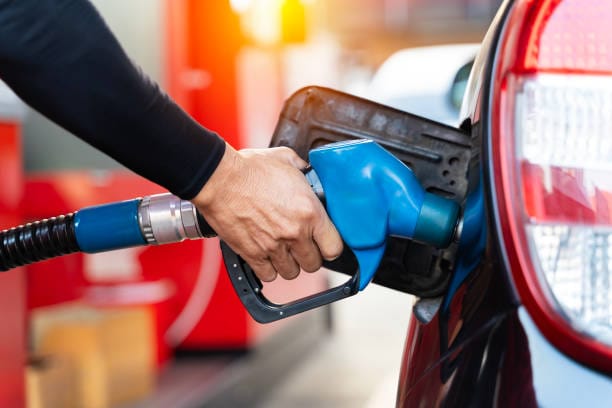
Faith Okerinmodun
In recent times, Nigerians have been faced with an increase in Petroleum Motor Spirit (PMS) which has resulted in a spike in food prices, transportation especially, in the Nation's economy at large.
One of the biggest drivers is the rise in global crude oil prices. Recent geopolitical tensions in the Middle East, particularly the conflict involving Iran, the United States and Israel, have disrupted global oil supply routes and pushed crude prices upward.
Over the past decade, the price Nigerians pay for fuel has risen dramatically, turning what was once a manageable expense into one of the most pressing economic challenges facing the country.
In 2015, petrol sold for about ₦87 per litre under a government subsidy regime. At the time, the government absorbed a large portion of the cost to keep pump prices low for citizens.But maintaining the subsidy came at a huge cost. Over the years, Nigeria spent trillions of naira subsidizing petrol imports through the state oil company, Nigerian National Petroleum Company Limited (NNPC).
The first major shift came in 2016, when the government raised petrol prices to ₦145 per litre as part of efforts to reduce subsidy spending and encourage private investment in the petroleum sector.
For several years after that, prices remained relatively stable, but the underlying problems in Nigeria’s fuel system persisted.
Despite being one of the world’s largest crude oil producers, Nigeria depended heavily on imported refined petroleum products because its state-owned refineries struggled to operate efficiently.
This meant the country was exposed to global oil price fluctuations and foreign exchange pressures.By 2020, the government began gradually moving toward a deregulated fuel market, allowing petrol prices to adjust based on international market conditions.
In May 2023, the administration of Bola Ahmed Tinubu announced the removal of the fuel subsidy, declaring that the government could no longer afford the massive cost. The announcement triggered an immediate spike in petrol prices nationwide. Within months, the price of petrol jumped from around ₦238 per litre to more than ₦600 in many parts of the country.
The weakening value of the naira made fuel imports more expensive, while global crude oil prices fluctuated due to geopolitical tensions and market pressures.
At the same time, reforms aimed at deregulating the downstream petroleum sector allowed marketers to adjust prices based on supply and demand.
New developments in Nigeria’s refining sector, including operations at the Dangote Refinery, were expected to improve local supply. But fluctuations in crude prices, logistics challenges, and market adjustments meant pump prices continued to vary across the country.
By 2026, petrol prices in many Nigerian cities had climbed to between ₦900 and over ₦1,000 per litre, marking more than a tenfold increase compared to a decade earlier.
Price (₦)
1000 ┤ █ 2025
900 ┤ █
800 ┤ █ 2026
700 ┤ █ 2024
600 ┤ █ 2023
500 ┤
400 ┤
300 ┤
200 ┤ █ █ █ █ █ █
100 ┤
└────────────────────────
2015 2026
Source: Datagraphics from Chat gp
Impact of Fuel Increase on Nigerians
The increase in fuel price has a major impact on Nigeria's economy. Transport fares doubled in several cities, food prices surged, and the cost of running small businesses skyrocketed.
For a country where millions rely on petrol-powered generators due to unreliable electricity, the increase hit particularly hard.
For 32 year old, Miss Pelumi, who has a small scale business of selling frozen food like Turkey, Chicken and fish as decried the poor state of her business and how much customers she has lost due to the erratic power supply and the spike in fuel prices due to unavailability to meeting their needs
“At some point, the light seems manageable and I use fuel to power my cold room due to the increase in fuel money, some persons would still want to buy the goods at the initial price without thinking of what we go through despite the spike in prices”
“This development has made me lose customers due to the unavailability of fuel and most customers don't welcome a new price in my business and look for another cheap source, so I have lost some customers in the process. I believe the Government can do more especially to improve the state of the electricity” she added
A transporter who pleaded anonymity because he doesn't want his name to be in print or TV, said the hike in fuel prices has caused more harm than good not to talk of what the economy of the country is making them go through.
“I have 5 kids at home with my wife and the vehicle I use is on installation. Irrespective of the fuel Hike there's a certain amount to deliver. Most times I take #1000 home as my profit. How do I use #1000, to take care of 5 kids and my wife?”
“Before the increment in the fuel price, I still go home with #3000 or so in a day and this is enough to take care of my family. Though it's not enough but we are still surviving” he added
Police Extortion still Imminent - Adamu
For Adamu, a motorcyclist the increase in fuel prices isn't just the issue but the extortion by officers of the Nigerian Police force which had eaten deep and affected their day to day activities.
“Most times when we are trying to get customers, some officers might just show up and demand for money but if we don't divulge, they would say our bikes would be sized and taken to the station. At that point we have to give them because we know what it means for our bikes to be tolled to their station as the money we would be told to pay would be triple"
“As the battle of hike in fuel prices looms, we are still faced with the men of the Nigerian Police Force and also the union who do not care the level of state we are in Nigeria. Most times I end up not having a dime to take home after getting home”
For many road users, each one has a story to tell on how Security operatives who are saddled with the responsibility of safeguarding lives and properties are the ones still making lives difficult for them and making them go through hurdles and pain.